



Can Puppies Have Beef Gullet? Age, Portions & Chewing Safety
Many puppies can have beef gullet once they can comfortably handle firm treats, but age alone does not determine readiness. Size, teething stage, chewing behavior, portion size, beef tolerance, and close supervision all matter.
Puppies develop at different rates. Instead of choosing beef gullet because a puppy has reached one specific birthday, look at whether the puppy can chew comfortably, whether the piece is appropriately sized, and what happens during the entire supervised session.
Yes, some puppies can have beef gullet when they are already comfortable chewing firm food or treats and can manage an appropriately sized piece without trying to swallow it whole. There is no universal minimum age that fits every puppy. Start with a manageable amount, supervise continuously, count gullet toward the puppy's treat calories, provide fresh water, and remove pieces that become small enough to gulp. Puppies with dental problems, digestive disease, beef reactions, prescription diets, or repeated vomiting or diarrhea should be discussed with a veterinarian before introducing a new edible chew.
Can Puppies Have Beef Gullet? Readiness Matters More Than One Exact Age
A puppy's age is useful context, but it should not be treated as a stand-alone safety test. Puppies are still developing their chewing skills and changing teeth during their first several months of life.
The American Kennel Club notes that puppies generally finish replacing their baby teeth with adult teeth at around six months. That does not mean every puppy must wait until six months for every edible chew. It means owners should take teething stage and current mouth comfort into account when choosing texture.
Useful readiness check: a puppy should already be chewing firm food or treats comfortably and should be able to work on the chew rather than immediately trying to swallow a large section.
What Is Beef Gullet?
Beef gullet is beef esophagus that is prepared and dried into an edible dog treat. It can be sold as narrow sticks, flatter strips, or other shapes. The texture is generally lighter than very dense natural chews, although individual pieces and puppy chewing styles vary.
A lighter textured beef chew
Gullet can suit puppies that are ready for supervised edible chewing but do not need the density of a heavy-duty chew. Brutus & Barnaby's current gullet-stick page specifically lists puppies among the intended users.
Digestible does not mean risk-free
Even an edible animal-based chew can become a choking or swallowing concern when a puppy bites off a large section, gulps the final piece, or receives a chew that is too small for its mouth and behavior.
How Much Beef Gullet Can a Puppy Have?
There is no responsible universal rule such as “one stick per puppy.” Puppies differ dramatically in body size and calorie needs, and natural gullet pieces can vary in weight.
Brutus & Barnaby's current Beef Gullet Sticks page lists approximately 116.2 calories per ounce. That figure is based on weight, not a guaranteed number of calories in every individual stick.
Keep all treats to about 10% or less of daily calories
General veterinary nutrition guidance recommends that approximately 90% or more of daily calories come from the puppy's complete and balanced diet, leaving no more than about 10% for treats and other extras. That allowance includes gullet plus training treats, chews, table food, enrichment food, and other snacks.
How to Choose a Beef Gullet Chew for a Puppy
The right chew should make the puppy slow down and work on the treat. A piece that disappears almost immediately or fits easily into the puppy's mouth as one swallowable object requires extra caution.
Size
Choose a piece the puppy cannot comfortably put entirely inside its mouth at once. Remove the remaining end before it becomes an easy gulp.
Chewing Style
A puppy that gnaws gradually is different from one that bites through treats and immediately attempts to swallow large sections.
Mouth Comfort
Teething gums, retained baby teeth, mouth pain, recent dental work, or abnormal teeth can change which textures are appropriate.
Beef Gullet Sticks for Puppies Ready to Chew
Brutus & Barnaby's current Beef Gullet Sticks page lists the product for puppies, small and medium dogs, senior dogs, and non-aggressive chewers. That makes it a relevant option for a puppy that already tolerates beef and is ready for closely supervised edible chewing.
The product should still be matched to the individual puppy. A “recommended for puppies” label does not remove the need for portion control, appropriate sizing, supervision, or monitoring.
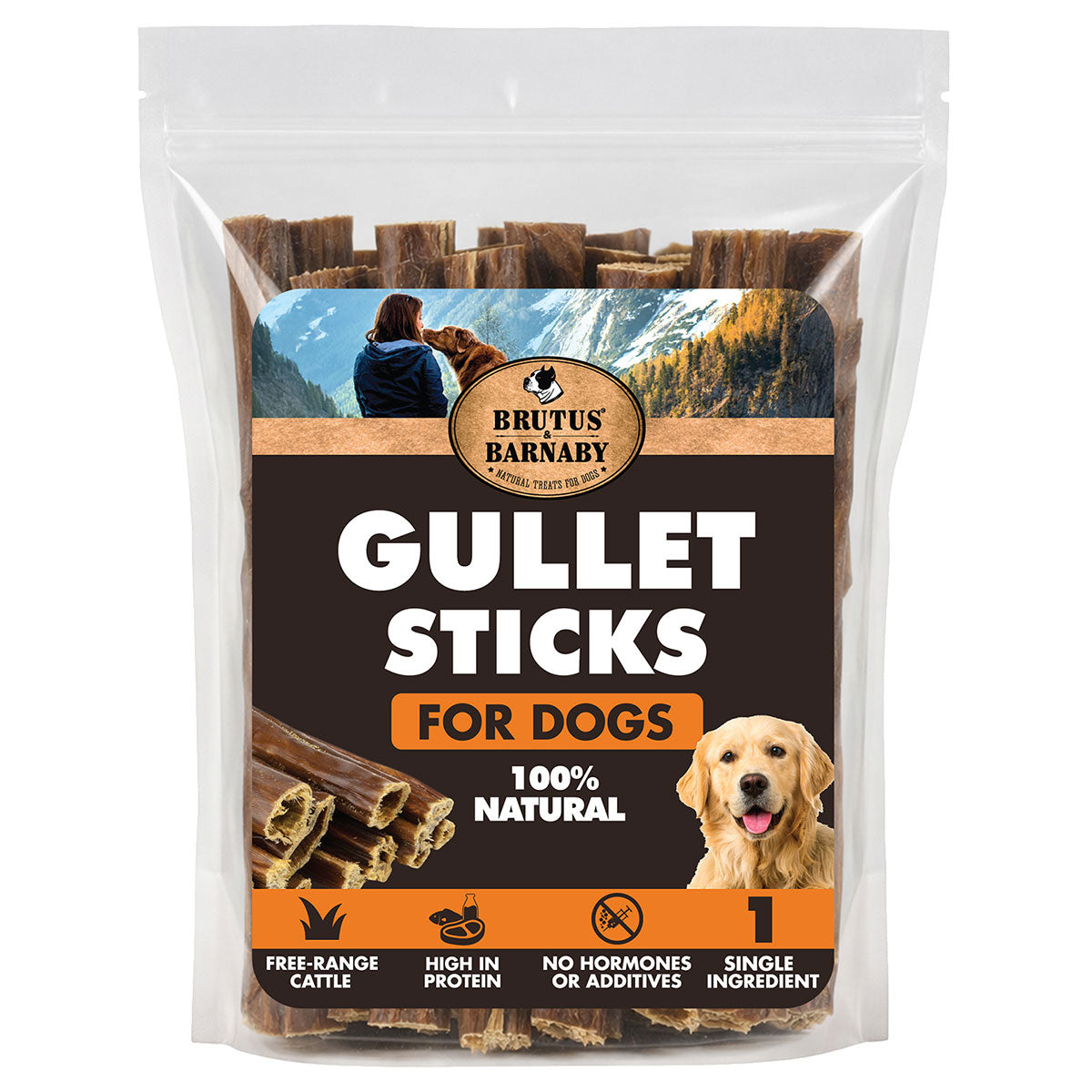
Beef Gullet Sticks for Dogs
A thin six-inch beef gullet chew listed for puppies and other gentle or non-aggressive chewers. Use only when the puppy can manage the texture and size comfortably under continuous supervision.
Puppy Teething Changes the Chewing Decision
Puppies lose their baby teeth while adult teeth grow in, and the gums can be tender during this process. The American Kennel Club notes that this transition generally happens during the first six months.
A puppy that was comfortable with one texture last week may chew differently during an uncomfortable teething period. Watch the mouth as closely as the digestive response.
Signs the texture may be manageable
Stop and reassess when
How to Introduce Beef Gullet to a Puppy
Treat the first session as a controlled test. The goal is to learn how your puppy handles the chew, not to maximize chew time.
Which Puppies Need Extra Caution With Beef Gullet?
Being labeled for puppies does not mean beef gullet is appropriate for every puppy. Health history and behavior can change the decision considerably.
Beef Gullet Is a Treat, Not a Puppy Food
Growing puppies need a complete and balanced diet formulated for their life stage. Beef gullet is an extra and should not displace a meaningful portion of the nutrients supplied by that diet.
This matters especially during training-heavy months. Several small rewards throughout the day plus an edible chew can quietly add up to a substantial calorie load. Include all of them in the same treat budget.
When to Stop the Chew and Contact a Veterinarian
Contact your veterinarian promptly
Seek emergency veterinary care
Why swallowing matters: veterinary references note that foreign material and chew products can become lodged in a dog's esophagus or gastrointestinal tract. Repeated gagging, regurgitation, swallowing attempts, vomiting, appetite loss, or abdominal pain after swallowing a large piece deserve veterinary attention.
Learn More About Beef Gullet
Continue with guides covering what beef gullet is, how often to offer it, and how the stick and flat-strip formats differ.
Helpful Puppy, Nutrition & Chewing Resources
These resources provide additional guidance on puppy teething, edible-chew selection, treat calories, and swallowed foreign objects.
American Kennel Club — What Can Puppies Safely Chew? Guidance on puppy chewing, teething comfort, chew strength, and asking your veterinarian about appropriate options. American Kennel Club — Puppy Teething Timeline An overview of the transition from puppy teeth to the adult teeth generally present around six months. VCA Animal Hospitals — Dog Treats Veterinary nutrition guidance explaining the 90/10 approach to complete food and treat calories. Merck Veterinary Manual — Esophageal Foreign Bodies Veterinary information on swallowed objects, obstruction signs, diagnosis, and treatment.Beef Gullet for Puppies: Common Questions
What age can puppies have beef gullet?
There is no single minimum age that fits every puppy. Consider beef gullet once your puppy can comfortably handle firm food or treats and can chew an appropriately sized piece under close supervision. Teething stage, mouth size, chewing behavior, and veterinary guidance may change the timing.
Can an eight-week-old puppy have beef gullet?
Do not choose a chew based on the eight-week milestone alone. Puppies this young vary greatly in size and chewing ability. Soft, tiny rewards may be easier to manage, and your veterinarian can advise whether an edible chew is appropriate for your individual puppy.
Is beef gullet too hard for puppy teeth?
Gullet is generally a lighter chew than very dense natural chews, but suitability still depends on the puppy and the individual piece. Stop if chewing appears painful, the gums bleed persistently, or the puppy develops another mouth-related problem.
How much beef gullet should I give my puppy?
Use a manageable portion that fits within the puppy's total treat allowance rather than automatically giving a whole stick. Veterinary nutrition guidance generally keeps treats and extras at about 10% or less of daily calories. Natural gullet pieces vary in weight, so weighing the portion is useful when precise calorie control matters.
Can puppies have beef gullet every day?
Potentially, but daily feeding is not automatically appropriate. Consider the amount eaten, total daily treat calories, digestive tolerance, regular diet, body condition, and whether the puppy continues to handle the chew safely. Frequency and portion size should be considered together.
Is beef gullet safe during puppy teething?
Some teething puppies may comfortably manage a lighter gullet chew, while others may prefer softer or cooling options when their gums are tender. Watch your puppy's mouth and chewing behavior closely rather than assuming the same texture will be comfortable throughout teething.
What if my puppy swallows a large piece of beef gullet?
Monitor closely and contact your veterinarian if you know or suspect a large piece was swallowed, particularly if gagging, repeated swallowing, regurgitation, vomiting, appetite loss, lethargy, abdominal pain, or difficulty breathing develops. Active choking or trouble breathing requires emergency veterinary care.
Puppies Can Have Beef Gullet When Their Chewing Skills Are Ready
There is no single birthday that makes beef gullet appropriate for every puppy. A better decision combines developmental stage, comfortable chewing, appropriate sizing, controlled portions, beef tolerance, and continuous supervision. Start with a manageable amount, remove pieces before they become gulpable, count the chew toward the day's treat calories, and change course if your puppy develops digestive or mouth-related problems.
Explore Brutus & Barnaby Beef Gullet Sticks
Review the current product page, ingredients, calorie information, feeding instructions, and available options before deciding whether this lighter beef chew fits your puppy.
Educational disclaimer: This article provides general educational information and is not veterinary, nutritional, dental, diagnostic, or emergency advice. Chew suitability depends on your puppy's age, developmental stage, body size, mouth size, dental health, chewing behavior, medical history, regular diet, calorie needs, allergies, digestive tolerance, and current medications. Always supervise edible chews, provide fresh water, use manageable portions, follow the current product instructions, and consult your veterinarian when you are unsure whether a chew is appropriate for your puppy. Seek veterinary care for concerning digestive symptoms, mouth injuries, choking, difficulty swallowing, or a suspected obstruction. Product ingredients, analysis, sizes, packaging, availability, and page information may change, so review the current product page and package before feeding.