



Are Collagen Sticks Easy to Digest for Dogs? Digestion & Safety Guide
Collagen sticks are edible beef chews intended to be consumed gradually, but “digestible” does not mean every dog can safely swallow large pieces or tolerate unlimited amounts.
A chew can be made from an edible ingredient and still create problems if a dog gulps a large section, eats too much at once, reacts poorly to beef, or continues chewing after the remaining piece becomes small enough to swallow whole.
Collagen sticks are designed as edible dog chews and can be digestible when a dog gradually chews and consumes manageable amounts. However, there is no universal guarantee that collagen sticks will be easy to digest for every dog. The amount eaten, beef tolerance, digestive history, chewing style, and size of swallowed pieces all matter. Large pieces can still create choking or gastrointestinal-obstruction concerns, so supervise every session and remove the chew before it becomes swallow-sized.
What Does “Digestible” Mean for a Collagen Stick?
When dog owners ask whether collagen sticks are digestible, they are usually asking whether the material can be broken down after it is swallowed. That is only one part of chew safety.
A dog that slowly softens a chew and swallows small amounts presents a very different situation from a dog that tears off and gulps a large section. Even edible material can become a physical foreign-body problem when the swallowed piece is too large to move normally through the digestive tract.
Are Collagen Sticks Easy to Digest for Dogs?
For many healthy dogs that tolerate beef and chew deliberately, a collagen stick can function as an edible chew. But “easy to digest” should not be treated as a universal promise.
Slow, deliberate chewing
The dog gradually softens the chew, consumes modest amounts, already tolerates beef, and remains supervised throughout the session.
Tearing, crushing, or gulping
The dog repeatedly detaches large sections, tries to swallow the remaining chew whole, or has a history of choking, obstruction, swallowing difficulty, or digestive problems.
Important distinction: a chew being digestible does not mean you should allow your dog to deliberately swallow large pieces. Chewing behavior remains one of the most important safety factors.
What Happens After Your Dog Chews a Collagen Stick?
There is no reliable universal digestion timeline for a collagen stick. How much the dog chewed before swallowing, the size of the pieces, the amount eaten, and the individual dog all affect what happens next.
Chewing changes the piece
A deliberate chewer works on the surface and gradually consumes material rather than attempting to swallow the original stick whole.
Swallowed material enters digestion
Properly chewed edible material enters the gastrointestinal tract, where the dog’s normal digestive processes act on the food material.
Tolerance becomes visible
Appetite, stool quality, vomiting, gas, abdominal comfort, and overall behavior can help you judge how well your dog tolerated the session.
What Changes How Well a Dog Handles Collagen Sticks?
Can Collagen Sticks Cause Diarrhea or Vomiting?
Yes, digestive upset can occur after any unfamiliar treat or chew. Diarrhea or vomiting after a collagen stick does not automatically identify one specific cause.
Beef Collagen Sticks for Dogs
The current Brutus & Barnaby listing describes its Beef Collagen Sticks as a single-ingredient, rawhide-free chew made from beef collagen. The page also directs owners to supervise chewing, provide fresh water, remove small fragments, and introduce the chew gradually.
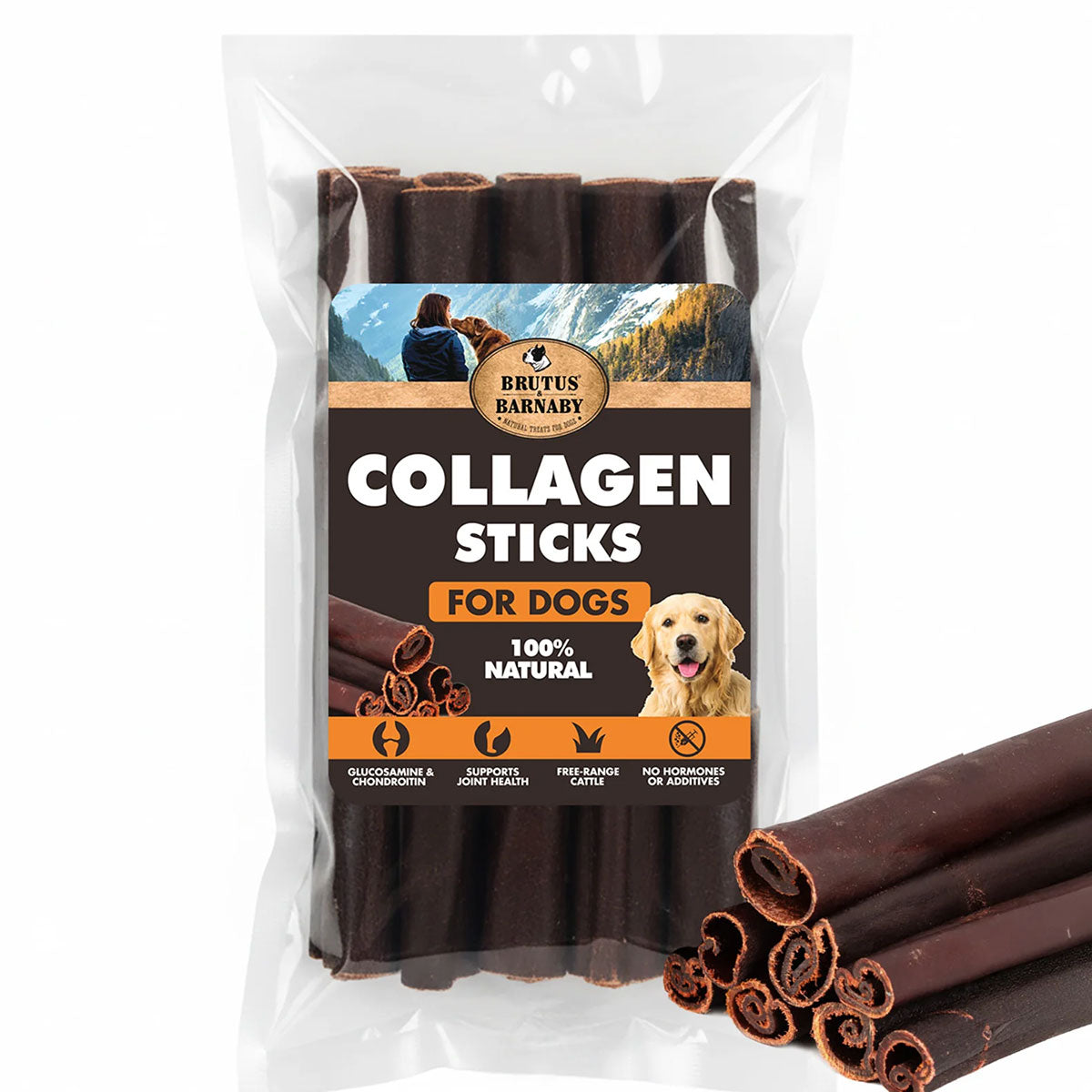
Beef Collagen Sticks for Dogs
A rolled beef collagen chew for dogs that tolerate beef and can work through a firm edible chew deliberately under supervision.
How to Introduce Collagen Sticks Without Overloading Digestion
A gradual introduction gives you a clearer picture of digestive tolerance and chewing behavior.
How Much Collagen Stick Should a Dog Eat?
There is no useful universal answer such as “one stick per dog.” Dogs have different calorie requirements, and natural chews can vary in weight. The amount actually consumed matters more than the number of sticks taken from the package.
Keep treats within the total calorie budget
Veterinary nutrition guidance generally recommends that treats and other extras account for no more than about 10% of a dog’s daily calorie intake, leaving at least 90% for a complete and balanced diet.
The current Brutus & Barnaby Beef Collagen Sticks listing provides an energy value of approximately 110.6 calories per ounce, but it does not provide one fixed calorie number for every individual natural stick.
Practical rule: your dog does not need to consume the entire collagen stick in one sitting. Short sessions can reduce the amount eaten while still providing chewing activity.
What If My Dog Swallows a Large Piece of Collagen Stick?
Do not assume that a large piece is harmless simply because the chew is edible. Some swallowed objects or food-sized foreign material may pass, while others can become lodged or obstruct the gastrointestinal tract.
Contact your veterinarian
Seek emergency care
Are Collagen Sticks Good for Dogs With Sensitive Stomachs?
A single-ingredient chew can make it easier to identify what your dog is eating, but that does not automatically make it suitable for every sensitive stomach.
A dog that reacts to beef can still react to a chew made only from beef collagen. Likewise, recurring diarrhea or vomiting should not be managed by continually testing different treats without investigating the underlying problem.
A cautious trial may make sense when
Ask your veterinarian first when
Collagen Sticks vs. Rawhide: Is Digestibility the Whole Story?
Collagen sticks are often considered by owners looking for a rawhide-free chew, but a safer chewing routine depends on much more than a product category.
When to Stop Giving Collagen Sticks
Stop the chew session when
Stop feeding and seek veterinary guidance when
Learn More About Collagen Chews
Build a more informed collagen-chew routine by looking at frequency, chew time, alternative chew formats, and product-label details.
Helpful Veterinary Resources
For more information about foreign-body obstruction, treat calories, digestive warning signs, and chew-related dental concerns, review these veterinary resources.
VCA Animal Hospitals — Ingestion of Foreign Bodies in Dogs Learn about obstruction warning signs including vomiting, appetite loss, abdominal pain, lethargy, and difficulty passing stool. Merck Veterinary Manual — Gastrointestinal Obstruction Veterinary reference covering clinical signs, diagnosis, and the seriousness of gastrointestinal obstruction. VCA Animal Hospitals — Dog Treats Guidance on treat calories, balanced diets, medical conditions, and food allergies. UC Davis Veterinary Medicine — Treat Guidelines for Dogs Veterinary nutrition guidance for keeping treats within the daily calorie budget. Cornell University — Risks From a Fractured Tooth Information on choosing chew textures carefully and recognizing dental-injury concerns.Collagen Stick Digestion: Common Questions
Are collagen sticks digestible for dogs?
Collagen sticks are edible chews intended to be consumed gradually. The current Brutus & Barnaby product listing describes its beef collagen chew as easily digestible. Individual tolerance still varies, and a large swallowed piece may create a physical choking or obstruction concern even when the material itself is edible.
How long does a collagen stick take to digest?
There is no reliable universal number of hours that applies to every collagen stick and every dog. The amount consumed, piece size, chewing, stomach contents, gastrointestinal function, and the individual dog can all affect digestion.
Can collagen sticks cause diarrhea in dogs?
They can in some dogs. Digestive upset may follow a large portion, sudden introduction, individual intolerance, or another gastrointestinal problem. Stop the chew and contact your veterinarian when diarrhea is persistent, severe, bloody, or accompanied by vomiting, pain, lethargy, dehydration, or appetite loss.
What happens if my dog swallows a large piece of collagen stick?
Contact your veterinarian for individualized advice rather than assuming it will dissolve safely. The veterinarian will consider your dog’s size, the estimated size of the piece, when it was swallowed, and any symptoms. Seek emergency care for choking, breathing difficulty, collapse, severe distress, or rapidly worsening symptoms.
Are collagen sticks okay for dogs with sensitive stomachs?
Possibly, but not automatically. A simple ingredient list can make a product easier to evaluate, but a beef collagen stick remains unsuitable for a dog that reacts to beef. Recurring digestive symptoms or a veterinary diet should be discussed with your veterinarian before introducing the chew.
Should my dog finish the entire collagen stick?
No. There is no need for a dog to finish a whole stick during one session. Remove the chew when the remaining portion becomes small enough to swallow, loose layers develop, or your dog changes from controlled gnawing to tearing or gulping.
Can dogs have collagen sticks every day?
Daily use should not be the automatic default. Frequency should reflect how much your dog consumes, the total treat-calorie budget, digestive response, body condition, teeth, chewing behavior, and medical history. Dogs with relevant medical conditions should follow veterinary guidance.
Digestible Does Not Mean “Safe to Gulp”
Collagen sticks are edible chews that many dogs can work through gradually, but whether they are easy to digest depends on the individual dog, amount consumed, beef tolerance, digestive history, and—most importantly—how the chew is handled before swallowing. Introduce collagen sticks gradually, supervise continuously, count the calories consumed, and remove shortened or loose pieces before they become swallowing hazards.
Build a Supervised Collagen-Chew Routine
Review the current ingredient list, nutritional information, feeding instructions, and available pack options before deciding whether beef collagen sticks fit your dog.
Shop Beef Collagen SticksEducational disclaimer: This article provides general educational information and is not veterinary, nutritional, diagnostic, allergy, choking-prevention, or emergency advice. Collagen-stick suitability depends on your dog’s age, size, teeth, chewing behavior, digestive history, regular diet, calorie needs, allergies, medical conditions, and current medications. Always supervise chewing, provide fresh water, introduce new treats gradually, and remove loose or shortened pieces before they become swallowing hazards. Contact your veterinarian if you believe your dog swallowed a large piece or develops persistent vomiting, diarrhea, appetite loss, abdominal pain, lethargy, difficulty passing stool, or other concerning symptoms. Seek emergency veterinary care for choking, breathing difficulty, collapse, or severe distress. Product ingredients, analysis, packaging, images, pack options, availability, and feeding information may change, so review the current product page and package before feeding.