



Are Pig Ears Good for Heavy Chewers? Chew Time, Size & Safety
Pig ears can work well for some enthusiastic chewers, but they are generally better viewed as a satisfying short-to-medium chew than a maximum-duration option for dogs that power through treats.
“Heavy chewer” can describe a dog that chews with strong jaw pressure, finishes edible chews quickly, breaks off large sections, or tries to swallow the final piece. Those behaviors matter more than breed or body weight alone.
Yes, pig ears can be appropriate for some heavy chewers, but they are not usually the longest-lasting choice. Strong dogs may finish an ear relatively quickly, so use a piece that is large enough to manage safely, supervise the entire session, and remove the final portion before it becomes easy to gulp. For dogs that consistently finish ears too quickly, a bully stick or beef cheek roll may provide a more substantial chewing session.
Are Pig Ears Good for Heavy Chewers?
Pig ears have a chewy-crunchy cartilage-and-skin texture that many dogs enjoy. They can provide purposeful chewing without being the same type of extremely hard object as bones or antlers.
The limitation for a true power chewer is durability. A dog that methodically gnaws may get a satisfying session from an ear, while a dog that crushes and consumes chews rapidly may finish the same type of ear much faster.
How Long Does a Pig Ear Last for a Heavy Chewer?
There is no reliable number of minutes that applies to every dog. Natural ears vary in thickness and shape, and dogs vary dramatically in jaw strength, chewing technique, experience, and willingness to stop and gnaw instead of swallowing pieces.
Chewing intensity
A dog that crushes and tears aggressively can finish an ear much faster than a dog that slowly softens and gnaws it.
Ear thickness
Natural pig ears are not identical. Thickness, shape, weight, and cartilage distribution can affect how quickly each piece is consumed.
Whole vs. smaller pieces
A whole ear generally gives the dog more material to work through than a half, but safe sizing still comes before maximizing duration.
Better measurement: instead of expecting a pig ear to last a certain number of minutes, watch how your dog handles it. If an ear consistently disappears almost immediately, it may be better used as an occasional reward while a denser chew is chosen when longer occupation is the goal.
Pig Ear Size for Heavy Chewers: Whole or Half?
Choose size according to your individual dog rather than using body weight alone. The dog should be able to hold and chew the ear comfortably without being able to immediately swallow the entire piece.
Often the more practical starting format for a strong chewer
A whole ear provides more material and may be easier to hold while chewing. It can be a better fit than a half for larger dogs or dogs that rapidly finish smaller portions, provided the dog manages it safely.
Better suited to a smaller or shorter portion
A half ear can make sense for smaller dogs or shorter treat sessions, but a powerful dog may consume the smaller format very quickly. Never choose a smaller piece simply to reduce chew time if it increases gulping risk.
Heavy-Chewer Safety: What Matters Most
Being able to destroy a chew quickly does not mean a dog should be left alone with it. In fact, fast chewing can make active supervision even more important.
Good chewing behavior
Reasons to end the session
Brutus & Barnaby Pig Ears for Dogs
For dogs that enjoy the pig-ear format, Brutus & Barnaby's current whole Pig Ears are a single-ingredient pork chew intended for supervised treat time.
For a heavy chewer, the important question is not simply whether the dog is strong enough to chew an ear—it is whether the dog works through the ear safely rather than gulping large sections.
Heavy-chewer rule: if your dog consistently finishes a whole pig ear almost immediately, consider keeping pig ears in the rotation as an occasional reward and choosing a denser format when you specifically want a longer chewing session.
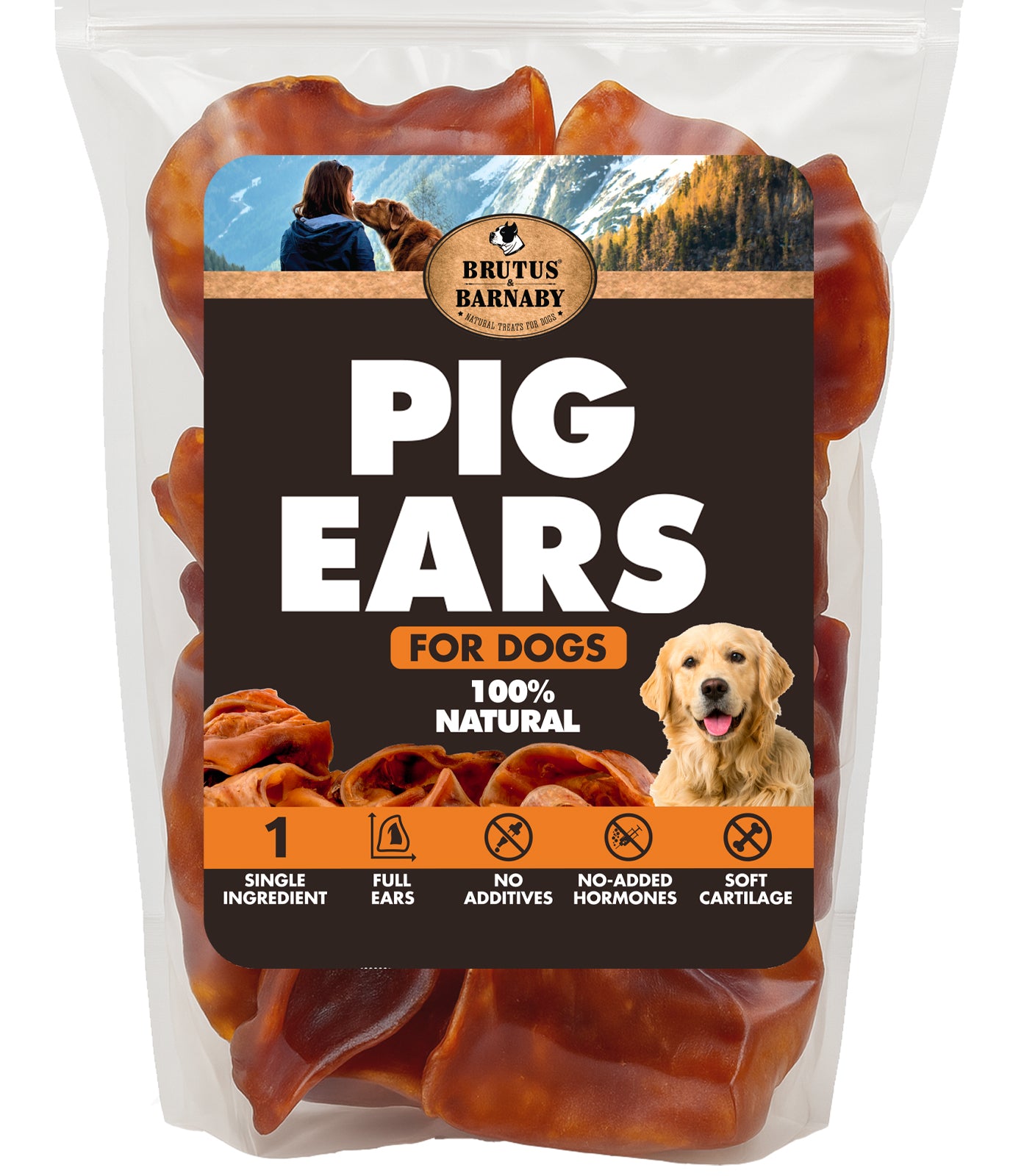
Pig Ears for Dogs
A whole pig-ear format for dogs that enjoy a chewy-crunchy natural chew and can work through it safely under supervision.
When a Pig Ear Is Not Long-Lasting Enough
Pig ears do not need to be the longest-lasting chew in your dog's rotation. If your main goal is keeping a strong chewer occupied for longer, a denser chew may be a better fit.
Remember: these are relative categories, not guaranteed chew times. The same product can last very different lengths of time for two dogs.
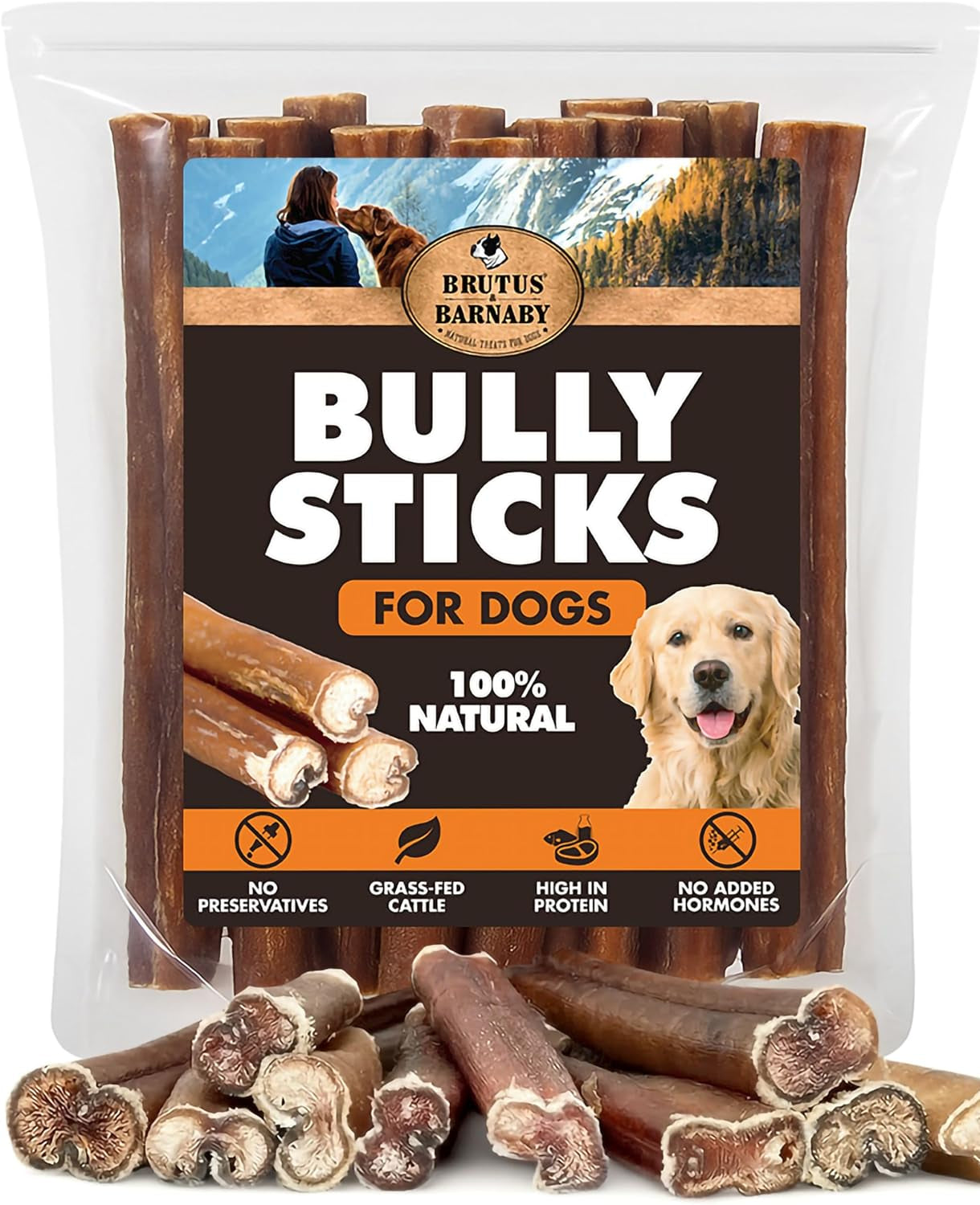
Bully Sticks for Dogs
A denser beef chew to consider when a strong dog enjoys pig ears but finishes them too quickly for the chewing session you want.
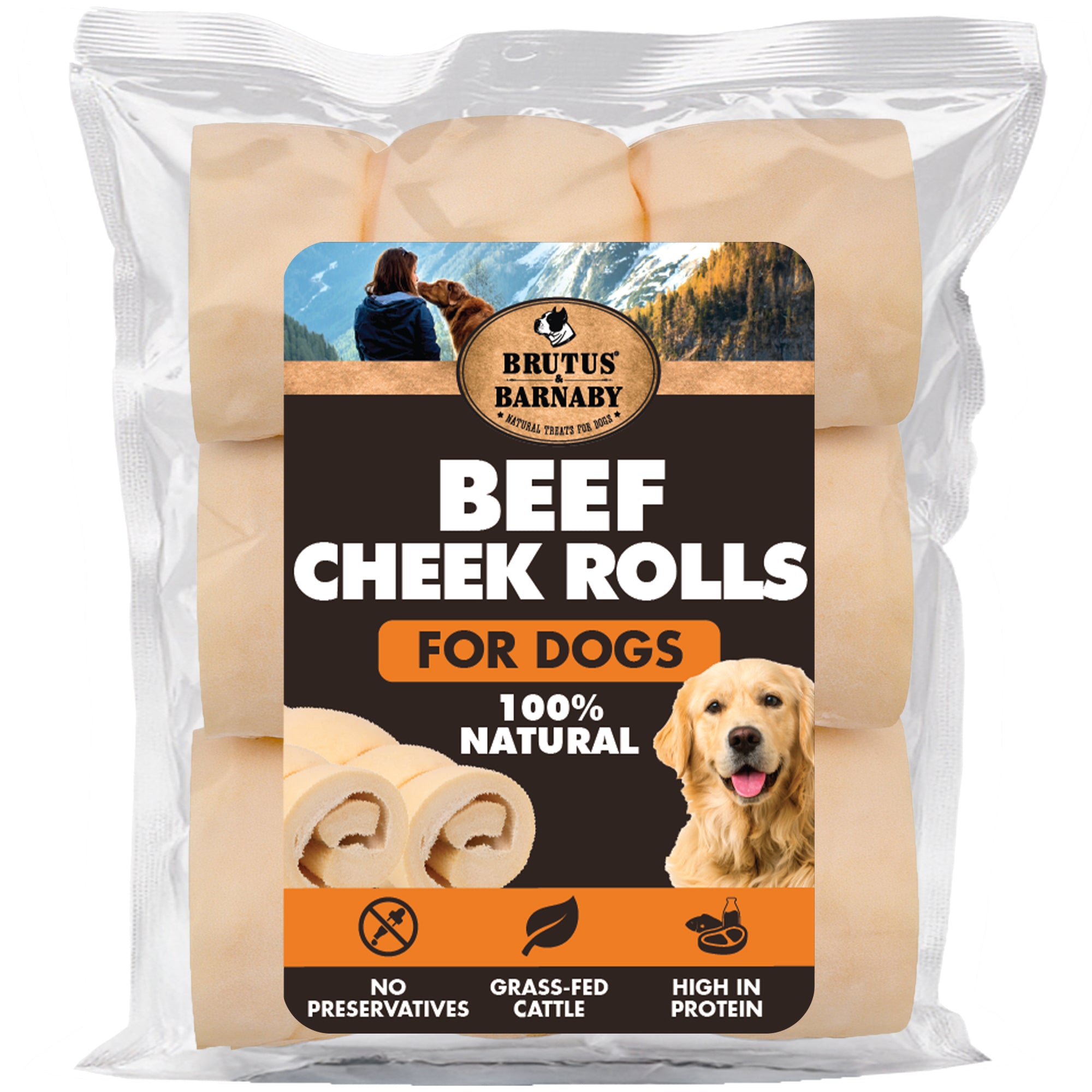
Beef Cheek Rolls for Dogs
A dense rolled beef-cheek chew to consider for dogs that need more resistance and routinely finish ear-style chews quickly.
Pig Ears Are Rich Treats—Even for Very Active Dogs
Chewing strength does not determine calorie needs. A powerful chewer may be able to finish an entire pig ear quickly, but that does not mean the whole ear automatically fits the dog's daily treat allowance.
Whole Brutus & Barnaby Pig Ears: 133.2 kcal per ounce
The current product page lists 23.6% crude fat and approximately 133.2 calories per ounce. Because natural ears vary in weight, the calorie total of one individual ear can also vary.
General veterinary nutrition guidance recommends that treats and other extras stay within roughly 10% of a dog's daily calorie intake so they do not displace too much of the complete and balanced diet.
Ask your veterinarian first if your dog has pancreatitis, requires a fat-restricted diet, is being treated for obesity, has recurring digestive symptoms, or has another medical condition affected by dietary fat or calories.
Food-Safety Rules for Pig Ear Chews
Animal-based pet treats can potentially carry harmful bacteria, so good handling habits matter even when a product looks and smells normal.
Wash your hands
Wash thoroughly with soap and water after handling animal-based chews or touching surfaces contaminated with saliva.
Clean contacted surfaces
Clean bowls, washable mats, floors, or other surfaces where the chew and the dog's saliva have been in contact.
Follow the package
Keep treats stored according to current package instructions and away from areas where young children can access them.
When Pig Ears May Not Be the Right Choice
A supervised pig ear may be reasonable when
Ask your veterinarian before feeding when
When to Stop Chewing and Contact a Veterinarian
Contact your veterinarian promptly
Seek emergency veterinary care
Learn More About Pig Ears and Long-Lasting Chews
Compare chew duration, calories, safety considerations, and alternative formats before building your dog's chew rotation.
Helpful External Resources
Use these resources for additional guidance on edible chews, food safety, treat calories, and dental warning signs.
American Kennel Club — Choosing Edible Dog Chews Guidance on edible chew sizing, swallowing hazards, texture, and choosing chews for individual dogs. FDA — Think Food Safety and Be Salmonella Safe Food-safety information covering Salmonella risks associated with pet food and animal-based treats, including pig ears. VCA Animal Hospitals — The 10% Treat-Calorie Guideline Why treats and extras should remain a limited portion of a pet's overall calorie intake. AVMA — Pet Dental Care Signs of dental problems and information on professional and at-home oral care.Pig Ears for Heavy Chewers: Common Questions
Are pig ears good for aggressive or heavy chewers?
They can be suitable for some strong chewers, but pig ears may not last as long as denser options such as bully sticks or beef cheek rolls. Supervise closely and judge suitability by how your dog actually chews rather than strength alone.
How long should a pig ear last a heavy chewer?
There is no standard chew time. Natural ear thickness and the dog's jaw strength, chewing technique, and tendency to gulp all affect duration. Heavy chewers may consume an ear much faster than light or moderate chewers.
Are whole pig ears better than halves for heavy chewers?
A whole ear generally provides more material and may be more practical for a larger or stronger dog, while halves are intended for smaller portions and shorter sessions. The safest format is the one your individual dog can hold and chew without attempting to swallow large pieces.
Can a heavy chewer swallow a pig ear whole?
A determined dog may attempt to swallow an ear or a large remaining section. Choose a manageable size, supervise continuously, and remove the chew once the remaining portion becomes small enough for your dog to gulp.
Are pig ears high in fat?
Brutus & Barnaby's current whole Pig Ears page lists 23.6% crude fat and approximately 133.2 calories per ounce. Dogs with pancreatitis, fat restrictions, recurring digestive problems, or weight-management needs should have their treat plan discussed with a veterinarian.
Can dogs have pig ears every day?
Daily use will not suit every dog because pig ears contribute meaningful fat and calories. Consider the ear's portion size together with every other treat and keep extras within your dog's overall calorie plan.
What lasts longer than pig ears for heavy chewers?
Bully sticks and beef cheek rolls generally provide a denser, longer-lasting chewing experience than pig ears. Actual duration still varies by dog, and every edible chew requires appropriate sizing and supervision.
Do pig ears replace brushing for dental care?
No. Chewing may provide mechanical action against the tooth surface, but pig ears should not replace regular tooth brushing, veterinary dental examinations, or professional treatment when dental disease is present.
Pig Ears Can Work for Heavy Chewers—But They Are Not the Longest-Lasting Option
Pig ears can be a satisfying supervised chew for strong dogs that work through them deliberately. The best size is one your dog can hold and chew without gulping, and the final portion should be removed when it becomes too small to manage safely. If your heavy chewer consistently finishes pig ears too quickly, keep them as an occasional reward and consider denser options such as bully sticks or beef cheek rolls when longer chew time is the priority.
Find the Right Chew for Your Dog's Style
Compare current ingredients, sizes, feeding directions, nutrition information, and chew formats before choosing the best fit for your dog.
Educational disclaimer: This article provides general educational information and is not veterinary, dental, nutritional, diagnostic, or emergency advice. Chew suitability depends on your dog's age, size, oral health, chewing behavior, medical history, regular diet, calorie needs, allergies, digestive tolerance, and current medications. Always supervise chewing, provide fresh water, remove pieces that become small enough to swallow, follow the current product instructions, and consult your veterinarian before changing the routine of a dog with ongoing digestive symptoms, dental disease, swallowing problems, a prescribed diet, pancreatitis, or another health condition. Product ingredients, analysis, sizes, packaging, availability, and page information may change, so review the current product page and package before feeding.