



Can Collagen Sticks Cause Diarrhea? Causes & Prevention
Learn why a dog may develop loose stool after a collagen chew, what to do next, and how to make future chew sessions easier to evaluate and manage.
Can collagen sticks cause diarrhea? They can contribute to diarrhea in some dogs, even when the chew contains only one ingredient. The most common practical explanations are eating a large amount, introducing an unfamiliar chew too quickly, or an individual reaction to beef. However, timing alone does not prove that the collagen stick caused the problem. Parasites, infections, medications, stress, other foods, and swallowed objects can produce similar symptoms.
One soft stool in a dog who remains active, comfortable, and interested in water is different from repeated watery diarrhea accompanied by vomiting or lethargy. The first step is to remove the chew, watch the whole dog rather than only the stool, and contact a veterinarian when symptoms are persistent, severe, or accompanied by warning signs.
Why Can Collagen Sticks Cause Diarrhea?
Diarrhea occurs when material moves through the gastrointestinal tract too quickly for normal water absorption. A new edible chew may be the trigger, but it may also be only one part of the dog’s recent diet. Consider everything eaten during the previous day or two, including meals, table scraps, training rewards, supplements, scavenged food, and other chews.
Too much was consumed
A collagen stick is an edible treat, not simply a toy. A dog that rapidly softens and consumes a substantial portion receives more extra food than a dog that only gnaws the surface. Excess treats can cause stomach upset, including diarrhea or vomiting.
The introduction was too fast
Some dogs react to sudden dietary changes. Giving a full chew during the first trial makes it difficult to identify a comfortable amount and may be too much for a dog that has never eaten this chew type.
Beef does not suit the dog
Collagen sticks made from cattle are still beef-derived treats. A dog with a diagnosed beef allergy, suspected food reaction, or veterinary elimination diet should not receive one unless the veterinarian managing the diet approves it.
A piece was swallowed
A swallowed section may cause more than diarrhea. Choking or gastrointestinal obstruction is possible when a dog gulps pieces that are too large. Repeated vomiting, abdominal pain, appetite loss, lethargy, or known ingestion of a large piece requires prompt veterinary guidance.
The chew was poorly stored
Do not offer a chew from damaged packaging or one that has become wet, moldy, unusually discolored, or noticeably different in odor. Follow the package storage directions and contact the manufacturer if a product appears abnormal.
The timing was coincidental
Infections, parasites, toxins, medication changes, pancreatic disease, intestinal disease, stress, and scavenged food can all cause diarrhea. A veterinarian may need to rule out these possibilities when symptoms persist or recur.
Important distinction: “Digestible” does not mean “guaranteed to agree with every dog.” A chew may be designed to break down during digestion while still causing stomach upset in a dog that eats too much or does not tolerate its protein source.
Was the Collagen Stick Really the Cause?
A close timeline makes the chew worth considering, but it does not provide a diagnosis. Look for a repeatable pattern and avoid deliberately testing the chew again while your dog is unwell.
| Possible explanation | Helpful clues | Appropriate next step |
|---|---|---|
| Large edible portion | The dog consumed much more than during previous chew sessions or finished the stick unusually quickly. | Stop the chew and review the consumed amount, total treats, and daily calories with your veterinarian. |
| New-food response | This was the first collagen chew or several new treats were introduced together. | Return to the established feeding routine and ask the veterinarian how to handle any future introduction. |
| Possible beef reaction | Digestive or skin signs have appeared after other beef foods, or a food trial is underway. | Avoid beef treats and speak with the veterinarian rather than attempting another exposure. |
| Swallowed fragment | A section is missing, or the dog gulped the final piece and now has vomiting, pain, appetite loss, or lethargy. | Contact a veterinarian promptly; do not wait for the fragment to pass without professional advice. |
| Unrelated illness | Diarrhea continues after the chew is removed, affects another pet, or occurs with significant systemic signs. | Arrange a veterinary assessment so other gastrointestinal causes can be investigated. |
What to Do If Your Dog Has Diarrhea After a Collagen Stick
- Remove the collagen stick. Do not give another piece to “confirm” the cause. Keep the package and note the product name, lot information, and amount your dog may have consumed.
- Provide fresh water. Diarrhea causes fluid loss. Do not force water, but keep it readily available and contact a veterinarian if your dog refuses water, cannot keep water down, or appears dehydrated.
- Record what happened. Note when the chew was given, session length, estimated amount eaten, stool frequency, vomiting, appetite, activity, medications, and everything else eaten in the previous 48 hours.
- Call before using home remedies. Human anti-diarrheal medicines, supplements, fasting, and homemade diets are not appropriate for every dog. Puppies, small dogs, seniors, and dogs with medical conditions need especially individualized advice.
- Monitor the whole dog. Energy, comfort, appetite, drinking, urination, vomiting, and abdominal appearance can be more important than a single stool.
- Do not reintroduce the chew until your dog is fully well. If diarrhea was repeated, severe, or has happened with beef before, ask your veterinarian whether another collagen trial is appropriate at all.
Do not replace regular meals with chews. The World Small Animal Veterinary Association recommends keeping all treats—including edible chews—below 10% of a dog’s daily calorie intake. Your veterinarian can calculate a more suitable allowance for your individual dog.
How to Help Prevent Digestive Upset
Start when digestion is stable
Do not introduce a collagen stick while your dog already has loose stool, vomiting, appetite changes, or a recent food transition. Starting from a stable routine makes it easier to recognize a genuine reaction.
Keep the first session brief
The amount swallowed matters more than the number of minutes alone. During an initial trial, stay close, observe how quickly the chew softens, and remove it through a calm trade before a large quantity is consumed. Never chase the dog or pull forcefully on a guarded chew.
Introduce only one new item
Avoid giving a new collagen stick on the same day as multiple new treats, table foods, supplements, or a different diet. If stool changes, too many simultaneous changes make the trigger nearly impossible to identify.
Match the chew to the dog
Choose a chew that cannot fit completely inside the mouth. Length alone is not enough; diameter, jaw size, chewing strength, and gulping behavior also matter. Remove the final portion once it becomes small enough to swallow.
Count the edible portion
Chews contribute calories even when they are used mainly for enrichment. The current Brutus & Barnaby product page lists its Beef Collagen Sticks at 3,900 kcal/kg, or 110.6 kcal per ounce. Because individual sticks can vary in weight, use the actual amount consumed—not simply “one stick”—when discussing calories with your veterinarian.
Use active supervision
Supervision means remaining close enough to see whether your dog is gnawing, breaking off chunks, or trying to gulp the chew. Take it away if the dog coughs, gags, repeatedly repositions it for swallowing, or removes large pieces.
Store chews correctly
Reseal the package, keep it dry, and follow the current label directions. Discard chews that become contaminated, develop mold, or change unexpectedly in appearance or odor.
Collagen Stick Safety: When to Stop and Call the Vet
Stop giving the chew whenever diarrhea, vomiting, gagging, abnormal swallowing, mouth pain, or large broken pieces appear. Seek veterinary advice promptly if you notice any of the following:
- Repeated or very watery diarrhea
- Blood or black, tarry stool
- Repeated vomiting or dry-heaving
- Marked lethargy or weakness
- Abdominal pain, swelling, or bloating
- Refusal to eat or drink
- Possible dehydration or collapse
- A swallowed large section
Cornell University advises seeking veterinary care when diarrhea is accompanied by vomiting, lethargy, refusal to eat, black stool, or when it does not resolve within roughly two days. Contact a veterinarian sooner for puppies, senior dogs, very small dogs, pregnant dogs, or dogs with chronic illness.
Veterinary guidance is also appropriate before offering collagen sticks to a dog with a diagnosed beef allergy, prescription or elimination diet, chronic digestive symptoms, previous gastrointestinal obstruction, pancreatitis risk, swallowing disorder, pica, or significant dental disease.
A chew that is too small can become a choking or obstruction hazard. A firm chew may also be unsuitable for dogs with fractured, loose, painful, or heavily worn teeth. Chewing is not a replacement for veterinary dental care or toothbrushing.
Brutus & Barnaby Beef Collagen Sticks
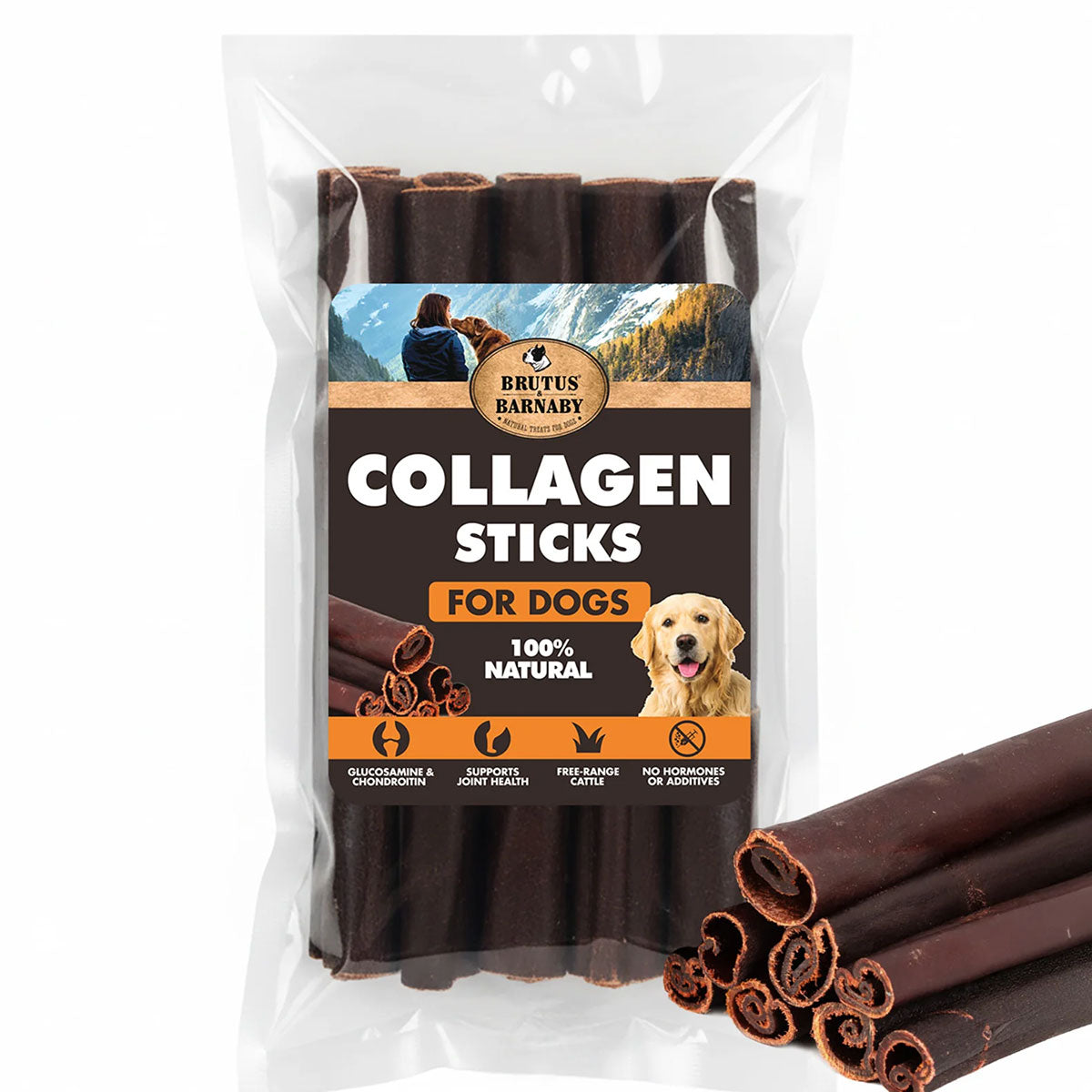
Beef Collagen Sticks for Dogs
The current Brutus & Barnaby listing describes these as rawhide-free, single-ingredient chews made with 100% all-natural beef collagen from grass-fed, free-range cattle.
- Currently offered in 5-, 10-, and 25-pack options
- Crude protein: 82.2%
- Crude fat: 2.4%
- Crude fiber: 1.5%
- Moisture: 15.6%
- Listed calorie content: 110.6 kcal per ounce
Offer only as a supervised treat and introduce gradually. These chews are not appropriate for every dog, including dogs that react to beef or are following a veterinary diet that excludes unapproved treats.
View Beef Collagen SticksProduct information notice: Ingredients, pack options, guaranteed analysis, calorie information, packaging, availability, and feeding directions can change. Check the current product page and package before feeding.
Related Brutus & Barnaby Guides
Trusted Reading
- Cornell University College of Veterinary Medicine: Diarrhea
- VCA Animal Hospitals: Gastroenteritis in Dogs
- WSAVA: Feeding Treats to Your Dog
- Merck Veterinary Manual: Disorders of the Stomach and Intestines in Dogs
Frequently Asked Questions
Can one collagen stick give a dog diarrhea?
Yes. One stick may be enough to cause digestive upset if the chew is unfamiliar, the dog consumes a substantial portion, or beef does not agree with that dog. The stick may also be unrelated, so consider other recent foods and symptoms.
How long should diarrhea last after a new dog chew?
There is no guaranteed duration because the cause and severity differ. Contact your veterinarian if diarrhea is repeated, worsening, accompanied by other symptoms, or does not resolve within about two days. Puppies, seniors, small dogs, and medically vulnerable dogs may need attention sooner.
Are collagen sticks easy for dogs to digest?
Collagen sticks are sold as edible, digestible chews, but individual tolerance varies. “Digestible” does not guarantee that every dog can consume any quantity without loose stool, vomiting, or other digestive problems.
Can a dog with a beef allergy have collagen sticks?
Beef collagen is still derived from cattle. Do not give it to a dog with a diagnosed beef allergy or a veterinary food trial unless the veterinarian overseeing the dog specifically approves it.
Should I give another collagen stick after the diarrhea stops?
Do not immediately repeat the chew. Wait until your dog is completely well and ask your veterinarian whether reintroduction is appropriate, particularly if diarrhea was severe, recurrent, or associated with other beef products.
Can swallowing a collagen stick chunk cause diarrhea?
A swallowed piece may cause digestive signs, but the greater concerns are choking and gastrointestinal obstruction. Contact a veterinarian promptly if a large piece was swallowed or your dog develops vomiting, pain, bloating, lethargy, or appetite loss.
Can puppies have collagen sticks?
Some puppies may be able to try an appropriately sized collagen chew under close supervision, but age is not the only consideration. Tooth development, body size, gulping behavior, digestion, and veterinary health guidance all matter. Do not introduce one while a puppy has diarrhea or vomiting.
How often can dogs have collagen sticks?
There is no safe universal frequency. It depends on the dog’s size, calorie needs, consumed portion, health, chewing style, and tolerance. All treats and edible chews should remain below 10% of daily calories unless the dog’s veterinary team recommends a different plan.
Final Takeaway
Collagen sticks can cause diarrhea when a dog eats too much, tries an unfamiliar chew too quickly, reacts to beef, or swallows sections. However, diarrhea after a chew is not proof that the chew was the only cause. Remove it, monitor your dog closely, provide fresh water, and involve a veterinarian when symptoms persist, recur, or appear with vomiting, blood, pain, lethargy, dehydration, or suspected obstruction.
Build a More Thoughtful Chew Routine
Explore the current product details, choose an appropriate size, introduce the chew gradually, and supervise every session.
Shop Collagen Chews