



Best Chews for Puppies by Age: From 8 Weeks to 12 Months
A practical age-by-age guide to matching chew texture, size, and supervision to your puppy's changing teeth and chewing skills.
The best chew for an 8-week-old puppy is rarely the best chew for the same dog at 10 months. Teeth erupt, baby teeth fall out, jaw strength changes, and chewing habits become easier to judge.
The best chews for puppies by age begin with soft, flexible puppy teething toys at 8–12 weeks, remain gentle during active teething around 3–6 months, and may expand to carefully sized edible chews after adult teeth are present and a puppy shows calm chewing behavior. Age alone never makes a chew appropriate. Size, hardness, health, diet, and swallowing habits matter too.
Age Is a Starting Point, Not a Permission Slip
Puppy development does not follow one exact calendar. Breed, mouth size, retained baby teeth, dental pain, medical history, and chewing style can move the appropriate choice forward or backward.
According to the Merck Veterinary Manual's dental-development overview, permanent teeth usually begin appearing at about 4–5 months, and most dogs have all permanent teeth by approximately 7 months. That timeline explains why a very young puppy and an older adolescent should not automatically receive the same chew.
Protect the developing mouth
Favor flexible, puppy-sized toys that give under pressure and cannot fit entirely inside the mouth.
Expect tenderness and loose teeth
Keep textures gentle while baby teeth fall out and permanent teeth emerge.
Judge technique, not just strength
An older puppy may still gulp, bite off chunks, or choose a chew that is too small.
Best Chews for Puppies by Age
Use these ranges as conservative screening points. The “best default” is the type to discuss with your veterinarian and compare with the manufacturer's current instructions—not a universal feeding schedule.
8 Weeks to 4 Months: Keep Chewing Soft and Simple
At this stage, chewing is exploration. A puppy may not yet understand how to hold an item, gnaw gradually, or release it when asked. Start with a flexible puppy toy that is larger than the mouth and has no loose parts. A food-stuffable rubber toy can use part of the puppy's measured meal instead of adding a new rich treat.
The VCA puppy teething guide recommends avoiding extremely hard items such as bones, antlers, and hard nylon. It suggests options with some bend or that can be indented with a fingernail. Check the toy before and after every use and discard it if pieces loosen.
For an 8-week-old puppy: an edible long-lasting chew should not be the automatic first choice. Ask your veterinarian about the puppy's teeth, diet, vaccine-stage routine, swallowing behavior, and suitable teething products.
4 to 6 Months: Protect a Mouth in Transition
This is often the messiest part of teething. You may find tiny teeth, notice extra chewing, or see mild gum sensitivity. Do not use the stronger urge to chew as a reason to choose a harder object. Hardness raises the risk of tooth damage, while loose pieces create swallowing concerns.
Continue with flexible toys and rotate textures that meet the fingernail-or-bend check. If your veterinarian approves an edible option, make the first exposure small and closely observed. Stop at the first sign of painful chewing, tooth damage, repeated gagging, vomiting, diarrhea, or attempts to swallow pieces.
6 to 12 Months: Expand Choices Only When the Puppy Is Ready
By roughly 7 months, most dogs have their permanent teeth, but a calendar date does not confirm a healthy mouth or controlled technique. Before trying an edible chew, look for calm end-to-end gnawing, willingness to trade, and no history of gulping or breaking off large chunks.
An older puppy who passes those checks may be ready for a lighter gullet strip, a thin bully stick, or—later and with veterinary approval—a denser collagen stick. The correct option must still be too large to swallow whole, appropriate for the puppy's jaw, and removed before the remainder becomes small, slippery, torn, or easy to gulp.
Pause and observe before buying
Choose a gentler activity
Three Edible Chews to Consider for a Ready Older Puppy
These are not recommendations for every age band. They are product options to evaluate only after your puppy is ready for edible chews and your veterinarian has no dental, dietary, or medical concerns.

Beef Gullet Flat Strips
The current page lists six-inch strips made from 100% grass-fed beef esophagus. Consider the lighter, easy-to-chew format only when an edible chew is appropriate for your puppy.

6-Inch Skinny Bully Sticks
A thinner bully-stick format currently described for puppies, small dogs, seniors, and sensitive jaws. It is still an edible beef chew that requires correct sizing, short first sessions, and removal of small ends.
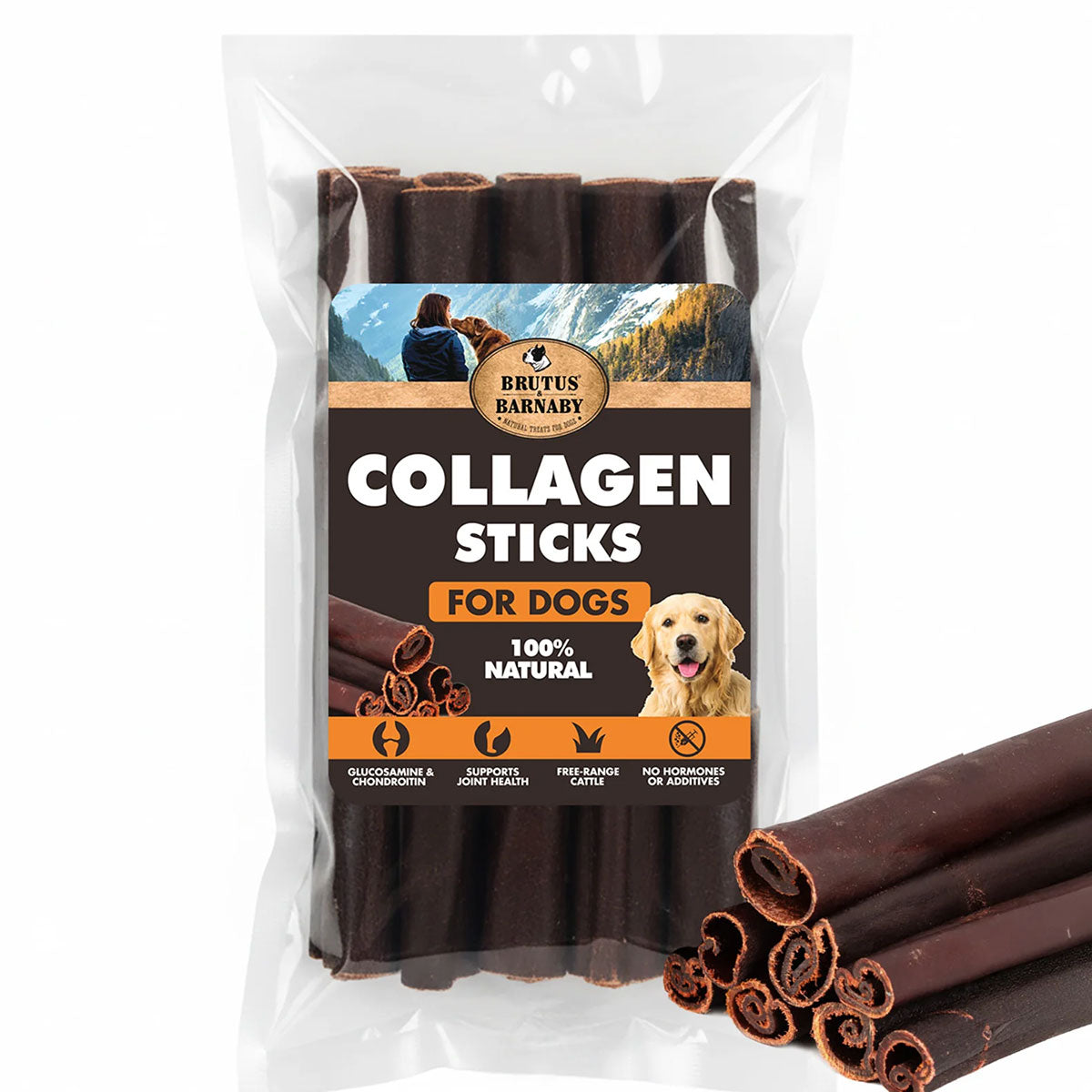
Beef Collagen Sticks
A six-inch rolled chew made from 100% beef collagen. Consider it only for an older puppy with a healthy adult mouth, veterinary approval, and calm chewing behavior.
How to Size and Supervise Any Puppy Chew
Supervision means watching closely enough to intervene immediately—not checking from another room. Use this routine every time, even if the puppy has handled the same product before.
Keep Edible Chews Inside a Growing Puppy's Diet
Edible chews are food. Count the amount consumed alongside training treats, table food, dental products, and food used in enrichment toys. The WSAVA guide to feeding treats recommends that treats make up no more than 10% of a dog's daily calories. A growing puppy still needs most nutrition from a complete and balanced puppy diet.
Because calorie needs and growth rates vary, ask your veterinarian how much room your puppy's plan leaves for edible chews. Introduce one new product at a time, start with limited consumption, provide fresh water, and stop if digestion changes.
When to Call a Veterinarian
Seek emergency care now
Go to an emergency veterinary clinic for difficulty breathing, collapse, pale or blue gums, obvious choking, severe distress, or repeated unproductive retching. Do not blindly reach into the mouth or induce vomiting unless a veterinary professional instructs you.
Contact a veterinarian promptly after a suspected swallowed chunk, or for repeated vomiting, abdominal pain or swelling, loss of appetite, lethargy, trouble swallowing, excessive drooling, persistent diarrhea, mouth bleeding, or a broken tooth. VCA's foreign-body guidance explains why obstruction can become life-threatening and why timing matters.
Brutus & Barnaby Puppy Guides
Veterinary Reading
Puppy Chews by Age: Common Questions
What can an 8-week-old puppy chew?
Start with a flexible puppy teething toy that is too large to swallow and has no loose parts. A food-stuffable rubber toy using part of the puppy's normal meal may also work. Ask your veterinarian before offering edible long-lasting chews.
When can puppies start edible chews?
There is no universal starting age. Readiness depends on dental stage, mouth health, chew size, digestion, and whether the puppy gnaws calmly instead of gulping. Very young and actively teething puppies usually need gentler choices.
Are bully sticks suitable for puppies?
Some older, chew-ready puppies may use a properly sized bully stick during a closely supervised session. A bully stick is not an automatic fit for an 8-week-old or actively teething puppy. Remove small ends and stop if the puppy chunks or gulps.
Can a teething puppy have a collagen stick?
A collagen stick is a dense chew, so it is not a cautious default during active tooth loss. Consider it only after the adult mouth is healthy, the puppy demonstrates controlled chewing, the size is appropriate, and your veterinarian agrees.
How hard is too hard for a puppy chew?
VCA advises choosing items with some bend or that can be indented with a fingernail and avoiding extremely hard choices such as bones, antlers, and hard nylon. Stop using anything that appears to cause pain or dental damage.
How long should a puppy chew?
There is no single safe duration. Keep the first session brief enough to observe technique and digestion, then end sooner for chunking, gulping, pain, loose pieces, or a swallow-sized remainder. Stay present for the whole session.
Do edible chews count as treats?
Yes. Count the amount eaten with every other treat and extra. WSAVA recommends keeping treats to no more than 10% of daily calories, while your veterinarian can help set an appropriate allowance for a growing puppy.
Move From Gentle Teething to Controlled Chewing
At 8 weeks, start with soft, flexible puppy toys. During active teething, protect tender and changing teeth. From roughly 6–12 months, expand to edible chews only when the adult mouth is healthy and the puppy demonstrates calm, manageable chewing.
Baby teeth, active teething, and adult teeth need different levels of caution.
Choose an item that cannot fit fully inside the puppy's mouth.
Remove damaged, loose, small, or slippery pieces before they become a problem.
Compare Texture Before Choosing
Review a lighter gullet strip, a thinner bully stick, and a denser collagen stick—then choose only the format that fits your older puppy's teeth, size, diet, and chewing behavior.
Disclaimer: This article provides general educational information and does not replace veterinary or nutritional advice. Every puppy is different. Chew suitability depends on age, dental development, mouth size, diet, health, allergies, ingredient tolerance, and chewing behavior. Ask your veterinarian before introducing an edible chew, especially if your puppy has dental concerns, digestive symptoms, dietary restrictions, a previous obstruction, or another medical condition. Introduce new products gradually, use manageable portions, provide fresh water, supervise continuously, and remove small or damaged pieces. Product details and availability may change, so review the current product page and packaging before feeding.