



How to Give Chews Safely in a Multi-Dog Home
Chew time should help each dog settle—not create a race, a theft attempt, or a confrontation. A simple separation-and-cleanup routine can make high-value chews calmer and easier to manage.
Two dogs can share a home beautifully and still need complete privacy around edible chews. Friendship does not remove differences in chewing speed, food motivation, body language, or tolerance for another dog approaching a valuable item.
The safest default is one dog, one chew, and one physically protected area.
Place each dog behind a closed door, secure gate, exercise pen, or in a positively conditioned crate before handing out chews. Give the chews at roughly the same time, actively supervise each dog, keep the faster dog separated after finishing, collect every leftover and small piece, and only then reunite the dogs. Do not rely on verbal warnings, equal-looking chews, or the hope that friendly dogs will “work it out.”
Why Chew Time Changes When More Than One Dog Is Present
An edible chew is different from an ordinary toy. It has scent, flavor, calories, and a limited lifespan. That can make it unusually valuable, even to dogs that normally share beds, water bowls, and play space without a problem.
Chews Are High-Value Resources
A dog may carry, hover over, block access to, or guard a chew because losing it matters. Guarding can be directed toward another dog, a cat, a child, or an adult.
Dogs Finish at Different Speeds
One dog may chew slowly while another breaks down a similar chew quickly. The first dog to finish may begin watching, pacing near, or approaching the dog that still has something left.
Competition Can Increase Gulping
A dog that usually chews carefully may rush, tear off larger pieces, or swallow the end sooner when another dog is visible or able to approach.
What Does Safe—or Unsafe—Chew Time Look Like?
Use behavior, not assumptions, to decide how much management is needed. Mild tension can escalate quickly when a dog is holding something edible.
| What You See | What It May Mean | Best Next Step |
|---|---|---|
| Each dog settles and chews in a separate protected area | The setup is reducing competition | Keep using the same routine; do not remove barriers early |
| One dog finishes and stares through the gate | Interest may be shifting to the other dog’s chew | Block the view, move the finished dog farther away, and keep them separated |
| A dog speeds up when the other dog moves | Social pressure may be increasing gulping | Add distance or a solid visual barrier and shorten the session |
| Freezing, hard staring, hovering, lip lifting, growling, or snapping | Possible resource guarding or rising conflict | Do not approach or punish; end access through safe management and seek qualified help |
| One dog steals abandoned chews or hidden leftovers | Cleanup and release order are not controlled | Collect every chew before barriers open and check beds, crates, and furniture |
| A dog bites off large pieces or tries to swallow the last portion | The chew may not fit that dog’s chewing style or current size | Trade before the piece becomes swallow-sized and reassess the chew format |
Set Up Multi-Dog Chew Time Step by Step
Choose the chewing zones before the chews appear
Use separate rooms, closed crates, secure exercise pens, or sturdy gates. For dogs that become tense when they can see each other, use a solid door or cover the visual line instead of relying on distance alone.
Match each chew to the individual dog
Do not automatically give both dogs the same size. Consider each dog’s mouth, body size, dental comfort, chewing pressure, speed, digestive history, allergies, diet, and tendency to gulp. Natural chews also vary from piece to piece.
Remove children, cats, and unnecessary traffic
Young children should never manage chew time, take a chew away, reach into a crate, or walk between dogs with high-value items. Cats and other pets should also be kept out of each dog’s chewing zone.
Secure the barriers, then distribute the chews
Give each dog a chew only after every barrier is closed. Handing one dog a chew while the other is loose can create immediate chasing, crowding, or theft.
Actively supervise every dog
Stay close enough to notice broken pieces, gulping, coughing, gagging, guarding, or a barrier problem. “Separated” does not mean “unattended.” Edible chews should not be used as an unsupervised crate activity.
End the session separately and clean up completely
Keep the faster dog contained. Trade away any remaining chew when needed, remove small or softened ends, inspect the floor and bedding, store reusable portions securely, and only open the barriers when no edible items remain.
Do This
- Use a physical barrier for every dog
- Give each dog an appropriate chew
- Watch both chewing speed and body language
- Keep the first dog finished securely separated
- Pick up all leftovers before reunion
- Practice trade-up skills outside real chew sessions
Avoid This
- Scattering chews into a shared room
- Assuming identical chews remove competition
- Letting one dog “check” the other dog’s area
- Chasing, cornering, or grabbing a guarded chew
- Punishing growling or warning signals
- Opening gates while a chew or crumb remains
Should Every Dog Get the Same Chew?
Fair does not have to mean identical. In many homes, giving every dog the exact same product creates a new problem because the chews do not last equally for dogs with different mouths and chewing styles. The goal is an equally well-managed experience, not matching objects.
| Dog Profile | Chew Direction to Consider | Multi-Dog Safety Note |
|---|---|---|
| Steady, moderate chewer | A broad ear chew or an appropriately sized bully stick | Still separate; watch for soft edges and pieces that tear away |
| Fast finisher | A larger or denser format that cannot fit fully in the mouth | Keep this dog contained after finishing so the slower dog is not pressured |
| Strong, deliberate chewer | An appropriately sized bully stick or beef cheek roll | Inspect frequently for large pieces, cracking, or a swallow-sized end |
| Dog with dental, digestive, allergy, or medical concerns | A veterinarian-approved alternative or smaller non-chew reward | Do not copy the other dog’s treat plan; medical needs come first |
| Dog that guards, gulps, or has swallowed chews before | Chews may not be appropriate until a veterinarian or qualified behavior professional helps assess the risk | Management may mean choosing a different enrichment activity entirely |
Three Chews to Match to Different Dogs
These products can fit a structured, supervised rotation when the size and texture suit the individual dog. Product choice does not replace separation, supervision, or timely removal.
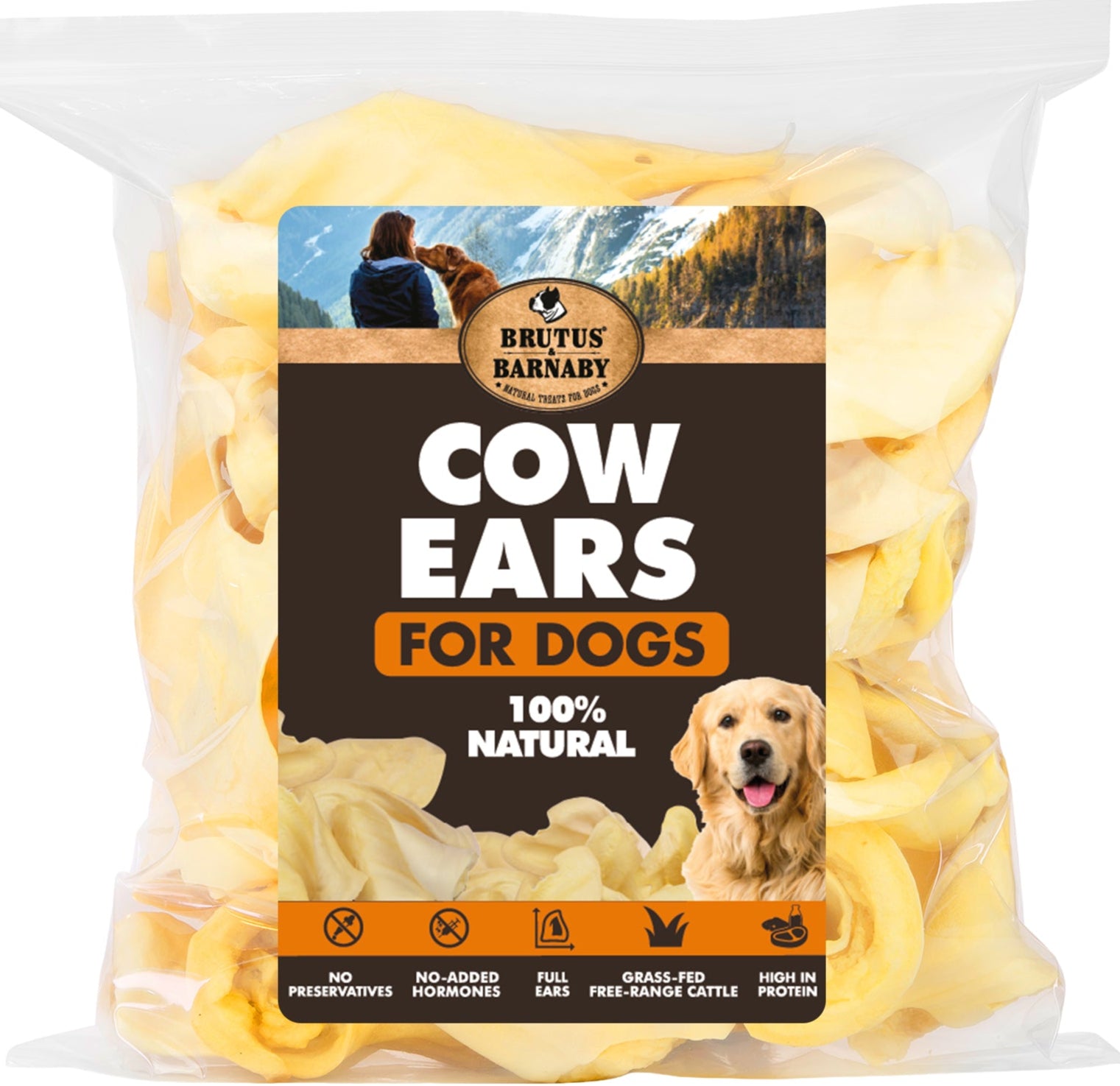
Natural Cow Ears
A single-ingredient ear chew for dogs that handle a broad, thinner chew calmly.
- 100% free-range cow ears
- 12, 30, or 100 large-ear options
- Rawhide-free and single ingredient
- Supervise and remove small fragments
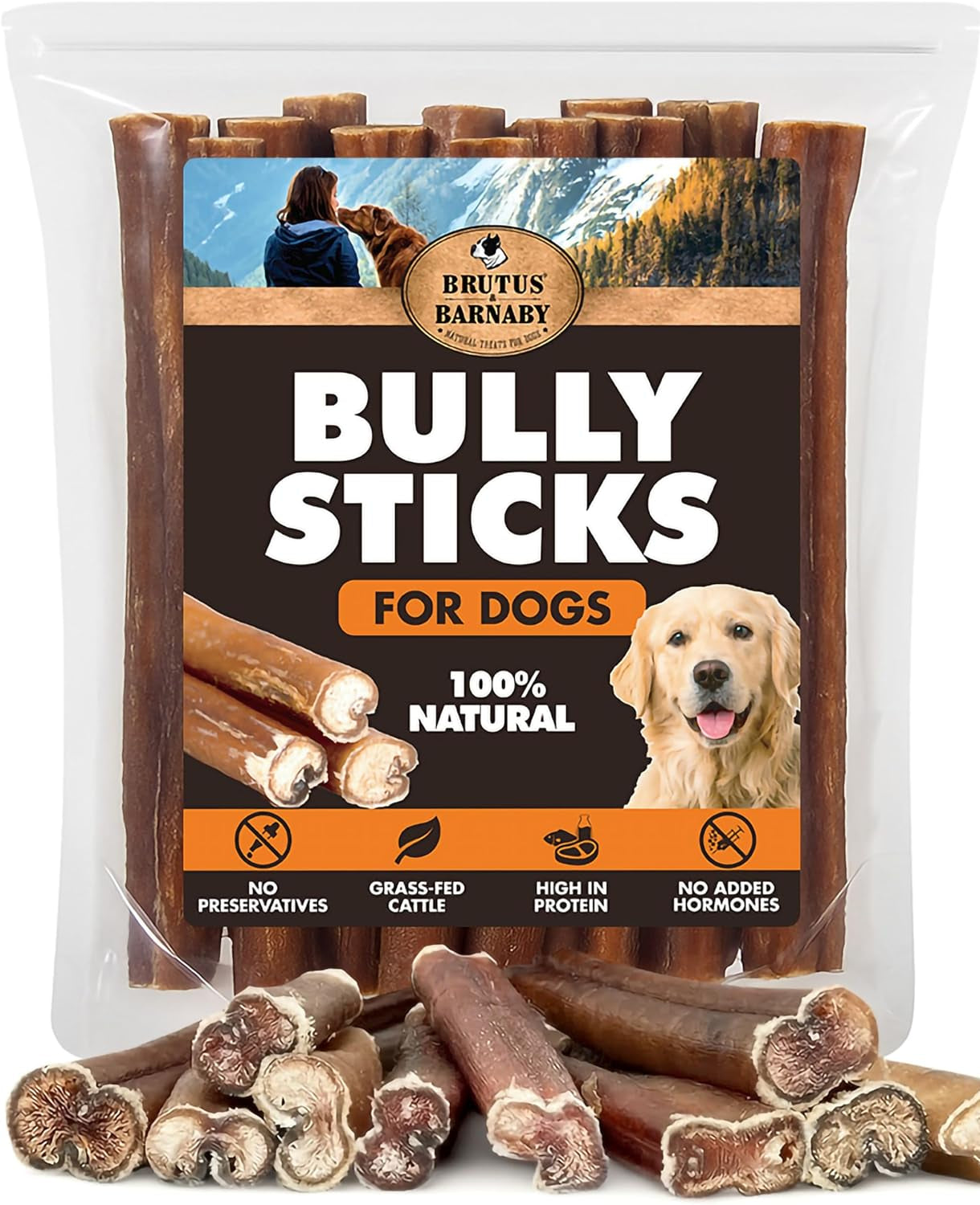
6-Inch Bully Sticks
A compact beef chew that can suit steady chewers when the six-inch format is large enough for the individual dog.
- 100% grass-fed beef
- 10, 12, 50, or 100-pack options
- Rawhide-free, single-ingredient chew
- Remove before the final piece can be swallowed

Original Beef Cheek Rolls
A single-ingredient beef cheek option intended for dogs that need a more substantial format and chew deliberately.
- 100% beef cheek
- 5–7 inch and 10–12 inch variants
- Available in 3, 5, and selected 10-pack options
- Best matched carefully to stronger chewers
What Should You Do When One Dog Finishes First?
The dog that finishes first should not be released to wander. Even a friendly approach can make the slower dog tense or prompt them to gulp the remaining piece.
Keep the finished dog behind the barrier
Do not reward finishing by opening the gate. The session is not over until every dog is done and every chew has been removed.
Reduce staring and pacing
If the finished dog fixates on the other chewing zone, create more distance or block the view. Avoid handing out repeated extra food simply to keep pace, because that can disrupt portion control.
End the slower dog’s session safely
When it is time to stop, use a practiced trade-up rather than reaching directly for the chew. If the dog has a bite history or shows intense guarding, do not attempt the trade without professional guidance.
Perform a full cleanup before reunion
Check crates, blankets, dog beds, corners, and the floor. A forgotten piece can restart conflict after everyone appears calm.
How to Stop One Dog From Stealing the Other Dog’s Chew
Prevent access instead of trying to referee in real time. Once one dog is loose and moving toward another dog’s chew, both dogs may become faster, stiffer, or harder to redirect.
Use Barriers That Cannot Be Bypassed
A loose baby gate may not be enough for a dog that jumps, pushes, or paws through it. Use the level of separation your dogs actually respect, not the minimum setup that looks convenient.
Control Leftovers and Hidden Pieces
Store unfinished chews out of reach and never let one dog discover a chew under another dog’s bedding. Hidden leftovers can become guarded resources hours later.
Use a Trade-Up—Not Chasing, Grabbing, or Punishment
A trade-up teaches a dog that moving away from an item can predict something worthwhile. Practice the skill separately with low-value objects before you need it around a real chew.
Start with an object the dog does not guard
Practice in a quiet room with one dog. Do not begin with the dog’s most valuable chew.
Offer or toss a higher-value reward away from the object
Give the dog space to leave the item voluntarily. Avoid leaning over, cornering, or putting a hand near the mouth.
Pick up the object only after the dog moves away
For safe practice objects, return the item sometimes so giving it up does not always mean permanent loss. Do not return a chew end that has become unsafe.
Stop if the dog stiffens, freezes, growls, snaps, or will not disengage
Those signals mean the exercise is too difficult or unsafe. Increase management and contact a qualified reward-based behavior professional.
Resource Guarding Warning Signs Between Dogs
Resource guarding is not limited to growling. Many dogs communicate discomfort earlier and more quietly. Treat those signals as useful information instead of waiting for a fight.
Early Tension Signals
- Eating faster when another dog moves
- Turning the body over the chew
- Carrying the chew away repeatedly
- Hard staring or tracking the other dog
- Closing the mouth and becoming still
- Blocking a doorway, crate, bed, or person
Higher-Risk Signals
- Growling, lip lifting, air snapping, or lunging
- Chasing another dog away from a resource
- Fighting over chews, crumbs, or empty packaging
- Biting a person who approaches or intervenes
- Frantic swallowing when another dog appears
- Guarding spreading to beds, bowls, toys, or people
Never punish a growl. A growl is a warning that the dog is uncomfortable. Punishment can increase fear, suppress warning signals, and make future interactions harder to predict. Use distance, barriers, and qualified reward-based support instead.
What About Children, Cats, and Visiting Dogs?
Children
Children should remain completely outside the chewing area. They should never deliver, retrieve, trade, or clean up a chew, even with a dog that has no known guarding history.
Cats and Other Pets
A cat walking past a crate or approaching a dropped piece can trigger guarding. Secure other pets in a separate area until cleanup is complete.
Visiting Dogs
Skip high-value edible chews during visits unless each dog can be fully separated and supervised. Dogs with little relationship history should not be tested around valuable food.
When Should You Stop Giving Chews and Get Help?
Management is often the right long-term choice, but some situations need individual veterinary or behavioral guidance before another chew session.
- A dog has bitten, punctured skin, or started a fight over food, chews, toys, spaces, or people
- Guarding is becoming more frequent, intense, or difficult to predict
- A dog swallows large pieces, repeatedly gulps chew ends, or has a history of obstruction
- A dog coughs, gags, vomits, seems painful, loses appetite, becomes lethargic, or has trouble passing stool after chewing
- A dog has dental disease, broken teeth, mouth pain, pancreatitis risk, allergies, digestive disease, pica, swallowing problems, or a restricted diet
- A puppy, senior, or medically vulnerable dog needs a chew plan tailored by a veterinarian
For serious guarding, aggression, fear, or panic, contact your veterinarian and a qualified reward-based trainer, certified behavior consultant, or board-certified veterinary behaviorist. If a dog cannot breathe, collapses, has blue or pale gums, or is in obvious distress, seek emergency veterinary care immediately.
Remember the Daily Treat Budget
Chews count as treats and should not replace a complete and balanced diet. A commonly used veterinary guideline is that about 90% of daily calories should come from complete and balanced food, with no more than about 10% coming from treats, chews, toppers, and other extras. The correct allowance may be lower for an individual dog, especially when weight, disease, medication, or a prescription diet is involved.
Related Brutus & Barnaby Guides
Behavior and Chew-Safety Resources
These external resources provide additional guidance on resource guarding, active chew supervision, reward-based training, and keeping treats within a balanced diet.
Multi-Dog Chew Safety FAQ
Can two dogs have chews in the same room?
Physical separation is the safer default. Some dogs appear relaxed until one finishes, moves closer, or finds a more valuable piece. Separate rooms, crates, pens, or secure gates reduce stealing and social pressure.
Should both dogs receive identical chews?
Not necessarily. Each dog needs a chew matched to their own size, chewing style, dental comfort, digestion, and diet. Equal management matters more than identical products.
What should I do when one dog finishes first?
Keep that dog behind the barrier until the other dog is finished and every chew, crumb, and leftover has been collected. Add distance or block the view if staring or pacing pressures the slower dog.
Is growling over a chew normal?
Growling is a warning signal that a dog is uncomfortable. Do not punish it or force an interaction. Increase separation and contact a qualified reward-based professional if guarding is repeated, intense, or directed toward people or other animals.
How do I take a chew away safely?
Use a previously practiced trade-up: offer a better reward away from the chew and pick up the chew only after the dog moves. Do not chase, corner, or reach into the dog’s mouth. Get professional help if there is a bite risk.
Can dogs chew in crates placed beside each other?
Only if both dogs remain genuinely relaxed and cannot reach each other. Some dogs become tense through crate bars, so use more distance, a visual cover, or separate rooms when needed. Continue active adult supervision.
What if my dog swallows a large chew piece?
Contact your veterinarian or an emergency veterinary clinic promptly for guidance, even if your dog initially appears normal. Seek urgent care for breathing difficulty, repeated gagging, vomiting, pain, lethargy, appetite loss, or trouble passing stool.
How often can dogs have edible chews?
There is no universal schedule. Frequency depends on each dog’s calorie needs, diet, size, health, digestion, and how much of the chew is consumed. Count chews within the individual dog’s daily treat allowance and ask your veterinarian when health or weight concerns are present.
Calm Multi-Dog Chew Time Is Built With Management
You do not need to prove that your dogs can share valuable chews. The safer goal is to give each dog enough privacy to chew at their own pace while you control sizing, supervision, finishing order, and cleanup.
Separate First
Set up one secure zone per dog before any chew is visible.
Supervise Each Dog
Watch chewing speed, body language, broken pieces, and barrier security.
Clean Up, Then Reunite
Remove every chew and crumb before any door, crate, pen, or gate opens.
Choose the Right Chew for Each Dog—Then Give Them Space to Enjoy It
Explore natural chews for different sizes and chewing styles, and keep every session separate, supervised, and matched to the individual dog.
Shop Natural Dog Chews