



How Long Should a Dog Chew a Pig Ear? Safe Session Guide
Use short introductions, active supervision, calorie-aware portions, and clear stop signs to build a pig-ear routine that fits your individual dog.
You hand your dog a pig ear, start watching the clock, and immediately wonder whether five minutes is enough—or whether your dog should be allowed to finish the entire ear. The concern is reasonable. Pig ears change size and texture as they are chewed, and dogs differ dramatically in how quickly they break off and swallow pieces.
The safest session is determined by more than minutes. Your dog’s experience, body size, chewing style, digestive tolerance, dental condition, health history, and the amount consumed all matter. A slow, deliberate chewer may safely work on an appropriately sized ear longer than a larger dog that tries to crush and gulp it.
Quick Answer: How Long Should a Dog Chew a Pig Ear?
For a dog trying a pig ear for the first time, begin with about 3–5 fully supervised minutes. If your dog chews calmly and has no digestive symptoms during the next 24 hours, the next session can increase to around 10 minutes.
For a dog already accustomed to pig ears, there is no universal veterinary cutoff. Use 10 minutes as a deliberate inspection point, then continue only while the ear remains too large to swallow, your dog is chewing rather than gulping, the mouth looks comfortable, and the planned portion fits the day’s treat-calorie allowance.
A pig ear does not need to be finished in one sitting. Remove it earlier if its shape, size, or your dog’s behavior becomes unsafe.
Why a Timer Alone Cannot Make Pig-Ear Chewing Safe
Minutes are useful because they remind you to pause and inspect the chew. They cannot account for what happens during those minutes. One dog may soften an edge slowly, while another may tear away several swallowable pieces almost immediately.
The ear changes
Saliva, folding, biting, and pulling can turn a large dry ear into a soft section or small end that fits inside the mouth.
Chewing styles differ
Nibblers gradually wear down an edge. Crushers and gulpers may break off substantial pieces before a timer reaches five minutes.
Portions differ
Natural ears vary in weight. The amount eaten—and its calories—can matter more than how long the session lasted.
Pig-Ear Session Guide by Experience and Chewing Style
The following times are practical observation checkpoints, not medical guarantees. End any session sooner when you see a stop sign.
| Dog or situation | Starting approach | What determines whether to continue |
|---|---|---|
| First pig ear or first time eating pork | Start with 3–5 supervised minutes, then trade the ear away. | Monitor appetite, stool, energy, vomiting, drooling, and discomfort for 24 hours. |
| Second session after normal tolerance | Increase to approximately 10 minutes. | Continue gradually only if chewing remains controlled and digestion stays normal. |
| Small or gentle chewer familiar with pig ears | Use a half-ear or manageable portion and inspect at 5–10 minutes. | The chew must remain larger than the dog can swallow, without loose chunks or mouth discomfort. |
| Medium or large deliberate chewer | Inspect at 10 minutes and again every few minutes. | End when the planned portion is consumed or the shape, texture, or chewing behavior changes. |
| Power chewer or dog that crushes food | Watch continuously and inspect within the first minute or two. | Remove immediately if the dog breaks away large sections or tries to swallow rather than chew. |
| Known gulper | A shorter timer may not solve the underlying risk. | Choose another form of enrichment and ask your veterinarian or qualified trainer about appropriate options. |
| Puppy under 6 months | Skip pig ears for now. | Use an age-appropriate softer option and discuss firmer chews with your veterinarian as adult teeth develop. |
Session Length, Ear Size, and Portion Size Are Different Decisions
A short session can still deliver a large portion if a dog eats quickly. A long session may deliver relatively little if the dog mainly gnaws. That is why safe planning should answer three separate questions:
- Starting size: Is the ear large enough that your dog cannot swallow it whole?
- Chewing behavior: Is your dog gradually chewing, or crushing and gulping pieces?
- Amount consumed: Does the edible portion fit your dog’s treat-calorie budget and health needs?
The World Small Animal Veterinary Association advises keeping treats to no more than about 10% of an average healthy dog’s daily calories. Individual dogs may need a lower allowance, particularly when weight management, a therapeutic diet, or a medical condition is involved.
Current Brutus & Barnaby calorie information
The current Whole Pig Ears product page lists 4,700 kcal/kg, or 133.2 calories per ounce. The Pig Ear Halves page lists 4,300 kcal/kg, or 121.9 calories per ounce. Because natural ears vary in weight, calories per individual ear are not currently listed as one fixed number.
For a closer estimate, weigh the dry portion before offering it. Whole Pig Ears provide approximately 4.7 calories per gram based on the current listing, while Pig Ear Halves provide approximately 4.3 calories per gram. For example, a 20-gram portion would contain approximately 94 or 86 calories respectively. Treat these as label-based calculations rather than a prescription for your dog.
How to Run a Safer Pig-Ear Chewing Session
-
Check the dog and the chew.
Use an ear or portion that cannot fit completely inside your dog’s mouth. Do not offer a piece that is already cracked, unusually sharp, spoiled, or contaminated. -
Choose the portion before the session.
Account for other treats, chews, toppers, and table foods given that day. Do not assume your dog needs to finish an entire ear. -
Use a calm, washable area.
Keep children and other pets away. Competition or an approaching person can make some dogs chew faster, swallow prematurely, or guard the item. -
Stay close and attentive.
Active supervision means you can see the chewing pattern and physically intervene within seconds. Being elsewhere in the house or watching through a camera is not enough. -
Start the clock and inspect early.
Use 3–5 minutes for a first introduction. With an experienced dog, pause at approximately 10 minutes and inspect the size, loose sections, mouth comfort, and chewing speed. -
Trade instead of grabbing.
Offer a small, high-value reward and collect the ear after your dog moves away. Practice trading with low-value objects first if your dog guards food or becomes tense when approached. -
Monitor after the session.
When introducing pig ears, watch for vomiting, diarrhea, appetite changes, itching, swelling, unusual drooling, lethargy, or abdominal discomfort over the following day.
Pig-Ear Safety: When to Stop and When to Call a Veterinarian
Stop the session immediately if:
- The remaining piece fits fully inside your dog’s mouth.
- Your dog tears off large pieces or repeatedly tries to gulp them.
- The ear develops a loose, sharp, or awkwardly folded section.
- Your dog coughs, gags, retches, paws at the mouth, or repeatedly swallows.
- You see bleeding gums, a damaged tooth, mouth pain, or reluctance to bite.
- Vomiting, diarrhea, itching, facial swelling, or unusual discomfort begins.
- Your dog becomes tense, frantic, or starts guarding the chew.
Seek veterinary advice when:
- Your dog swallowed a large section or you suspect an obstruction.
- Vomiting repeats, the abdomen appears painful or swollen, appetite drops, or your dog becomes lethargic.
- Diarrhea is severe, contains blood, or does not resolve promptly.
- There is breathing difficulty, blue or pale gums, collapse, or active choking—these require emergency care.
- Your dog has a pork allergy, chronic digestive symptoms, previous obstruction, swallowing problems, dental disease, or pancreatitis risk.
- Your dog is on a prescription or medically restricted diet.
Age and dental considerations
Pig ears are better reserved for older puppies and adult dogs that can demonstrate controlled chewing. Brutus & Barnaby’s puppy guide advises waiting until approximately 6 months, but development differs. Ask your veterinarian before offering a pig ear to a puppy, senior dog, or dog with missing teeth, painful gums, or a history of fractured teeth.
Food-handling considerations
Animal-based treats can carry microbial risks. Brutus & Barnaby’s current Whole Pig Ears page states that batches are tested and irradiated, but handling precautions still make sense. Wash your hands after touching the chew, keep it away from food-preparation surfaces, clean the chewing area, and do not let young children handle it.
Brutus & Barnaby Pig-Ear Options
These two formats are directly relevant to controlled pig-ear sessions. Choose according to starting size, planned portion, and chewing behavior—not the product name alone.
| Product | Current ingredient | Current count options | Current calorie listing | Practical format |
|---|---|---|---|---|
| Whole Pig Ears | 100% pig ear | 12, 25, or 100 pieces | 133.2 kcal/oz | Larger starting format for an appropriately matched dog |
| Pig Ear Halves | 100% pig ears | 15, 40, or 100 count | 121.9 kcal/oz | Pre-cut format that can help with smaller planned portions |
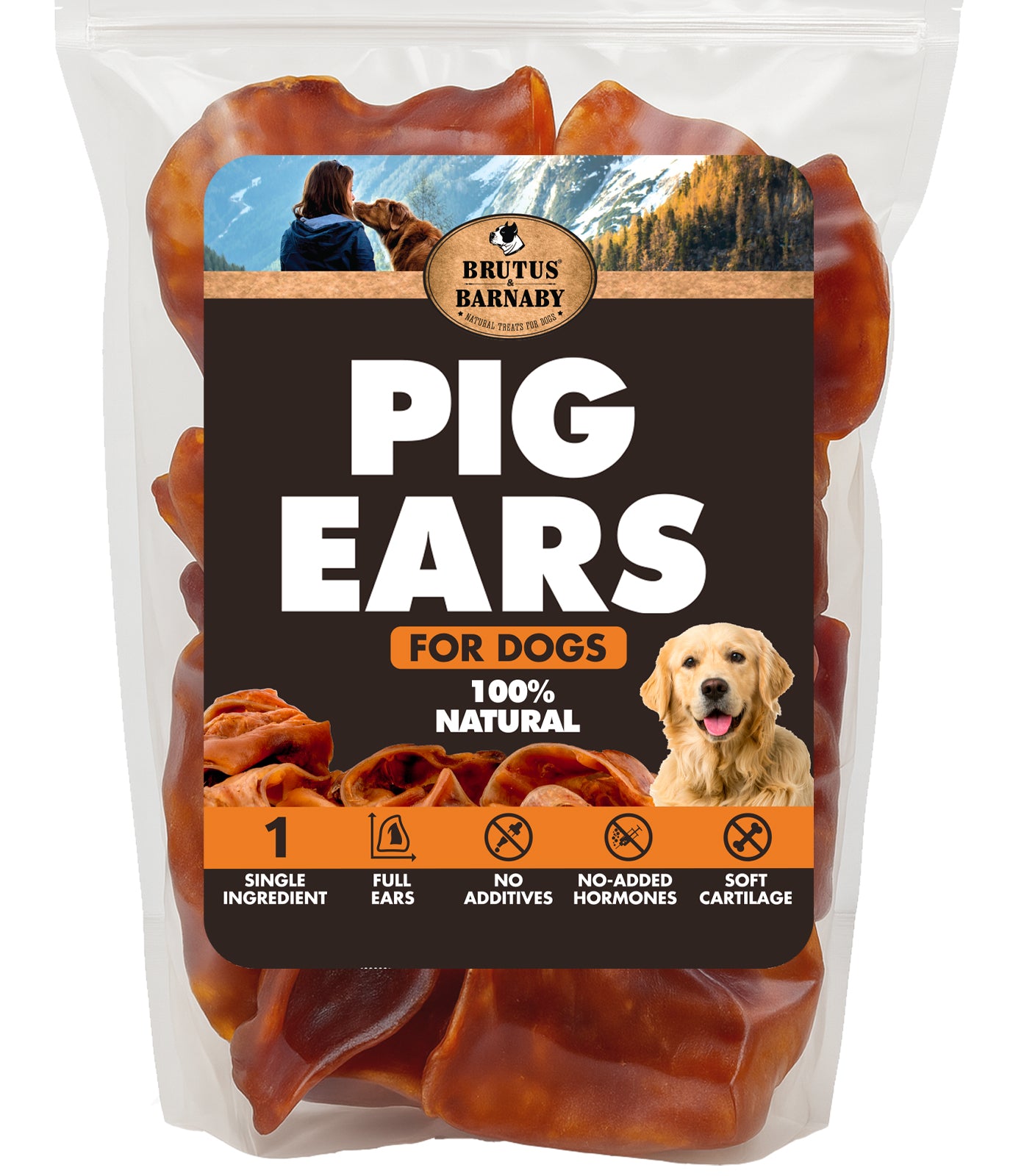
Pig Ears for Dogs | Natural Rawhide-Free Chews
A single-ingredient whole pig-ear chew available in several count options. Use only as a supervised treat and remove small fragments.
- 100% pig ear
- Rawhide-free
- 12, 25, and 100-piece options currently listed
- 133.2 calories per ounce currently listed
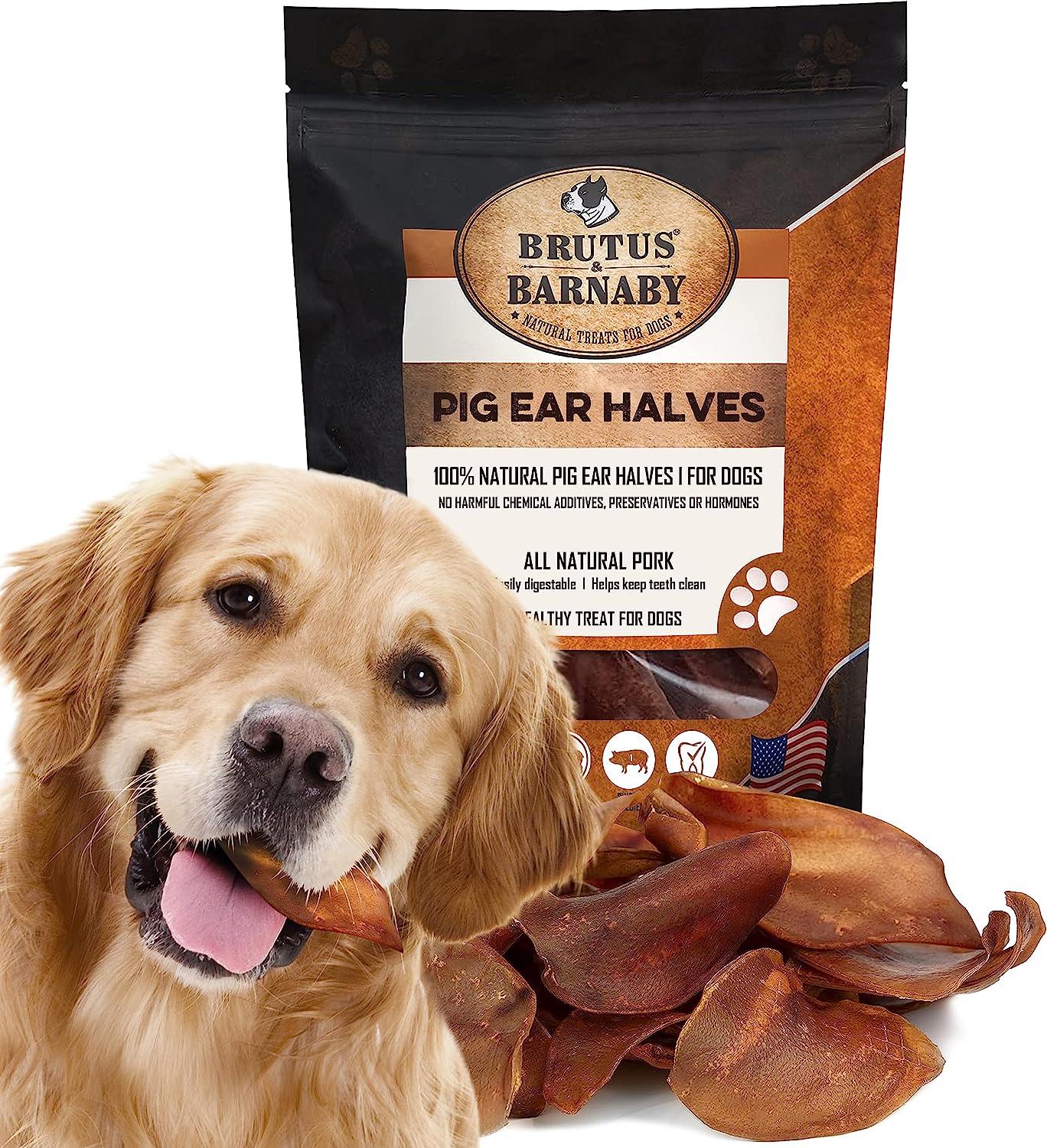
Pig Ear Halves for Dogs
A pre-cut single-ingredient format that may be easier to portion for small dogs or lighter chewers when appropriately sized and supervised.
- 100% pig ears
- Rawhide-free
- 15, 40, and 100-count options currently listed
- 121.9 calories per ounce currently listed
Trusted Reading
-
WSAVA: Feeding Treats to Your Dog
Guidance on supervision, appropriate treat size, medical considerations, and keeping treats within the daily calorie allowance. -
Cornell University: Gastrointestinal Foreign-Body Obstruction in Dogs
Veterinary information about obstruction symptoms, diagnosis, treatment, and prevention. -
VCA Animal Hospitals: Dog Treats
Advice about treat calories, food allergies, prescription diets, and conditions that may require restricted treats. -
Texas A&M Veterinary Medicine: How to “Chews” Dog Chew Toys
Guidance on selecting chew items and removing them when they become small enough to cause choking or obstruction.
Frequently Asked Questions
Can my dog finish a pig ear in one sitting?
Finishing an entire ear is not necessary. Whether the amount is appropriate depends on the ear’s weight, your dog’s calorie allowance, digestion, health, and chewing behavior. Remove it if it becomes swallow-sized or if the planned portion has been consumed.
How long should my dog chew a pig ear the first time?
Start with approximately 3–5 supervised minutes. Trade the ear away and monitor your dog for digestive discomfort, appetite changes, itching, swelling, or unusual behavior during the next 24 hours.
How do I know when a pig ear is too small?
Take it away before the remaining section can fit fully inside your dog’s mouth or be swallowed in one piece. Remove loose, folded, or partially detached sections earlier.
Can I leave my dog alone with a pig ear?
No. Pig ears are edible chews that change size and texture during use. Stay close enough to notice gulping, choking, loose pieces, dental discomfort, or sudden changes in behavior and intervene immediately.
Can I save a partially chewed pig ear for later?
Specific storage instructions for a saliva-softened Brutus & Barnaby pig ear are not currently listed on the live product pages. Do not assume a wet chew is shelf-stable. Discard it if it is dirty, damaged, slimy, or has an unusual odor, and contact the brand for current storage guidance.
How often can dogs have pig ears?
Pig ears are best treated as occasional chews rather than everyday meals. Frequency depends on the calories consumed, dog size, activity, weight goals, digestive tolerance, and the rest of the diet.
Can puppies chew pig ears?
Brutus & Barnaby’s current puppy guide advises waiting until approximately 6 months. Even then, adult-tooth development, digestion, dog size, and chewing control matter. Ask your veterinarian when a firmer chew is appropriate for your puppy.
What should I do if a pig ear causes diarrhea or vomiting?
Stop giving the chew and provide no additional pig ear while you assess your dog. Contact your veterinarian if vomiting repeats, diarrhea is severe or persistent, blood appears, appetite decreases, or your dog becomes painful, weak, or unusually tired.
Final Takeaway
Start a dog’s first pig-ear session at 3–5 supervised minutes, monitor tolerance for 24 hours, and increase gradually if everything remains normal. For experienced dogs, use the clock as an inspection reminder rather than a guaranteed safety limit.
The right time to end the session is when the planned portion is eaten, the ear becomes small or loose enough to swallow, chewing turns into gulping, or your dog shows discomfort. Stay close, count the calories consumed, and remember that no dog needs to finish a pig ear in one sitting.
Choose a Pig-Ear Format for Supervised Chew Time
Compare whole ears and half-ear formats, then select a starting size and portion that match your individual dog.
Shop Pig Ear Treats