



Training treats do not have to be soft, but a small, soft reward is often convenient when you need quick delivery and repeated practice. Crunchy or chewy treats can also work when your dog handles them comfortably and the longer eating time does not interrupt the lesson.
Texture matters because it influences how quickly a dog can eat the reward, how easily you can divide it and how smoothly you can continue the training session—not because every training reward must feel the same.
No, training treats do not need to be soft. Soft, bite-sized treats are especially useful for rapid repetitions because many dogs can finish them quickly. A crunchy or chewy reward may still be appropriate for occasional reinforcement, enrichment or a higher-value moment. The best choice is small enough to manage safely, motivating to your dog, compatible with their diet and easy to deliver at the right time.
Why Are So Many Training Treats Soft?
Reward-based training depends partly on clear timing. The reward should follow the desired behavior closely enough that the dog can connect the behavior with the outcome. The American Veterinary Society of Animal Behavior recommends reward-based training methods and identifies treats, toys and other appropriate reinforcers as possible rewards.
Less time between repetitions
A small soft bite can often be eaten quickly, allowing the trainer to move directly to the next cue.
Smaller rewards when needed
A soft treat may be divided into smaller pieces when its texture and shape allow, helping limit the amount used per repetition.
Ready when behavior happens
Pre-portioned bites can be held in a pouch and delivered without stopping to break apart a large chew.
Softness is a practical feature, not a training rule: if a different reward can be delivered promptly and your dog eats it safely without losing focus, it may still work.
Soft vs. Crunchy vs. Chewy Training Treats
No texture is automatically best for every dog or every exercise. Think about how long the reward takes to eat, how distracting the environment is and how many successful repetitions you expect to reward.
For a more detailed comparison of reward formats, see our guide to choosing between chicken jerky and soft training treats.
When Soft Training Treats Are Especially Helpful
Soft treats tend to be most useful when the training plan depends on several quick rewards. The goal is not to feed as fast as possible. It is to reward clearly without turning every successful repetition into a long eating break.
Rapid skill practice
- Name-response exercises
- Sit, down and stand repetitions
- Loose-leash practice
- Short focus or handling exercises
The individual dog
- Preferred flavors and textures
- Known ingredient sensitivities
- Ability to manage the piece comfortably
- Current calorie and dietary needs
Puppies, senior dogs and dogs with missing teeth or oral discomfort may sometimes find a softer option easier to manage, but texture alone cannot resolve a medical problem. Contact your veterinarian if your dog drops food, resists chewing, paws at the mouth, has unusual odor or bleeding, or suddenly changes how they eat.
When a Training Treat Does Not Need to Be Soft
A crunchy, chewy or jerky-style reward may work well when you are rewarding only occasionally, ending a session or reinforcing a particularly important response. A dog’s preferred texture may also differ from what the trainer expects.
If you want to use rewards beyond formal lessons, our guide explains how to include treats in a thoughtful dog enrichment routine.
How to Choose the Right Training-Treat Texture
Start with the demands of the session and then adjust according to your dog’s response. A practical training reward should support attention without creating avoidable dietary or handling problems.
- Use manageable pieces. Choose a piece your dog can take comfortably without gulping an oversized reward. Break larger treats before the session when appropriate.
- Match the reward to the task. Routine indoor practice may need only an everyday reward, while recall around distractions may require something more valuable.
- Review the complete ingredient list. Avoid ingredients your dog should not eat and introduce unfamiliar recipes gradually.
- Plan the session’s total amount. Set aside the intended portion before training instead of repeatedly reaching into the full bag.
- Watch how your dog eats. Stop if the dog coughs, gags, struggles to chew or repeatedly swallows pieces without managing them comfortably.
- Store treats correctly. Close the package after use and follow the label directions. The FDA also recommends safe handling practices for pet food and treats, including washing your hands and using clean utensils.
How Many Training Treats Can a Dog Have?
The correct amount depends on the treat’s calories, your dog’s body size, activity level, regular food and veterinary needs. A tiny reward is usually enough if it remains motivating. Reward value comes from what the dog likes, not from giving the largest possible piece.
Pre-portion the rewards
Decide how much fits the session, create appropriately small pieces and include those calories in the dog’s complete daily intake.
Ignoring many small rewards
Individual treats may look tiny, but the total can become meaningful during multiple sessions or a busy training class.
Consider the complete diet: the AAHA nutrition and weight-management guidelines emphasize nutritional assessment and accounting for foods beyond the primary diet. Ask your veterinarian to help plan rewards if your dog needs weight management or follows a therapeutic diet.
If your dog enjoys variety, use a planned approach rather than adding unlimited extras. Our dog treat rotation guide explains how to change rewards while monitoring portions and tolerance.
Soft Training Treats for Quick Rewards
These Brutus & Barnaby soft training treats are offered as small bites for fast reward delivery. Review the current product label and ingredient panel, choose a flavor appropriate for your dog and introduce a new recipe gradually.
Training Treats for Dogs | Peanut Butter & Banana Soft Dog Treats

Small, soft peanut butter and banana treats made for quick reward delivery during positive-reinforcement training. Check the complete recipe before feeding.
Shop Peanut Butter & Banana Training TreatsTraining Treats for Dogs | Peanut Butter & Apple Soft Dog Treats
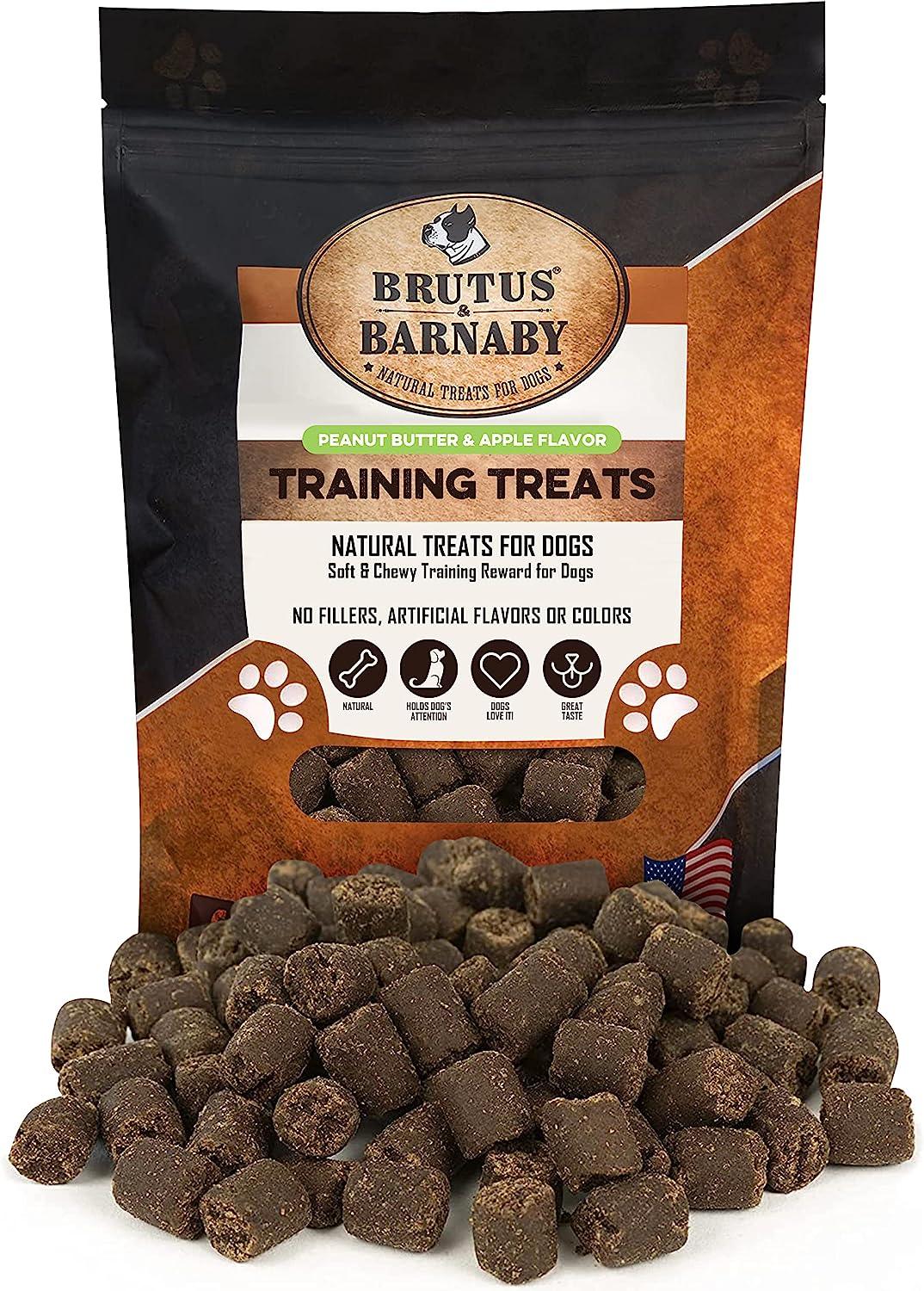
Soft peanut butter and apple bites designed for puppy training, repeated practice and everyday reward moments. Confirm that every listed ingredient suits your dog.
Shop Peanut Butter & Apple Training TreatsTraining-Treat Safety Reminders
No treat texture is completely risk-free. A soft treat can still be swallowed too quickly, while a crunchy or chewy piece can be too large or difficult for an individual dog to manage.
Safer training habits
Stop and reassess when
Stop using the treat if it appears to cause a problem. Contact your veterinarian when symptoms are severe, persistent, recurring or otherwise concerning. Breathing difficulty, facial swelling, collapse, repeated unproductive retching or signs of choking require prompt attention.
Training-Treat Texture and Use
Do training treats need to be soft for puppies?
Not necessarily, but small soft treats can be convenient for short puppy sessions and rapid repetitions. Choose a product appropriate for your puppy’s age, diet and ability to manage the piece, and ask your veterinarian when you are uncertain.
Can crunchy treats be used for dog training?
Yes. A crunchy treat can work if it is manageable for your dog and does not slow the lesson more than intended. It may be better for occasional rewards than for a sequence requiring many rapid repetitions.
Can I use regular kibble as training treats?
Yes, if your dog finds it motivating. Using part of the regular meal may help manage extra calories, although kibble may not be valuable enough for difficult tasks or distracting environments.
Should I cut soft training treats into smaller pieces?
You may divide them when the texture permits and the resulting pieces remain easy to handle. The reward should still be large enough for your dog to notice but manageable enough to finish without a long pause.
Are soft training treats better for senior dogs?
Some senior dogs may find a soft texture easier, but sudden difficulty chewing can indicate an oral or medical concern. Ask your veterinarian to examine changes in eating behavior rather than relying only on a softer treat.
What if my dog will not take soft training treats?
Try a different appropriate flavor, texture or reward type. Some dogs prefer crunchy food, jerky, toys, play or praise. Motivation is individual, so the best reward is one your dog values and can receive safely.
Training Treats Do Not Have to Be Soft
Do training treats need to be soft? No—but a soft, bite-sized reward is often the easiest option when timing and repetition matter. Crunchy, chewy and jerky-style rewards can also have a place when they suit the dog and the exercise. Choose manageable pieces, review ingredients, plan the total portion and match the reward’s value to the difficulty of the task. For quick training cycles, explore Brutus & Barnaby’s soft training-treat options and select a recipe appropriate for your dog.
Educational disclaimer: This article provides general educational information and is not veterinary, nutritional, diagnostic, emergency or individualized training advice. Dogs differ in age, size, health, dietary needs, chewing behavior and ingredient tolerance. Review the current product label, measure portions, introduce new foods gradually and provide fresh water. Contact your veterinarian about persistent digestive symptoms, suspected food reactions, chewing difficulty, appetite changes or other concerns. Product ingredients, packaging, availability and feeding directions can change, so check the current product page and package before feeding.