


How to Choose Dog Treats for Clicker Training: Reward Timing, Size and Texture
The right dog treats can make clicker training easier and more consistent. Learn how reward timing, bite size, texture, and treat value affect training sessions, and how to choose rewards that keep your dog focused without unnecessary calories.
Quick Answer: The best dog treats for clicker training are small, easy to eat, and motivating enough to reward the behavior you want to reinforce. Soft, bite-sized treats often work particularly well because dogs can finish them quickly and return to training. Click at the exact moment your dog performs the desired behavior, then deliver the reward promptly. Choose appropriate ingredients and count every reward toward your dog's daily calorie intake.
How to Choose Dog Treats for Clicker Training
Clicker training uses a short, consistent sound to mark a specific behavior. When your dog sits, looks toward you, or follows another desired action, the click communicates exactly which moment earned a reward. The treat that follows helps build a positive association with that behavior.
Choosing suitable rewards keeps the process efficient. A treat that takes too long to chew can interrupt practice, while a tiny piece your dog enjoys can support repeated learning. Our training treat size guide explains portion considerations, while our guide to soft training treats explores texture and eating speed.
Simple rule: Mark the correct behavior immediately, follow every click with a reward, and use the smallest comfortable treat piece that your dog genuinely enjoys. Prepare rewards before starting so delivery stays smooth.
Which Dog Treat Textures Work Best for Clicker Training?
Treat texture affects how quickly your dog can collect, chew, and swallow a reward. For exercises involving repeated clicks, easy-to-eat pieces are usually more practical than large snacks or long-lasting chews.
| Treat Type | Clicker Training Use | What to Consider |
|---|---|---|
| Soft training treats | Excellent for frequent, quick rewards. | Choose small pieces that are easy to swallow. |
| Small meat-based bites | Useful when extra motivation is needed. | Check richness, calories, and piece size. |
| Crunchy treats | Suitable for dogs that eat them quickly. | Watch for crumbs and longer chewing pauses. |
| Jerky-style treats | Can provide occasional higher-value rewards. | Prepare suitably small pieces beforehand. |
| Long-lasting chews | Generally unsuitable for rapid repetitions. | Better considered separately for supervised chew time. |
Softness is useful, but it is not the only factor. A crunchy reward may work well for one dog, while another needs something easier to eat. The American Kennel Club's guidance on training rewards also emphasizes small pieces and treats that dogs can finish quickly.
Small Dog Treats for Repeated Clicker Training Rewards
Brutus & Barnaby offers training treats in different flavors. Choose a variety your dog enjoys, review the ingredients, and adjust individual pieces to suit the exercise and your dog's size.

Peanut Butter & Banana Training Treats
These peanut butter and banana-flavored training treats offer a convenient reward option for practicing basic cues, reinforcing attention, and building consistent click-and-reward routines with your dog.
- Convenient format for repeated rewards
- Peanut butter and banana flavor

Sweet Potato & Chicken Training Treats
Featuring sweet potato and chicken flavors, these training treats provide another reward choice for everyday obedience practice, new behaviors, and situations where your dog benefits from added motivation.
- Sweet potato and chicken flavor combination
- Useful for click-and-reward practice
When Should You Use Higher-Value Treats in Clicker Training?
The value of a reward depends on your dog's preferences and the difficulty of the task. Familiar training treats may be sufficient in a quiet room, while learning around distractions may require something your dog finds more exciting. Higher-value rewards can still be offered in very small pieces.
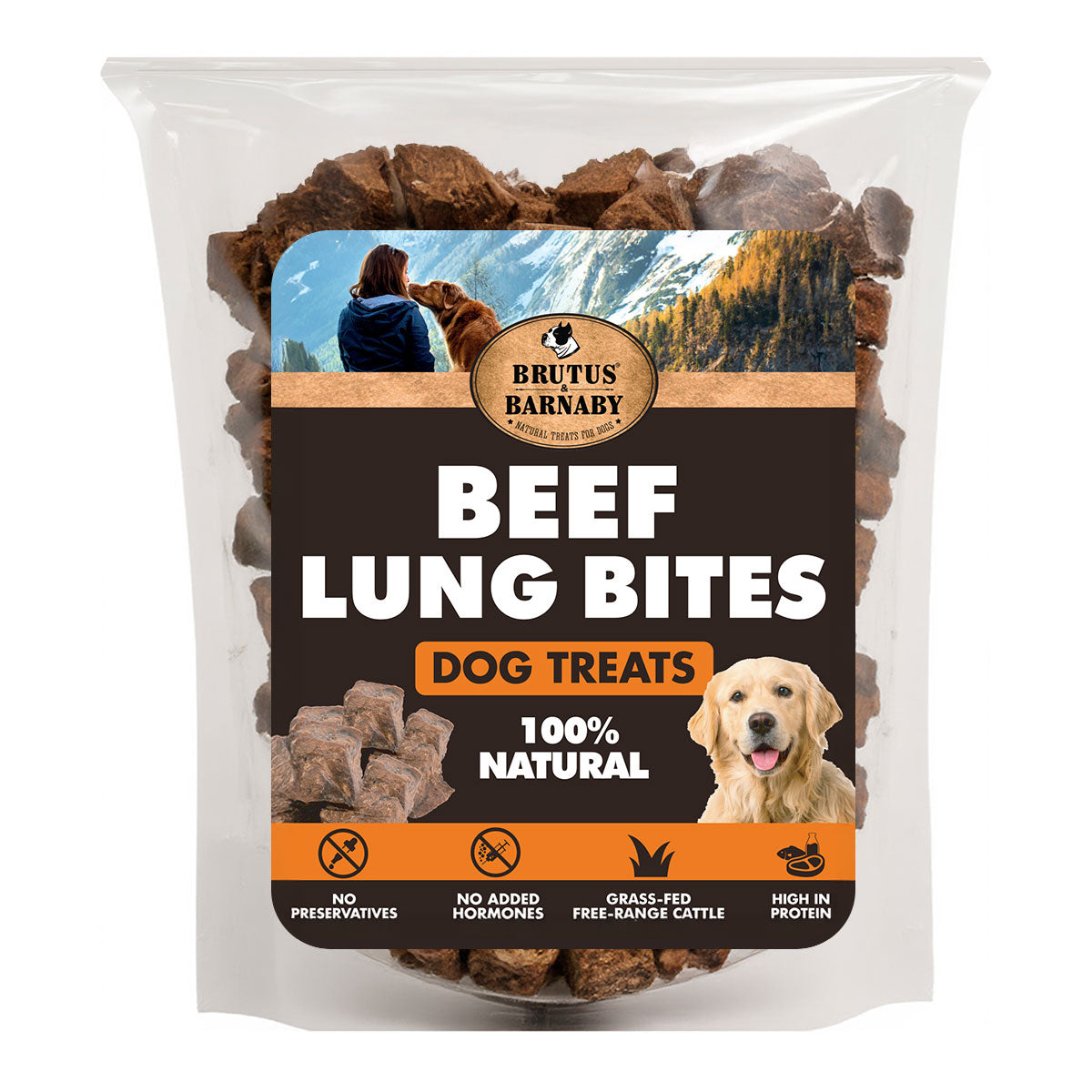
Beef Lung Bites
Beef Lung Bites provide a meat-based alternative when your dog responds enthusiastically to beef. Prepare suitably small pieces and evaluate the texture before using them for rapid training repetitions.
- Beef-based treat option
- Portion carefully for training rewards
Use Everyday Rewards When...
- Practicing familiar commands indoors.
- Reinforcing simple attention and manners.
- Repeating several easy behaviors.
Consider Higher-Value Rewards When...
- Introducing a challenging new behavior.
- Working around manageable distractions.
- Practicing recall or difficult skills.
Why Reward Timing and Treat Size Matter
The click should occur at the moment your dog performs the desired behavior. For example, when teaching sit, click as your dog's rear touches the floor rather than several seconds afterward. Deliver the treat promptly after the click. This helps your dog understand which action earned the reward. The AKC's clicker training guide explains this marker-and-reward relationship.
Treats should also be small enough to avoid unnecessary pauses. For many dogs, pea-sized rewards or smaller can work well, although the appropriate portion depends on body size, chewing ability, and the product. Tiny dogs may need smaller pieces, while dogs that gulp food require extra attention to swallowing safety.
Count training treats as part of your dog's daily food intake. A common general guideline is that treats and supplemental extras should contribute no more than about 10% of daily calories, with most nutrition coming from complete and balanced food. Dogs with specific medical or dietary needs may require individualized guidance. Avoid assuming that a small treat is automatically low in calories.
A Simple Clicker Training Reward Routine
Successful clicker training relies on consistency rather than large rewards. Use this practical sequence to prepare your treats, mark behavior clearly, and keep each repetition easy for your dog to understand.
| Step | What to Do | Practical Tip |
|---|---|---|
| 01 — Prepare | Choose suitable treats and portion them before training. | Keep tiny rewards within easy reach. |
| 02 — Mark | Click at the precise moment the desired behavior happens. | Mark the action, not the treat delivery. |
| 03 — Reward | Deliver the reward promptly after each click. | Allow your dog to eat comfortably. |
| 04 — Repeat | Practice another manageable repetition. | Keep sessions positive and adjust difficulty. |
Important training note: Clicker training should remain positive and comfortable for your dog. Avoid using the click to frighten, punish, or interrupt unwanted behavior. If your dog becomes distressed by the sound, consider a gentler marker. Always check treat ingredients, monitor swallowing, and follow veterinary guidance for dietary restrictions.
Frequently Asked Questions
Small, easy-to-eat treats that your dog enjoys are usually best. Soft training treats are convenient for repeated rewards because they often require minimal chewing. Consider ingredients, calories, your dog's preferences, and how quickly each piece can be eaten.
Yes. During clicker training, each click should predict a reward so the marker remains meaningful. The reward may eventually be something other than food if your dog finds it motivating. As training progresses, you can click less frequently, but continue rewarding each click.
For many dogs, pea-sized pieces or smaller are sufficient. The ideal size is one your dog can comfortably accept and swallow without extended chewing. Adjust portions for your dog's size, feeding behavior, and daily calorie needs rather than relying on one fixed measurement.
Yes, crunchy treats can work when your dog eats them quickly and comfortably. However, hard or crumbly treats may slow repeated exercises. Try small portions first, and switch to an easier-to-eat texture if chewing or searching for crumbs interrupts the session.
There is no universal number. It depends on the number of correct repetitions, reward size, calorie density, and your dog's daily food needs. Prepare small portions for the planned session and adjust the amount as needed without exceeding an appropriate daily treat allowance.
Make Every Click Count With the Right Reward
Explore Brutus & Barnaby training treats for everyday practice and positive reinforcement. Find flavors your dog enjoys, prepare small portions, and turn each click into a clear, consistent learning opportunity.
Shop Dog Training Treats