


Understand What's Inside Every Beef Chew
What are bully bites made of? Learn where these compact beef chews come from, what ingredient statements reveal, and how to interpret terms such as single ingredient, natural, rawhide-free, and high protein.
The front of a dog-treat bag can sound impressive. The ingredient statement tells you more about what your dog is actually eating.
Bully bites are typically short pieces of dried beef pizzle, the muscle tissue from a bull or steer. They belong to the same general chew category as full-length bully sticks, but are sold in smaller, often irregular pieces. A single-ingredient version contains only beef tissue, although ingredients and processing can vary among products. Always read the current ingredient statement rather than assuming every product named "bully bites" has an identical composition.
What Are Bully Bites Made Of?
Traditional bully bites begin with beef pizzle, an animal-derived muscle that can be prepared as an edible dog chew. The same material is commonly used for full-length bully sticks. The main difference is the finished format: bully bites are compact pieces rather than consistently long sticks.
Depending on the manufacturer, the beef tissue may be cleaned, dried, baked, or otherwise prepared under a controlled production process. The precise method matters because moisture removal and processing affect the finished chew's firmness, shape, and storage characteristics.
Not every manufacturer discloses every processing detail. If the origin of the beef, drying method, or ingredient description is unclear, ask the brand before purchasing.
Beef Tissue
Traditional bully bites use beef pizzle rather than a mixture of ground meats or animal hide.
Drying and Firming
Processing removes moisture and creates the characteristic firm, chewy texture.
Compact Pieces
Pieces may differ in thickness, length, shape, and the amount a dog can consume.
For a comparison of these formats rather than their ingredient terminology, see our guide to bully nuggets vs. bully sticks.
How to Read a Bully Bites Ingredient Label
The product name and marketing claims can help identify the category, but the ingredient list is the best starting point for understanding a particular recipe.
According to the FDA's animal food labeling guidance, ingredients must be identified using their common or usual names and listed in descending order by weight.
What does a one-ingredient label tell you?
When a label lists only beef or a specific beef tissue, it indicates that the product is formulated from that declared ingredient rather than a longer recipe with multiple added components. However, a broad description such as "beef" may not specify the exact anatomical cut.
For example, Brutus & Barnaby's published nutrition information identifies beef as the ingredient for its Bully Nuggets product. Owners who need more specific anatomical or sourcing information can request clarification from the manufacturer.
What if several ingredients are listed?
Some chew-style treats may contain additional ingredients for flavor, texture, or manufacturing purposes. These should be reviewed individually rather than assuming that every added ingredient serves the same function.
The AAFCO guide to reading pet food labels explains that ingredient order reflects weight, not the exact percentage of each ingredient. The ingredient list alone therefore cannot tell you precisely how much of each component is present.
Label-reading tip: A short ingredient list can make a recipe easier to understand, but it does not automatically prove that a chew suits every dog. Ingredient tolerance, calorie intake, chew size, and individual health needs still matter.
Bully Bite Label Terms Explained
Packaging often combines factual ingredient information with descriptive marketing language. Understanding the difference can make it easier to compare products without relying on front-of-bag claims alone.
| Label Term | What It Generally Means | What to Verify |
|---|---|---|
| Single Ingredient | One ingredient is declared in the recipe. | The precise ingredient name and any questions about processing. |
| Beef Pizzle | A specific beef muscle tissue traditionally used for bully chews. | Whether the product actually lists or identifies this tissue. |
| Natural | A description associated with ingredient origin or processing under applicable labeling standards. | The complete ingredient statement rather than the word alone. |
| Rawhide-Free | The product is represented as not containing rawhide. | Its actual ingredient composition and chewing suitability. |
| No Preservatives | A claim that preservatives have not been added. | Current packaging, ingredient information, and storage instructions. |
| High Protein | A claim about protein content. | The guaranteed analysis and nutritional context. |
| Grass-Fed | A sourcing or animal-feeding claim about the cattle. | The manufacturer's sourcing details and supporting documentation. |
| All-Natural | A country-of-origin or manufacturing claim. | Whether it refers to manufacturing, ingredient origin, or both. |
These terms answer different questions. "Rawhide-free" describes an excluded material, while "high protein" describes a nutritional characteristic. Neither tells you the complete recipe or guarantees the chew is appropriate for an individual dog.
Do Natural and Single-Ingredient Mean the Same Thing?
No. These expressions describe different aspects of a product.
Single Ingredient
Focuses on how many ingredients appear in the recipe. It can make it easier to identify whether a treat includes a particular animal protein.
Natural
Relates to the character or processing of the ingredients under applicable standards. It does not establish ingredient count, individual tolerance, or freedom from all hazards.
A single-ingredient beef chew can still be unsuitable for a dog with a beef allergy or a veterinarian-directed elimination diet. Similarly, a naturally derived chew can still create choking concerns if its size does not suit the dog.
Look beyond promotional wording and confirm the ingredient list, the manufacturer's description, and the dog's individual needs before making a choice.
Are Bully Bites the Same as Rawhide or Other Beef Treats?
Products that look similar in a photograph can have very different compositions. Bully bites should not be confused with rawhide, beef jerky, beef meat sticks, or collagen chews simply because all may appear brown and firm.
| Treat Type | Typical Main Material | Important Difference |
|---|---|---|
| Bully Bites | Beef pizzle in traditional formulations | Short, often mixed-size edible chews. |
| Bully Sticks | Beef pizzle | Longer stick-shaped edible chews. |
| Rawhide | Processed animal hide | Different animal tissue and processing characteristics. |
| Beef Meat Sticks | Beef-based meat mixture or ingredients | Recipes and texture may vary considerably. |
| Collagen Sticks | Collagen-rich animal-derived material | Different composition and potentially different texture. |
The ingredient category alone does not predict exactly how long a treat will last, how a dog will chew it, or whether a swallowed piece can cause problems. Compare the actual product dimensions and texture as well as the composition.
What Does High Protein Really Tell You?
Beef-based dried chews can have a substantial protein concentration because much of their moisture has been removed. However, protein content should be understood alongside the complete nutritional information rather than treated as a complete measure of quality.
A guaranteed analysis may include crude protein, crude fat, crude fiber, and moisture. These values help describe the product's nutrient composition, but they do not automatically provide an exact calorie count or determine how much your dog should receive.
Protein-rich does not mean calorie-free
A concentrated beef chew still contributes to your dog's daily intake. Compare the current calorie information, account for the amount actually consumed, and avoid treating a bag's protein claim as permission for unlimited feeding.
The World Small Animal Veterinary Association's treat-feeding guidance recommends keeping treats below 10% of a dog's daily calorie intake. Your veterinarian can help establish an individualized treat allowance.
Dogs with restricted diets, food allergies, digestive conditions, or other medical concerns may require different choices even when a treat has a simple ingredient list.
Why Are Bully Bite Pieces Different Shapes and Colors?
A bag of bully bites may contain a mixture of short, thick, narrow, curved, or uneven pieces. This variation can reflect the shape of the original material and the way individual pieces are prepared.
Color can also vary with the raw material and processing. A darker piece is not automatically better, and a lighter piece is not automatically inferior.
Color
Natural differences and processing may influence the finished shade. Compare the product with its usual appearance and package description.
Thickness
Pieces of different thicknesses may require different chewing effort and may not suit the same dog equally.
Odor and Condition
A beef aroma can be normal, but suspicious spoilage, mold, unusual moisture, or damaged packaging calls for caution.
Always check the package before use. The FDA's safe pet-treat handling recommendations include washing hands, protecting food from contamination, and discarding spoiled products.
How to Choose Bully Bites by Their Ingredient Information
A practical evaluation begins with the label but does not stop there. Use these steps when comparing a new bag or reviewing a product you already purchase.
For a more focused explanation of swallowed pieces and digestibility, read our bully stick digestibility and swallowed-piece guide.
Brutus & Barnaby Bully Bite and Bully Stick Options
Brutus & Barnaby offers beef-based chews in different formats. Compare the compact Bully Bites with a longer bully stick when deciding which shape and chewing experience fits your dog.
Bully Bites for Dogs | Bite-Sized High-Protein Dog Chews
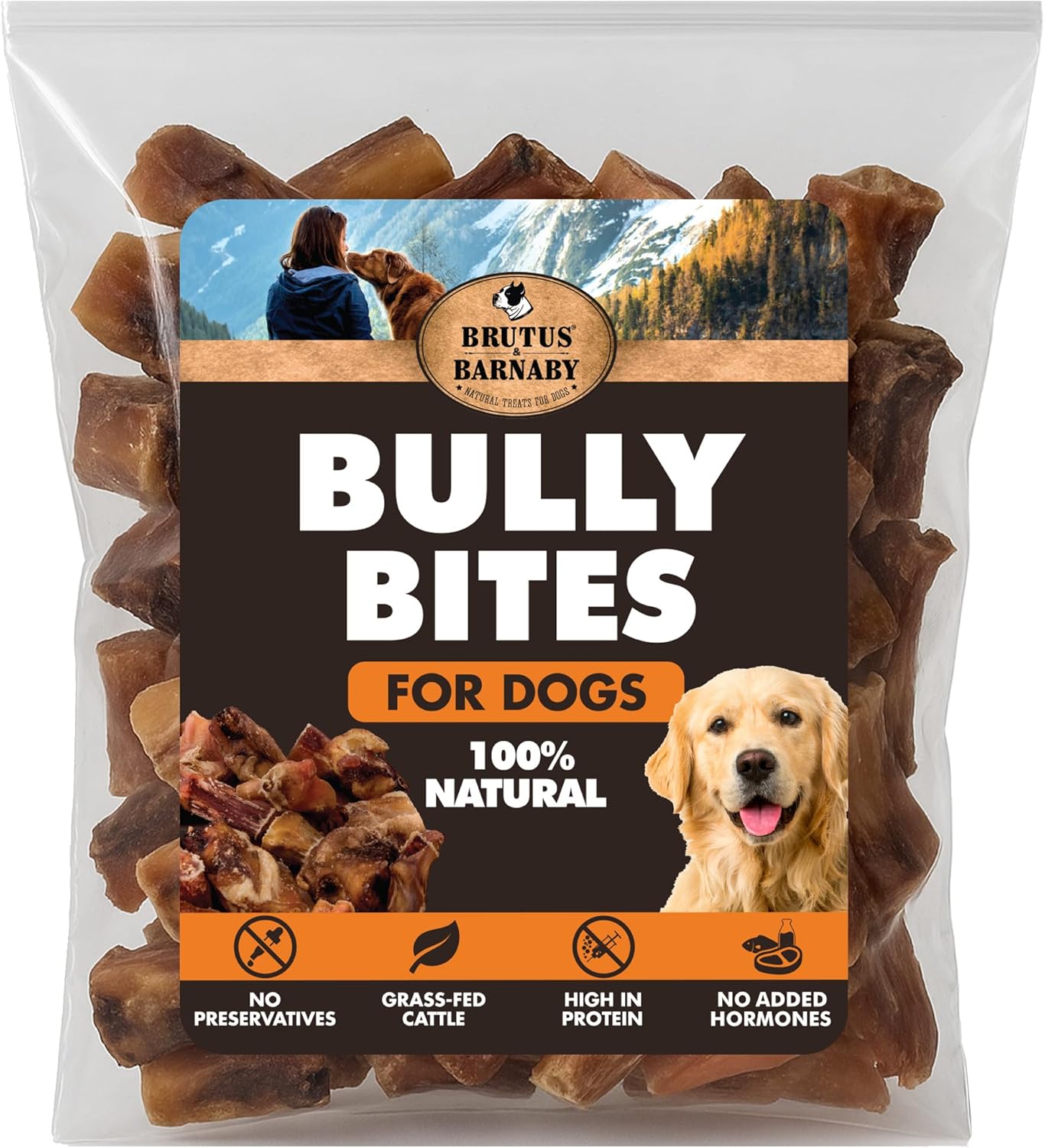 Shop Bully Bites for Dogs
Bully Sticks for Dogs | 6 Inch, Odor-Free & Rawhide-Free Chews
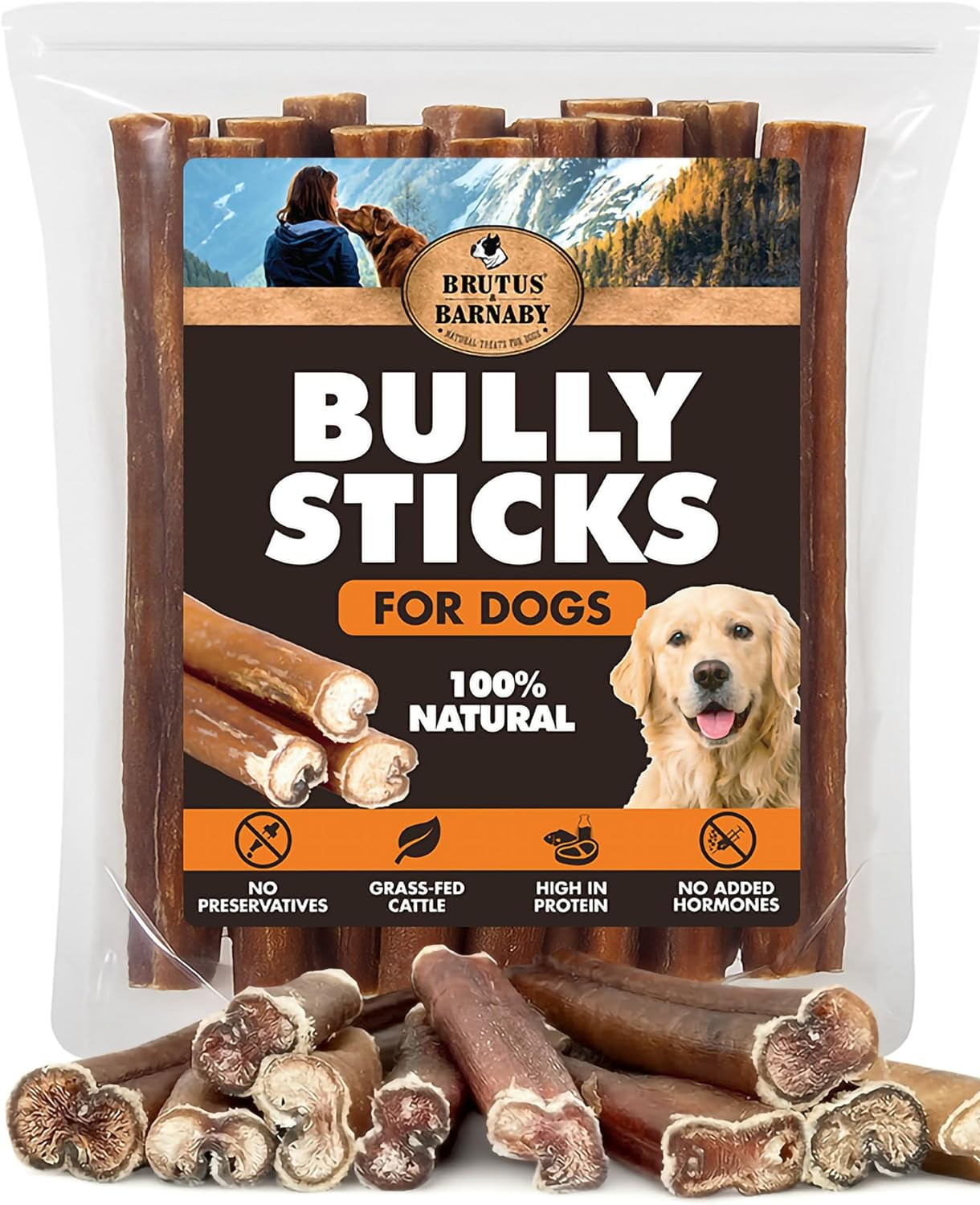 Shop 6-Inch Bully Sticks
Important: Neither a simple ingredient list nor a different chew length eliminates choking or digestive risks. Choose according to your dog's individual chewing behavior and supervise throughout use.
Ingredient Simplicity Does Not Replace Chew Safety
Even a chew made from one familiar ingredient can become unsuitable because of its size, firmness, or the way a dog handles it.
Check the Dog and the Piece
- Consider mouth size and chewing strength.
- Avoid pieces that can easily be swallowed whole.
- Check for a known beef allergy or restricted diet.
- Do not offer firm chews to work around dental pain.
Watch the Entire Session
- Supervise rather than leaving the dog alone.
- Stop if large pieces are torn off or gulped.
- Remove pieces that become easy to swallow.
- Watch for coughing, gagging, or discomfort.
Puppies, senior dogs, and dogs with dental or digestive concerns may need special consideration. A veterinarian can help determine whether this texture and ingredient fit the individual animal.
For broader product-selection concerns, our guide to bully stick safety and chewing risks explains the importance of monitoring swallowing behavior and dental comfort.
When to get help: Suspected choking, difficulty breathing, or collapse requires emergency veterinary care. Contact a veterinarian promptly if your dog swallows a concerning chunk or develops repeated vomiting, abdominal discomfort, unusual lethargy, or refusal of food. Never induce vomiting without veterinary instructions.
Bully Bite Ingredients and Label Questions
Are bully bites made from the same ingredient as bully sticks?
Traditional bully bites and bully sticks are both made from beef pizzle. Their main difference is format. Always check the individual product's ingredient statement because manufacturers may use different descriptions or formulations.
Do bully bites contain rawhide?
Traditional beef-pizzle bully bites are not rawhide. Rawhide comes from animal hide, while beef pizzle is muscle tissue. Check the ingredient list and product claims instead of assuming every similarly shaped chew has the same composition.
Does single ingredient mean hypoallergenic?
No. A single-ingredient beef chew can still cause an adverse reaction in a dog sensitive or allergic to beef. Dogs following elimination diets or veterinarian-directed feeding plans should not receive new treats without appropriate guidance.
What does high protein mean on bully bite packaging?
It describes the product's protein content, which should be interpreted using the guaranteed analysis and applicable labeling information. It does not tell you the complete calorie content or establish that the chew is suitable for every dog.
Why do bully bites sometimes have a beef smell?
Animal-derived dried chews can retain a natural odor. Strength can vary with the source material and processing. A normal beef smell is different from signs of spoilage; discard a product with suspicious mold, contamination, or deterioration.
Are bully bites completely digestible and safe to swallow?
Beef tissue is edible and digestible, but a large swallowed piece may still cause choking or gastrointestinal obstruction before it breaks down. Never assume a piece is safe to swallow whole. Supervise chewing and contact a veterinarian about concerning ingestion or symptoms.
Know the Ingredient. Understand the Label.
What are bully bites made of? Traditional bully bites come from beef pizzle, but the current ingredient statement is the best way to confirm a specific product's declared composition. Understand the difference between ingredient facts and marketing descriptions, review nutritional information, and select a chew size appropriate for your dog's behavior. For a compact beef chew option, explore Brutus & Barnaby Bully Bites.
Explore Brutus & Barnaby Bully BitesEducational disclaimer: This article provides general information about dog-treat ingredients and labeling, not individualized veterinary advice. Ingredient simplicity does not guarantee safety, digestive tolerance, or nutritional suitability. Supervise edible chews, account for treat calories, and remove pieces before they become easy to swallow. Consult a veterinarian about allergies, dental concerns, restricted diets, persistent digestive symptoms, or suspected ingestion problems. Seek urgent veterinary care for suspected choking or breathing difficulty. Always review the current packaging and product instructions.