



Probiotics for Dogs: Benefits, Uses & Gut Health Support
Probiotics may help support your dog’s digestive balance, stool quality, immune health, skin, coat, and everyday comfort. Learn what they do, when they may help, and how to use them safely.
Regardless of how healthy your dog appears to be, long-term wellness starts with daily habits: the right food, the right amount of exercise, fresh water, regular vet care, and support for a healthy digestive system.
Along with feeding your dog the nutrients they need, you may also hear about probiotics. Probiotics are beneficial microorganisms that may help support a balanced gut microbiome. They are commonly used by dog parents who want to support digestion, stool quality, immune health, and overall comfort.
That said, probiotics are not a replacement for veterinary care. If your dog has ongoing diarrhea, vomiting, weight loss, blood in stool, appetite changes, severe gas, lethargy, or repeated digestive upset, contact your veterinarian before trying to manage it at home. For more foundational nutrition guidance, read our guide to the 6 basic nutritional requirements your dog needs.
Vet-first note: probiotics may support digestive balance, but persistent digestive problems need a proper diagnosis.
What Do Probiotics Do for Dogs?
Probiotics are beneficial microbes that live in the gastrointestinal system. These microbes may include certain bacteria and yeasts. A healthy gut microbiome helps support digestion, nutrient use, immune function, and a more balanced internal environment.
Sometimes a dog’s gut balance can be disrupted by stress, diet changes, illness, antibiotics, travel, boarding, or sudden changes in routine. When that happens, probiotics may be used as part of a vet-guided plan to support digestive comfort and stool quality.
Helpful Microbes
Probiotics add beneficial microbes that may help support a more balanced digestive environment.
Not a Cure-All
Digestive symptoms can have many causes, so chronic or severe problems should be checked by your vet.
Simple takeaway: probiotics may support gut balance, but they work best as part of a broader routine that includes proper food, fresh water, exercise, and vet guidance.
Common Forms of Probiotics for Dogs
Dog probiotics are available in several forms. The best option depends on your dog’s preferences, your vet’s recommendation, and how easy it is to use consistently.
Probiotic Soft Chews for Dogs
A soft chew format can make probiotics easier to add to your dog’s routine, especially for dogs who prefer treat-style support.
- Easy daily format
- Supports digestive balance
- Useful for gut-health routines
Six Benefits of Probiotics for Dogs
Probiotics may support several areas of canine wellness, especially when digestive balance is disrupted. Results vary by dog, product, strain, dose, and the reason probiotics are being used.
Important: if probiotics do not help, or symptoms return, your dog may need a different diet, testing, medication, parasite screening, or other veterinary care.
Probiotics and Antibiotic Side Effects
If your dog is taking antibiotics, your veterinarian may discuss probiotics as part of the plan. Antibiotics can affect the balance of bacteria in the gut, which may lead to temporary digestive changes in some dogs.
Probiotics may help support normal gut balance during or after antibiotic use, but timing matters. Some vets recommend spacing probiotics away from antibiotics so the antibiotic does not interfere with the probiotic. Always follow your veterinarian’s directions.
Gut Health, Behavior, Skin, and Coat
When dogs feel uncomfortable, their behavior may change. Digestive upset can make a dog restless, irritable, less playful, or more sensitive. Supporting digestive comfort may help some dogs feel more like themselves again.
Gut health may also be connected to overall wellness, including immune health, skin, coat, and breath. However, skin allergies, itching, ear infections, chronic bad breath, and coat changes can have many causes, so they should not be blamed on gut bacteria alone.
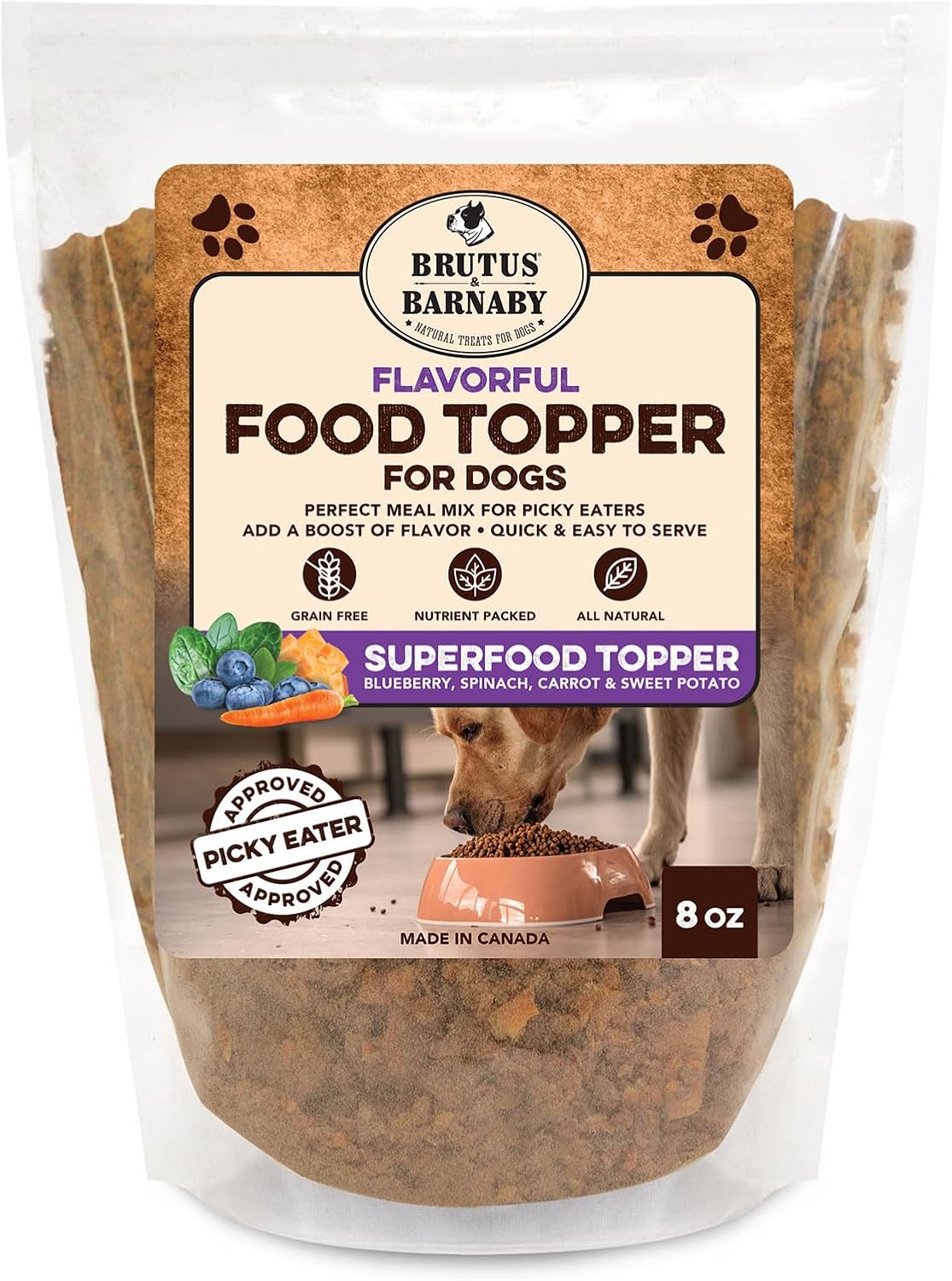
Superfood Dog Food Topper
A topper can help add variety to your dog’s meal routine while keeping their regular food as the foundation.
- Great for bored or picky eaters
- Easy meal enhancer
- Helpful for daily feeding routines
Can Probiotics Help With Digestive Issues?
Probiotics may help support digestive balance in dogs with occasional gas, loose stool, stress-related digestive changes, or diet transitions. They may also be recommended by a veterinarian during certain digestive upsets.
However, digestive issues can come from parasites, infections, food intolerance, pancreatitis, inflammatory conditions, toxins, foreign objects, sudden diet changes, and many other causes. If symptoms are severe, frequent, or long-lasting, probiotics alone are not enough.
Do not wait if your dog has bloody diarrhea, repeated vomiting, severe lethargy, bloating, collapse, dehydration, pain, or symptoms after eating something toxic.
How to Support Your Dog’s Gut Health Every Day
Probiotics are only one piece of digestive wellness. The daily routine matters just as much: consistent meals, fresh water, gradual food transitions, exercise, safe treats, and avoiding random table scraps.

Sweet Potato Slices
A simple plant-based treat option for dogs who need a gentler alternative to rich table scraps.
- Simple everyday snack
- Great for gentle treating
- Easy to introduce gradually
If you are introducing a new chew, topper, or treat, go slowly. For a step-by-step guide, read how to safely introduce new chews into your dog’s diet.
Frequently Asked Questions
Final Takeaway
Probiotics for dogs may support digestive balance, stool quality, immune health, and overall gut comfort. They can be especially helpful to discuss with your vet during antibiotic use, stress, travel, food transitions, or occasional digestive changes.
The best routine is simple: feed a consistent diet, introduce new treats gradually, provide fresh water, keep your dog active, and ask your veterinarian when digestive symptoms are persistent, severe, or unusual.
Support Your Dog’s Daily Wellness Routine
Explore treats, toppers, and chews that fit a smarter daily routine for your dog.
Shop Treats & Chews