



The Right Texture Can Change Treat Time
Sweet potato fries for dogs offer a different eating experience from crunchy sticks, broad slices, or ordinary cooked sweet potato. Their shape, moisture content, and preparation influence how easily dogs handle each bite and how owners use them for snacks, rewards, or meal toppers.
A familiar ingredient can feel very different to your dog depending on how it is cut, dried, cooked, and served.
Sweet potato fries made for dogs can be a convenient occasional treat when their ingredients, texture, and size suit the individual dog. Dehydrated fry-cut treats generally have less moisture and a more concentrated texture than freshly cooked sweet potato. Their firmness can vary, so inspect the actual piece, introduce it gradually, supervise eating, and account for its calories. Avoid assuming that every fry-shaped treat is soft or suitable for every dog.
What Makes Sweet Potato Fries for Dogs Different?
The word "fries" describes the familiar narrow shape, not necessarily how the food was cooked. A commercially dehydrated sweet potato fry is not the same thing as a deep-fried, salted side dish intended for people.
Dog-specific sweet potato fries are typically cut into narrow pieces and dried to remove moisture. Depending on thickness and processing, the finished treat may bend, resist chewing, or feel firmer toward its edges. Natural variation between pieces is worth checking rather than relying on the product description alone.
Brutus & Barnaby's Sweet Potato Fries for Dogs are made with dehydrated sweet potato as the single listed ingredient. The product is offered as a fry-cut format for occasional treats or meal topping, not as a complete dog food.
Narrow pieces
Fry-cut strips offer a different width and eating experience from broad sweet potato slices.
Dehydrated texture
Removing water changes firmness, flexibility, weight, and how concentrated the finished treat becomes.
Flexible uses
Appropriately sized pieces may work as occasional rewards or as a small addition to regular food.
For the wider ingredient question, our guide to whether dogs can eat sweet potatoes explains general considerations. Here, the focus is specifically on fry-cut texture and preparation.
How Preparation Changes Sweet Potato Treat Texture
Two treats made from the same vegetable can behave differently in a dog's mouth. Preparation changes the amount of water remaining, the structure of each piece, and the way the treat breaks down while chewing.
Chewy or firm strips
Drying removes moisture and can create flexible, leathery, or relatively firm pieces. Thickness and the degree of drying influence the result. A dehydrated treat is not automatically soft just because it is vegetable-based.
Moist and tender pieces
Boiled or baked sweet potato can be softer when fully cooked and served without unsafe seasonings. Texture still depends on cooking time, piece size, and whether it has cooled sufficiently.
Pieces that snap
Some baked or dried formats become crisp. Crunch can appeal to certain dogs, but sharp fragments or pieces swallowed too quickly may create concerns.
Moisture-adjusted treats
Some dried sweet potato pieces may soften after contact with plain water. Results vary, and adding moisture does not make an unsuitable piece safe for dental or swallowing problems.
Preparation matters more than appearance: A strip that looks like a soft french fry may be leathery or firm. Check its actual flexibility and how your dog handles it before deciding whether the texture fits.
Sweet Potato Fries vs. Slices vs. Sticks
Different cuts can serve different purposes, even when sweet potato is the main ingredient. The best choice depends on your dog's chewing habits, the specific product, and how you plan to offer it.
| Treat Format | Typical Texture | Practical Use | What to Check |
|---|---|---|---|
| Dehydrated sweet potato fries | Flexible, chewy, or moderately firm depending on the piece | Occasional snacks, appropriately sized rewards, or small meal additions | Strip width, actual firmness, and tendency to gulp |
| Dehydrated sweet potato slices | Broad, often chewy pieces with variable thickness | Supervised treat sessions for dogs that manage the format comfortably | Whether the dog tears off large pieces or struggles with a wide slice |
| Crunchy sweet potato sticks | Firmer or crisp stick-style texture | Occasional crunchy rewards and treat variety | Breakage, fragments, and individual chewing ability |
| Plain cooked sweet potato | Moist and tender when thoroughly cooked | Small portions as a food addition or occasional snack | Temperature, plain ingredients, and portion size |
None of these formats is automatically appropriate for every dog. A softer texture can be easier to handle for some dogs, but swallowing behavior and medical needs still matter.
Choosing a Texture for Your Dog's Size and Chewing Style
Dog size is a useful starting point, but it cannot tell you everything about how a treat will be eaten. Watch what happens after the first few bites.
Prioritize manageable pieces
A narrow strip may be convenient, but check whether its firmness and length are manageable. A small dog may still attempt to swallow an entire piece.
Watch for gulping
Dogs that swallow food quickly may not chew a fry thoroughly. Supervise closely and reconsider the format if pieces disappear without adequate chewing.
Consider resistance
A dog that takes small, deliberate bites may enjoy some chewy formats. New hesitation, dropping food, or obvious discomfort warrants attention rather than repeated testing.
What about puppies and senior dogs?
Puppies have developing teeth and changing chewing abilities. Check the manufacturer's age guidance and ask your veterinarian before introducing firm dried treats, particularly during teething or when your puppy tends to swallow food whole.
Senior dogs vary widely. Some continue to manage chewy treats comfortably, while others develop dental discomfort or difficulty handling certain textures. A new reluctance to chew, bleeding, unusual drooling, or a change in eating habits deserves a veterinary assessment. Softening a treat is not a substitute for addressing possible oral pain.
For dogs of any age, trouble breathing or suspected choking is an emergency requiring immediate veterinary attention.
How to Serve Sweet Potato Fries During Treat Time
Start with a simple, controlled routine. You do not need elaborate preparation to determine whether a commercial sweet potato fry suits your dog.
The FDA's pet food and treat handling guidance recommends washing hands before and after handling treats, keeping feeding equipment clean, and discarding spoiled food.
Can You Soften Dehydrated Sweet Potato Fries?
Adding plain water may soften certain dehydrated pieces, although the results depend on the product's thickness and preparation. Some strips become more flexible while others retain substantial resistance.
Follow any product-specific preparation instructions. If appropriate, use clean, plain water, check the resulting texture, and serve promptly. Do not store moistened leftovers as if they were still shelf-stable dried treats.
Our article on moisture content in dog treats explores how water content can change feeding routines. Remember that a moistened treat is not a replacement for fresh drinking water.
Do not use soaking to work around swallowing or dental problems. A softened strip may still be swallowed in a large piece. If your dog has painful teeth, repeated coughing while eating, or difficulty swallowing, pause the treat and ask your veterinarian what texture is appropriate.
Portion Size, Calories, and Digestive Considerations
Sweet potatoes are a source of carbohydrates and fiber, but that does not make unlimited servings appropriate. Dehydration removes water and changes the amount of food packed into a given weight or volume.
A handful of dried fries should not be treated as nutritionally equivalent to a handful of freshly cooked sweet potato. Serving decisions should use the finished product's calorie information and the dog's individual needs.
Count fries, rewards, and toppers together
Veterinary nutrition guidance commonly recommends that treats and other extras remain within approximately 10% of daily calorie intake, with the majority coming from a complete and balanced diet. Your veterinarian can help determine an appropriate allowance, particularly for dogs requiring weight management or a therapeutic diet.
VCA Animal Hospitals' dog treat guidance explains why treat calories, gradual introductions, and nutritional balance matter.
Introduce a new sweet potato treat gradually rather than adding several unfamiliar foods on the same day. If vomiting, diarrhea, excessive gas, or a marked appetite change occurs, stop offering the new treat and monitor your dog. Timing alone does not establish the cause.
Seek veterinary guidance for persistent, severe, or recurring symptoms, or if your dog appears weak, painful, or otherwise unwell. Dogs with diagnosed digestive conditions, food restrictions, or prescribed diets may need individualized advice before receiving sweet potato treats.
Homemade Sweet Potato Fries vs. Commercial Dog Treats
Homemade sweet potato can offer control over added ingredients, while ready-made dog treats offer a convenient format and established packaging instructions. Neither approach removes the need for appropriate preparation or portioning.
Control the preparation
Wash the sweet potato, cut appropriately sized pieces, and cook thoroughly without salt, butter, garlic, onion, spicy coatings, or sugary toppings. Allow the food to cool before serving. Store leftovers according to safe food-handling practices.
Check the finished product
Review the ingredients, drying style, feeding directions, calorie labeling, and package condition. Use the treat as intended rather than assuming that a ready-made format needs no supervision.
If you prefer preparing snacks at home, our DIY sweet potato dog treat recipes offer additional preparation ideas. Homemade recipes have different moisture levels and storage needs from packaged dehydrated treats.
Human fries are a separate category: Restaurant fries and heavily seasoned homemade fries may contain excessive salt, oil, or unsuitable ingredients. Choose plain dog-appropriate preparations instead of sharing seasoned fries from your plate.
Brutus & Barnaby Sweet Potato Treat Options
These products offer different sweet potato shapes and textures. Compare the individual pieces and current package information before choosing one for your dog.
Sweet Potato Fries for Dogs | Low-Fat Easy-to-Chew Dog Treats
 Shop Sweet Potato Fries for Dogs
Sweet Potato Dog Treats Slices | USA-Grown, Single Ingredient
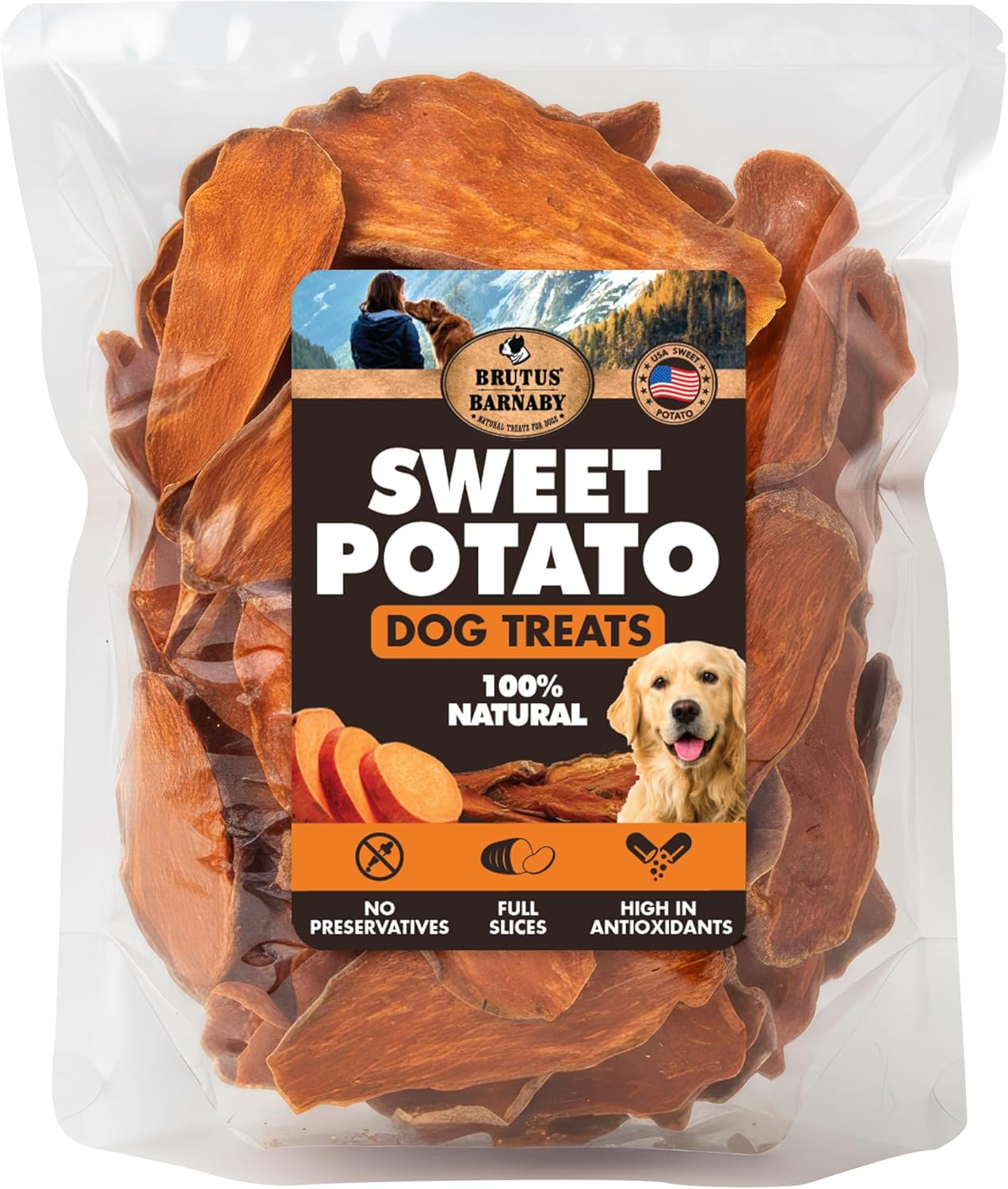 Shop Sweet Potato Dog Treats Slices
Sweet Potato Sticks for Dogs | Pumpkin & Cinnamon Crunchy Dog Treats
 Shop Sweet Potato Sticks for Dogs
Keeping Dehydrated Fries Fresh Between Treat Sessions
Dry treats still need appropriate storage. Humidity, damaged packaging, contamination, and improper handling can affect their condition over time.
Follow the current product label, close the package after use, and keep it in a suitable dry location. Avoid leaving open bags near sinks, damp surfaces, or accessible areas where a dog could consume the entire supply.
The FDA's guidance on storing pet food and treats recommends keeping dry products cool and dry, retaining packaging information, and securing treats from pets.
Discard treats with visible mold, unusual odors, unexpected wetness, or other signs of spoilage. If you suspect your dog became sick after consuming a product, stop offering it and contact your veterinarian.
Sweet Potato Fries for Dogs: Common Questions
Are sweet potato fries for dogs supposed to be crunchy or chewy?
Texture varies by preparation. Dehydrated fries may be flexible, chewy, or relatively firm, while some baked versions become crisp. Check the actual treat rather than assuming all fry-cut products have the same consistency.
Can dogs eat homemade sweet potato fries?
Many dogs can have modest amounts of plain, thoroughly cooked sweet potato when it fits their diet. Avoid added salt, oil-heavy preparations, unsafe seasonings, and oversized pieces. Let the food cool before serving and introduce it gradually.
Are dehydrated sweet potato fries suitable for small dogs?
Some smaller dogs may manage appropriately sized fry-cut pieces, but suitability depends on firmness, mouth size, and chewing habits. Watch closely for attempts to swallow strips whole. Small size alone does not guarantee a safe feeding experience.
Can I use sweet potato fries as dog training treats?
They may work as occasional rewards if the pieces can be offered and eaten comfortably. For rapid training repetitions, a smaller, suitably textured reward may be more practical. Count all rewards toward the dog's daily treat allowance.
Can sweet potato fries replace regular dog food?
No. Sweet potato fries are supplemental treats, not a complete and balanced diet. They should complement appropriate regular meals rather than replace the nutrients provided by the dog's primary food.
Should I stop offering sweet potato fries if my dog gets diarrhea?
Pause the new treat and contact your veterinarian if symptoms are severe, persistent, recurring, or accompanied by vomiting, weakness, pain, or reduced drinking. Do not assume sweet potato is the cause without considering other possible factors.
Make Every Treat Session Intentional
Sweet potato fries for dogs can add variety to an occasional treat routine, but texture and preparation matter as much as the ingredient itself. Compare chewy fries, broad slices, and crunchy sticks based on your dog's individual needs. Check portions, supervise every session, and select a format your dog handles comfortably.
Shop Sweet Potato Fries for DogsEducational disclaimer: This article provides general information about dog treats and does not determine whether a specific treat is suitable for an individual dog. Consult your veterinarian about dietary restrictions, dental discomfort, swallowing problems, allergies, or severe, persistent, or recurring digestive symptoms. Supervise treats during consumption and remove pieces that present a swallowing concern. Seek immediate veterinary assistance for suspected choking, difficulty breathing, collapse, or other emergency signs. Follow current product packaging, feeding instructions, and storage guidance.