



Lamb Lung vs Beef Lung Dog Treats: Which Protein Fits Your Dog?
Lamb lung and beef lung can both be crunchy, breakable rewards. The better choice depends first on your dog’s known protein tolerance—and then on whether you need ready-to-grab bites or larger filets you can portion yourself.
Choose the protein by the dog; choose the format by the training moment. Lamb is not automatically hypoallergenic or gentler, and beef is not automatically more nutritious for every dog.
Choose Lamb Lung Filets when your dog has already tolerated lamb and you want a larger, breakable single-ingredient reward. Choose Beef Lung Bites for convenient smaller pieces during quick training. Choose Beef Lung Filets when your dog tolerates beef and you want more control over the final piece size. For a diagnosed allergy, suspected food reaction, prescription diet, or veterinary elimination trial, ask your veterinarian before adding any lung treat.
The Two Decisions Are Protein and Format
“Lamb lung vs. beef lung” sounds like one decision, but dog parents are actually making two:
Which protein fits the dog?
Review what your dog already eats, which proteins have been tolerated, whether a veterinarian has diagnosed an allergy, and whether a formal diet trial is underway.
This decision is about ingredient exposure.
Which format fits the moment?
Smaller bites reduce preparation during frequent training. Larger filets let you create custom portions for different dogs, exercises, puzzles, or supervised snacks.
This decision is about convenience and portion control.
Lamb Lung vs. Beef Lung: Full Comparison
The table below reflects the current Brutus & Barnaby product pages. Where the live page does not publish a calorie value or full guaranteed analysis, it is marked as not currently listed rather than estimated.
| Feature | Lamb Lung Filets | Beef Lung Bites | Beef Lung Filets |
|---|---|---|---|
| Protein source | Lamb | Beef | Beef |
| Current ingredient list | 100% lamb lung | 100% USA beef lung | 100% beef lung |
| Current sourcing statement | USA-raised lamb; processed in the USA | USA-raised cattle; made in the USA | USA-raised cattle; processed in the USA |
| Starting format | Larger light, airy filets | Smaller crunchy bites | Larger light, airy filets |
| Texture and crunch | Crunchy and breakable | Crunchy, ready-to-grab pieces | Crunchy and breakable |
| Breakability | Designed to break into smaller portions | Some pieces may still need to be broken for the individual dog | Designed for custom portion sizes |
| Aroma | All are animal-protein treats with a noticeable meaty aroma, but no controlled odor comparison is currently published. Individual dog preference is the useful test. | ||
| Best training role | Pre-break into small pieces when lamb fits the dog’s diet | Fast pouch rewards and frequent repetitions | Prepare custom reward sizes before the session |
| Current sizes | 8 oz and 16 oz | 6 oz, 12 oz, and 32 oz | 8 oz, 12 oz, 16 oz, and 32 oz |
| Current protein statement | Product page describes over 60% protein; full guaranteed analysis is not currently listed | Crude protein minimum 66.0% | Product page describes over 60% protein; full guaranteed analysis is not currently listed |
| Current calorie listing | Not currently listed | 4200 kcal/kg and 119.1 kcal/oz; calories per individual bite are not listed | Not currently listed |
| Allergy or diet-trial note | Lamb is not automatically hypoallergenic and may not be novel for the dog | Avoid when beef is excluded; use only with veterinary approval during a formal elimination trial | |
Why the missing values matter: do not calculate a direct calorie or fat comparison when the current Lamb Lung and Beef Lung Filets pages do not publish the same complete data as Beef Lung Bites. Check the current page and package before feeding because formulations, analysis, sizes, and packaging can change.
Is Lamb Lung Better Than Beef Lung?
Not universally. Lamb lung may be a reasonable choice for a dog that has eaten lamb without problems and whose current diet allows it. Beef lung may be equally appropriate for a dog that tolerates beef. The protein name alone cannot tell you which treat will taste better, digest better, or cause fewer reactions for a particular dog.
Your dog already tolerates lamb
You know lamb is part of the dog’s successful diet history, and no veterinarian has asked you to exclude it.
Your dog already tolerates beef
Beef is not restricted, and you want either convenient bites or larger customizable filets.
The diet has medical restrictions
A prescription diet, pancreatitis risk, kidney or liver disease, chronic digestive disease, pica, or previous obstruction may require a different veterinarian-approved reward plan.
Is Lamb Lung Hypoallergenic?
No protein is automatically hypoallergenic for every dog. Dogs can react to lamb, beef, or other dietary proteins. “Novel protein” has a specific meaning: it is a protein the individual dog has not eaten before, selected within a veterinarian-directed plan.
Lamb was once less common in dog food, but many modern diets and treats now include it. A dog that has eaten lamb kibble, canned food, toppers, chews, table scraps, or flavored products has already been exposed. That history matters more than the marketing category.
Can a Dog With a Beef Allergy Eat Lamb Lung?
Possibly—but not as an informal experiment when the allergy is diagnosed or strongly suspected. A veterinarian may select a novel or hydrolyzed diet based on the dog’s complete feeding history. Lamb may be unsuitable if the dog has eaten it before, reacts to it, or if the veterinarian is avoiding related proteins as part of a carefully controlled trial.
During an elimination diet, every item given by mouth matters: treats, toppers, chews, table food, supplements, toothpaste, and flavored medication can interfere. A retail single-ingredient treat is not automatically equivalent to a veterinary therapeutic diet because manufacturing controls and possible cross-contact may differ.
During a Veterinary Elimination Trial
- Use only the food and rewards approved by the veterinary team.
- Do not add lamb lung simply because the label says single ingredient.
- Do not add beef lung when beef is being excluded.
- Check flavored medications, supplements, dental products, chews, and household food access.
- Do not use online blood, saliva, or hair tests as a substitute for a veterinarian-directed elimination and challenge trial.
Does Single Ingredient Mean Suitable for Every Dog?
No. A single-ingredient label is useful because it makes the declared recipe easier to understand, but suitability still depends on the dog.
The declared ingredient is simple
- Lamb Lung lists lamb lung.
- Beef Lung Bites list USA beef lung.
- Beef Lung Filets list beef lung.
- It is easier to avoid a known declared protein than with a multi-protein recipe.
That the treat fits every clinical diet
- It does not prove the protein is novel for your dog.
- It does not rule out individual intolerance or allergy.
- It does not establish veterinary therapeutic manufacturing controls.
- It does not make unlimited portions appropriate.
Bites vs. Filets: Choose the Format by the Training Moment
After confirming which protein fits the dog, choose the shape that fits the activity. Brutus & Barnaby already has a detailed guide to Beef Lung Bites vs. Filets; the practical summary is below.
| Training or Reward Moment | Best Starting Format | Why | Preparation |
|---|---|---|---|
| Fast repetitions in the kitchen | Beef Lung Bites | Smaller starting pieces are easier to grab quickly. | Check each piece and break further when needed. |
| Treat pouch on a walk | Beef Lung Bites | Less preparation while moving. | Pre-measure the session’s amount instead of carrying the full bag. |
| Different reward values in one session | Lamb or Beef Lung Filets | Larger pieces can be divided into tiny, medium, or more noticeable rewards. | Break all pieces before training begins. |
| Small dog or puppy-sized rewards | Either format | The final piece size matters more than the bag’s original shape. | Make pieces suitable for the individual and avoid swallow-whole sizes. |
| Puzzle or scent game | Filets for customization; Bites when the existing size fits | Filets provide more control over shape and quantity. | Follow the enrichment product instructions and supervise appropriately. |
| Testing a new tolerated protein | Lamb Lung Filets, only when lamb fits the diet | Allows a single declared protein to be introduced in a measured amount. | Start with a very small piece and do not introduce several new foods together. |
Five Steps for Choosing the Right Lung Treat
Write down the dog’s real protein history
Include kibble, canned food, toppers, treats, chews, supplements, table scraps, and flavored medications. A protein is not novel simply because you have never purchased it as a lung treat.
Check for veterinary restrictions
Do not add either product without guidance when your dog has a diagnosed allergy, prescription diet, formal elimination trial, pancreatitis risk, kidney or liver disease, chronic digestive disease, or previous obstruction.
Choose the protein before the shape
Pick lamb only when lamb is appropriate. Pick beef only when beef is appropriate. Do not let pouch convenience override the dietary decision.
Choose bites for speed or filets for control
Use Bites when you want smaller ready-to-grab rewards. Use Filets when you prefer preparing custom sizes for different dogs or activities.
Start small and record the response
Introduce one new treat at a time in a modest amount. Track stool, vomiting, appetite, itching, ears, paws, and skin rather than relying on memory. Persistent or recurring signs need veterinary assessment.
How to Introduce a New Protein Treat
A healthy dog without dietary restrictions may still need a gradual introduction. Lung treats are extras, not complete meals, and suddenly adding a large amount can make it difficult to understand what caused digestive changes.
Offer a very small piece
Choose a manageable piece, supervise, and keep every other part of the routine familiar.
Increase only when tolerated
Use small portions and avoid introducing a second new protein, topper, chew, or supplement at the same time.
Count the full day
Include every training reward, chew, table scrap, and topper in the dog’s total daily extras.
Can You Rotate Lamb and Beef Lung?
A healthy dog that tolerates both proteins may receive them at different times for variety or different training jobs. Rotation can make a reward feel more novel to some dogs, but it does not prevent food allergies and is not necessary for every dog.
Both proteins are already tolerated
You use Beef Lung Bites for walks and Lamb or Beef Lung Filets for prepared training sessions while keeping portions controlled.
You are investigating a reaction
Frequent protein switching makes it harder to identify patterns and can invalidate a formal diet trial. Follow the veterinarian’s plan instead.
Portion Management When Calorie Data Differ
Beef Lung Bites currently list 119.1 kcal per ounce, but the current Lamb Lung and Beef Lung Filets pages do not list calorie values. That means a responsible comparison cannot claim that one of the three is lower calorie than another.
Pre-measure the session
Remove the amount you plan to use and close the main bag. This is more reliable than repeatedly reaching into the package.
Break rewards before training
Prepare small pieces that suit the dog, task, and eating style. The reward should not be large enough to interrupt the session or easy to swallow whole.
Count every extra together
Training treats, chews, toppers, puzzle food, table scraps, and dental products all contribute to the daily total.
Protect the complete diet
Treats should remain a small part of intake and must not replace complete and balanced food. Ask the veterinarian for an individual calorie target when weight or disease management matters.
When to Stop Feeding and Call a Veterinarian
Stop the new treat and contact your veterinarian when your dog develops persistent vomiting, repeated diarrhea, appetite loss, unusual tiredness, recurring itching, red skin, paw chewing, or repeated ear problems. These signs have many possible causes and should not be diagnosed from the protein name alone.
Seek emergency care immediately for breathing difficulty, collapse, facial swelling, widespread hives, pale or blue gums, repeated unproductive retching, severe abdominal swelling or pain, choking signs, or suspected obstruction.
Get Veterinary Guidance Before Choosing Either Protein When Your Dog Has
- A diagnosed or suspected food allergy
- A veterinary elimination diet
- A prescription or restricted diet
- Chronic vomiting or diarrhea
- Pancreatitis or high-fat restrictions
- Kidney or liver disease
- Previous intestinal obstruction
- Pica or rapid swallowing
- Difficulty chewing or swallowing
- Young puppy or frail senior needs
Compare the Three Brutus & Barnaby Lung Treats
Each product has a clear role when its protein fits the individual dog. Break rewards before the session, supervise eating, and review the current package for the latest feeding and nutrition information.
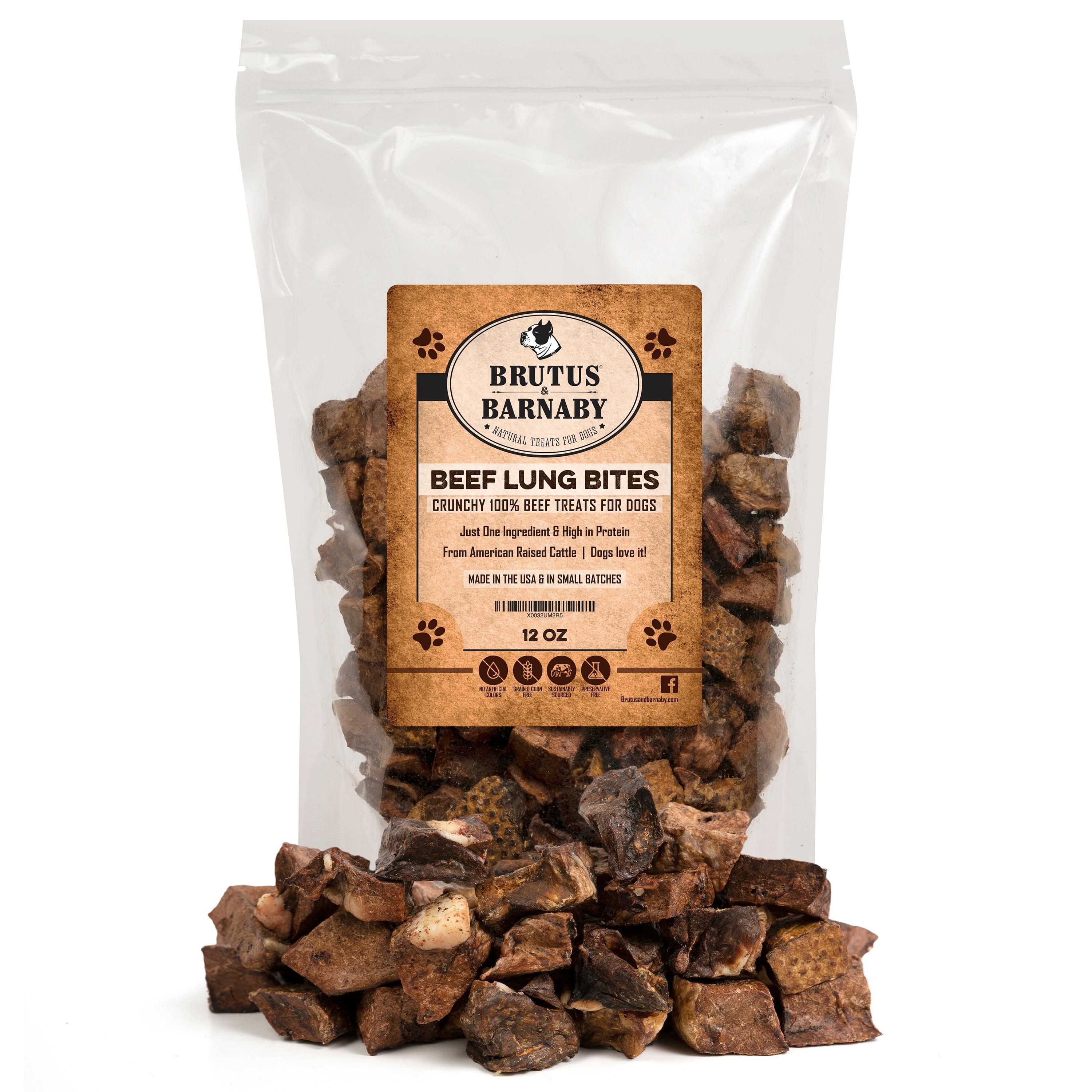
Beef Lung Bites for Dogs | High-Protein Crunchy Training Treats
Smaller crunchy pieces for convenient rewards when beef fits the dog’s diet.
- Ingredient: 100% USA beef lung
- Current sizes: 6 oz, 12 oz, and 32 oz
- Crude protein min 66.0%; crude fat min 20.4%
- Crude fiber max 4.5%; moisture max 5.8%
- 4200 kcal/kg and 119.1 kcal/oz; per-bite calories are not listed
Trusted Reading
Use veterinary sources—not marketing labels—to investigate allergies, chronic digestive signs, or clinical diet needs.
Elimination Diet Process
VCA: Implementing an Elimination-Challenge Diet TrialFood Allergy Diagnosis
VCA: Food Allergies in DogsNovel Proteins and Cross-Reactivity
Merck Veterinary Manual: Cutaneous Food AllergyTreat and Nutrition Guidance
WSAVA: Global Nutrition Guidelines and Feeding-Treats ToolkitRelated Brutus & Barnaby guides: Beef Lung Bites vs. Filets, High-Protein Dog Treats, and Hypoallergenic Dog Treats for Dogs.
Frequently Asked Questions
Is lamb lung better than beef lung for dogs?
Neither is universally better. Choose according to the dog’s known protein tolerance, complete diet, health needs, and the reward format you need.
Is lamb lung hypoallergenic?
No. Dogs can be allergic to lamb, and lamb is only “novel” when the individual dog has not eaten it before and a veterinarian considers it appropriate for the diet plan.
Can a dog with a diagnosed beef allergy eat lamb lung?
Ask the treating veterinarian. Lamb may or may not fit the dog’s diet history and elimination protocol. Do not casually add an over-the-counter treat during a formal veterinary diet trial.
What is the difference between beef lung bites and filets?
Bites are smaller starting pieces for quick rewards. Filets are larger, light, airy pieces you can break into custom sizes. The protein is the same; the practical difference is format.
Which lung treat is best for training?
Beef Lung Bites are convenient for fast repetitions. Lamb or Beef Lung Filets work well when you want to prepare several reward sizes. Protein suitability comes before convenience.
Are single-ingredient lung treats allowed during an elimination diet?
Only when the veterinary team specifically approves them. Single ingredient does not automatically mean suitable for a diagnostic diet trial because prior exposure and manufacturing cross-contact matter.
Can dogs eat lung treats every day?
That depends on the dog’s health, calorie needs, complete diet, and every other extra received. Keep treats supplemental, use controlled portions, and obtain veterinary guidance for medical or weight-management needs.
Does rotating lamb and beef prevent allergies?
No. Rotation may provide variety for a dog that tolerates both, but it has not been established as a way to prevent food allergy. Do not rotate proteins during an elimination trial.
Final Takeaway
Choose the protein by the dog; choose the format by the training moment.
Lamb Lung Filets offer a breakable lamb option for dogs that already tolerate lamb. Beef Lung Bites make frequent rewards convenient. Beef Lung Filets provide custom beef portions. None is automatically healthier, safer, more digestible, or more allergy-friendly for every dog.
For suspected allergies, diagnosed beef allergy, chronic skin or digestive signs, or a formal elimination diet, let the veterinary plan decide which treats—if any—are allowed.
Which Option Fits the Job?
When lamb fits the diet
Use larger breakable filets when your dog has a known history of tolerating lamb and no veterinary restriction.
When speed matters
Keep smaller crunchy pieces ready for walks, frequent reinforcement, and fast training delivery when beef is tolerated.
When control matters
Break larger filets into different reward sizes for training, supervised snacks, or suitable enrichment activities.
Pick the Protein, Then Pick the Format
Compare single-ingredient lamb and beef lung rewards—and choose the bag that fits both your dog and the way you train.
Shop Lung Treats