



Glycerin in Chicken Jerky Dog Treats: Why It’s Used and How to Read the Label
Glycerin in chicken jerky dog treats usually helps retain moisture and maintain a softer, more flexible texture. Understanding that role makes the ingredient list easier to interpret—and helps you compare the whole recipe rather than judge a treat by one unfamiliar word.
Glycerin, also called glycerol, is commonly used as a humectant: an ingredient that helps hold moisture. In chicken jerky, this can help keep pieces pliable. Its presence does not automatically make a treat unsuitable, and its absence does not establish superior safety. Check the full ingredient list, calorie information, manufacturer details, storage directions, and your dog’s individual needs.
What Is Glycerin in Chicken Jerky Dog Treats?
Glycerin is a substance used in food formulations for several technical purposes, including moisture management. The FDA’s glycerin ingredient inventory identifies humectant among its functions. That helps explain why it appears in some chewy treats.
You may see “glycerin,” “glycerine,” “glycerol,” or “vegetable glycerin” in product information. Glycerin and glycerol refer to the same substance; the vegetable description indicates a plant-derived source. It does not identify the particular plant oil or disclose the amount used.
Manufacturers may choose different recipes to achieve different textures. A dried chicken strip can have a short ingredient list and a firmer bite, while a formulated jerky may combine chicken with other ingredients to produce a more flexible piece. Neither format tells you everything about quality.
Why Do Manufacturers Add Glycerin to Jerky?
Its main relevance to shoppers is how the finished treat feels and behaves. Moisture, drying conditions, piece thickness, and the rest of the recipe also influence texture.
Maintain Flexibility
Holding moisture can help a formulated jerky remain pliable instead of becoming as dry or brittle as some other styles.
Support Consistent Texture
Glycerin can help manufacturers maintain the intended eating texture as part of a carefully developed recipe and packaging system.
Make Portioning Practical
A flexible treat may be easier to divide into rewards, although you should check the actual product rather than assume it will tear easily.
Does That Make Glycerin a Preservative?
“Humectant” is the more precise description of its moisture-related role. Moisture management can contribute to a product’s stability, but glycerin alone does not demonstrate that a treat is protected against spoilage. Drying, sanitation, packaging, and storage all matter.
Do not infer shelf life from softness or from whether glycerin appears on the label. Follow the product’s actual storage instructions and best-by information.
Is Glycerin Safe for Dogs?
U.S. animal-food regulations list glycerin as generally recognized as safe when used according to good manufacturing or feeding practice. See 21 CFR 582.1320 on glycerin in animal food. This is a conditional ingredient status, not an endorsement of every finished treat or every serving amount.
A sensible assessment considers the complete product: appropriate ingredients, manufacturing controls, feeding directions, and suitability for the individual dog. A treat can contain a permitted ingredient and still be a poor match for a particular dietary restriction or chewing style.
If your dog develops digestive symptoms after trying a new jerky, do not assume glycerin caused them. The protein source, other ingredients, amount eaten, or an unrelated problem may be involved. Stop the new treat and seek veterinary advice when symptoms are severe, persistent, recurring, or otherwise concerning.
For dogs following a medical feeding plan: Ask your veterinarian before adding jerky or other extras. “Vegetable,” “natural,” and “single ingredient” do not establish that a treat fits a prescribed diet.
How to Read a Chicken Jerky Ingredient Label
Start with the ingredient statement rather than the largest words on the front of the bag. The FDA explains that animal-food ingredients must appear by common or usual name in descending order by weight.
That order provides useful context, but it does not give exact percentages or a complete nutritional assessment. Glycerin listed third does not mean the product contains a particular percentage of it. Likewise, “chicken first” does not tell you how much chicken remains relative to other ingredients after processing.
| Label Detail | What It Helps You Understand | What It Cannot Establish |
|---|---|---|
| Ingredient list | The declared ingredients and their relative order by weight | Exact glycerin percentage or individual tolerance |
| Vegetable glycerin | A plant-derived source is identified | The specific plant source unless disclosed |
| Guaranteed analysis | Declared nutrient guarantees and moisture information | Whether the texture suits your dog’s mouth |
| Calorie statement | Energy per stated piece, serving, or weight | A universal number of treats for every dog |
| Lot and storage details | Traceability and handling instructions | A guarantee against every product problem |
Read Every Ingredient, Including the Familiar Ones
Chicken, sweet potato, flour, flavorings, and other ingredients all contribute to the recipe. If your dog must avoid chicken, choosing chicken jerky without glycerin does not resolve that restriction. If you need to exclude a particular plant source, ask the manufacturer rather than guessing from “vegetable.”
For broader comparisons beyond glycerin, our guide to choosing chicken jerky dog treats covers texture, sourcing, and other buying considerations.
Comparing Jerky With and Without Added Glycerin
Choose according to your priorities and your dog’s needs. If you prefer a shorter ingredient list, a verified single-ingredient chicken jerky may be appealing. If easy division and flexibility matter, assess a formulated jerky’s actual texture and full recipe.
Neither “glycerin-free” nor “soft” should replace a hands-on check. Some dried strips are tough; some flexible treats can still be swallowed in oversized pieces. Supervision and appropriate portions remain necessary.
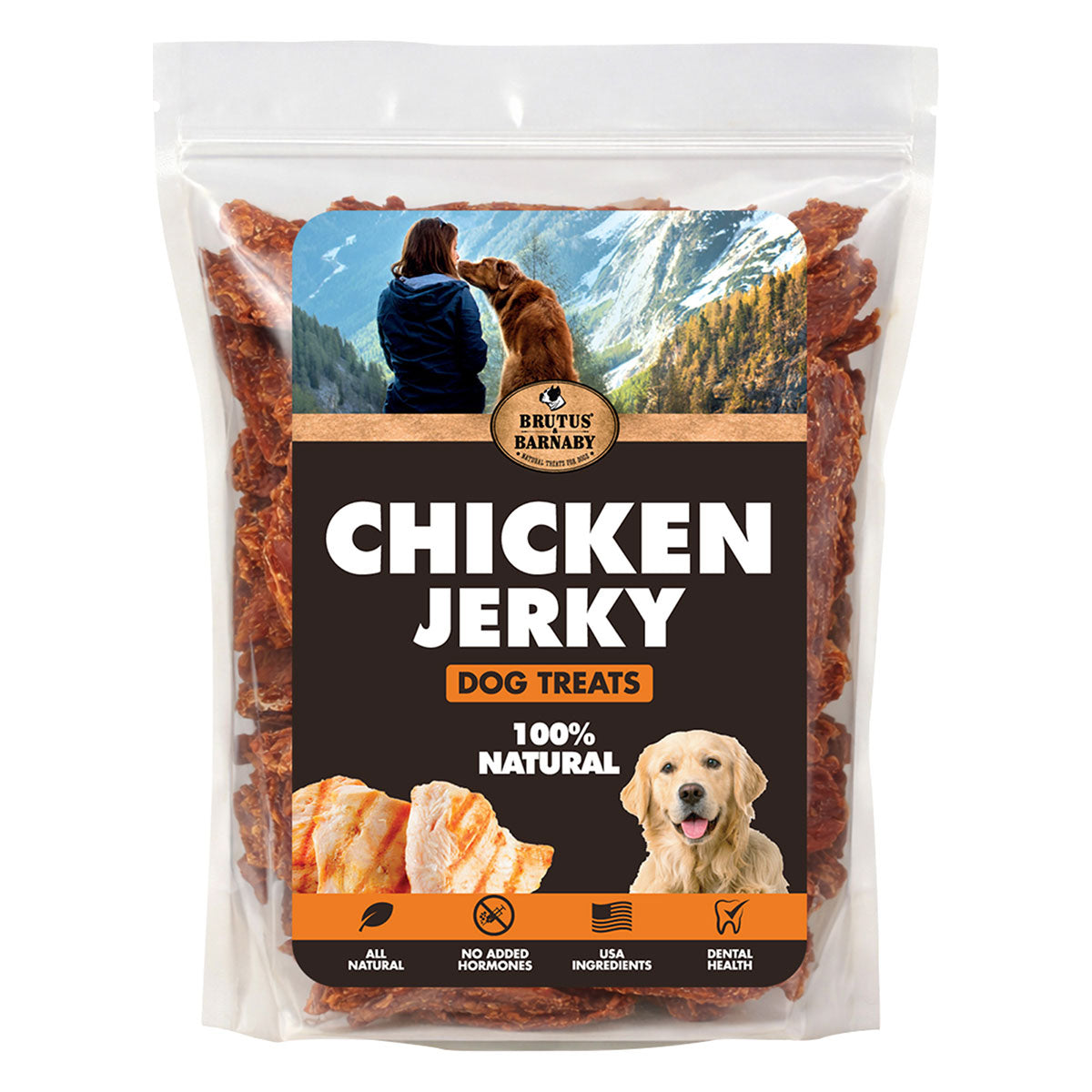
Brutus & Barnaby Chicken Jerky lists one ingredient: chicken breast, with no glycerin, preservatives or fillers. Recipes differ between brands and products, so always check the exact bag you are buying rather than extending one product’s claims to another.
A shorter list can make ingredients easier to track, but it does not guarantee that a dog will tolerate the product. Chicken remains chicken regardless of how many additional ingredients are present.
A Single-Ingredient Chicken Jerky Option
If you want to compare a chicken-only recipe, consider the product below. Choose it because the ingredient profile and texture fit your dog, rather than assuming that removing glycerin makes every aspect of a treat better.
Portioning, Supervision, and Storage Still Matter
Plan the Total Amount
Check calories per piece or measured weight and account for other snacks your dog receives. A flexible strip is not automatically a low-calorie reward. If calorie information is missing or inconsistent, ask the manufacturer before using the treat frequently.
For training, prepare a measured allowance rather than repeatedly handing out whole strips. Our guide to choosing high-value treats for recall training explains how reward size and ease of eating affect practical use.
Match the Piece to the Dog
Offer manageable portions and watch your dog eat. Softness does not eliminate choking risk, especially for dogs that gulp food. Ask your veterinarian about suitable textures for puppies, dogs with dental concerns, or dogs having difficulty chewing or swallowing.
Keep the Package Information
Reseal and store treats as directed. Avoid adding water to a whole bag to change its texture, since that changes the storage conditions. Discard treats showing mold, an unusual odor, or other signs of deterioration.
If you suspect a treat-related illness, retain the packaging, lot number, and purchase details. The FDA’s instructions for reporting a problem with jerky pet treats explain what information is useful. Reporting supports investigation; it does not establish which ingredient caused a problem.
Frequently Asked Questions
Are glycerin and glycerol the same?
Yes. Glycerol is another name for glycerin. The term “vegetable glycerin” additionally describes a plant-derived source, without necessarily identifying the specific plant.
Does every chicken jerky contain glycerin?
No. Recipes vary. Some products contain chicken alone, while others include glycerin and additional ingredients to create a particular texture. Read the exact product’s current ingredient list.
Does vegetable glycerin make jerky hypoallergenic?
No. That description does not establish allergy suitability. Consider every ingredient, particularly the animal protein, and follow your veterinarian’s directions during an elimination diet.
Can the ingredient list reveal how much glycerin is present?
Usually it shows relative order rather than an exact percentage. Ask the manufacturer if you need more specific formulation information; do not estimate the amount from its position alone.
Should I stop a treat if my dog develops diarrhea?
Stop the newly introduced treat and contact your veterinarian if symptoms are persistent, recurring, severe, or accompanied by concerning changes. The timing alone cannot identify glycerin—or any other ingredient—as the cause.
Choose With the Whole Label in Mind
Glycerin in chicken jerky dog treats generally serves a practical moisture and texture function. The most useful decision comes from considering the complete recipe, clear feeding information, appropriate storage, and how the treat fits your dog’s needs.
If a chicken-only recipe matches your preferences, explore Chicken Jerky for Dogs, then check the current package and offer appropriately sized portions under supervision.
Educational disclaimer: This article provides general educational information and does not replace veterinary, nutritional, diagnostic, allergy or emergency advice. Chicken jerky suitability depends on your dog’s age, size, health history, dental condition, chewing behavior, regular diet, calorie needs and ingredient tolerance. Contact your veterinarian if your dog develops vomiting, persistent diarrhea, marked tiredness, loss of appetite, pain, difficulty swallowing or another concerning symptom. Dogs on prescription or elimination diets should receive only treats approved by the veterinarian managing the diet. Product recipes, origin claims, calorie information, feeding directions, packaging, sizes and availability may change, so review the current product page and package before feeding.