

Can Senior Dogs Have Bully Sticks? Size, Teeth & Chewing Safety Guide
Some senior dogs can still enjoy bully sticks, but age alone is not the green light. Dental comfort, chew firmness, mouth size, chewing style, health history, and active supervision all matter.
Can senior dogs have bully sticks? For some older dogs, yes—but a dog can remain enthusiastic about chewing even after their teeth or gums become less comfortable. With seniors, the decision should start with the mouth and chewing behavior, not simply the dog's age.
Yes—some senior dogs can have bully sticks, but only when the chew still fits their teeth, mouth, health, and chewing style.
A bully stick may be reasonable for a senior dog with comfortable teeth and gums who chews slowly and deliberately and does not try to swallow large pieces. Choose a size that cannot be swallowed whole, supervise the entire session, and remove the chew before the remaining end becomes easy to gulp. If your senior dog has loose or fractured teeth, known dental disease, recent dental work, mouth pain, swallowing problems, a history of obstruction, digestive disease, or a restricted diet, ask your veterinarian before offering a dense edible chew.
Can Senior Dogs Have Bully Sticks Safely?
There is no single age at which bully sticks automatically become appropriate or inappropriate. Two dogs of the same age may have very different mouths, chewing habits, and medical needs. One twelve-year-old dog may still have comfortable functional teeth and chew patiently, while another may have periodontal disease, worn teeth, previous extractions, or a new tendency to gulp.
Teeth & Gums
Senior dogs can develop dental problems that make firm chewing uncomfortable. Loose, fractured, painful, or diseased teeth are a reason to stop and get veterinary guidance before offering a dense chew.
Size & Shape
The chew should remain too large for the dog to swallow whole. Length, diameter, mouth size, and how quickly the dog reduces the chew all matter more than choosing by age alone.
Chewing Behavior
A slow gnawer is different from a dog that crushes, tears, or gulps. Changes in chewing style can appear with age, so a chew that worked years ago should still be reassessed today.
Use Your Senior Dog's Current Condition—not Their Birthday
Before deciding on bully sticks for senior dogs, look at the whole dog. The table below is a practical starting point, not a substitute for a veterinary dental examination.
| Senior Dog Profile | Bully Stick Fit | Best Next Step |
|---|---|---|
| Comfortable mouth, no known dental problems, calm deliberate chewer | May be appropriate | Choose an appropriately sized chew, begin with a closely supervised session, and monitor how the dog handles it. |
| Lighter chewer with comfortable teeth but less interest in thick chews | A thinner format may be easier to manage | Consider a slimmer bully stick while still making sure the entire chew cannot fit inside the mouth. |
| Bad breath with red or bleeding gums, dropping food, or avoiding firm treats | Pause bully sticks | Schedule a veterinary dental assessment before offering a dense chew. |
| Loose, fractured, severely worn, or painful teeth; recent dental procedure | Not appropriate without veterinary clearance | Follow your veterinarian's recovery and chew recommendations. |
| Dog that gulps ends or swallows large pieces | Higher choking or obstruction concern | Do not rely on length alone to solve gulping. Consider a different enrichment option and discuss repeated gulping with your veterinarian. |
| Restricted diet, digestive disease, previous obstruction, or other medical concern | Individual decision | Ask the veterinarian managing the dog's condition before adding the chew. |
Check Your Senior Dog's Teeth Before Offering a Bully Stick
Dental comfort deserves extra attention in an older dog. Veterinary dental guidance cautions against very hard chewing objects because excessive force can damage teeth. Bully sticks also vary in thickness, dryness, and firmness, so assess the individual chew rather than assuming every stick has the same texture.
Reassuring Signs to Look For
- Your dog eats their usual food comfortably
- No new hesitation around firm treats or chew items
- No obvious loose or broken teeth you already know about
- No new drooling, pawing at the mouth, or facial swelling
- Your dog chews steadily rather than repeatedly stopping in discomfort
Signs to Stop and Ask Your Vet
- Loose, chipped, fractured, or severely worn teeth
- Red, swollen, or bleeding gums
- Dropping food or repeatedly chewing on one side
- New refusal of hard food, chews, or favorite treats
- Facial swelling, unusual drooling, or apparent mouth pain
- A noticeable change in appetite or chewing behavior
Are Bully Sticks Too Hard for Senior Dogs?
They can be for some dogs. Ageing does not automatically mean weak teeth, but seniors are more likely to have accumulated dental wear or disease than they did when they were younger. A particularly dry, rigid, or thick chew may demand more bite force than a dog's current mouth handles comfortably.
A useful safety principle from veterinary dental guidance is to be cautious with objects that are so hard they do not flex or give. If your senior dog attacks a chew with heavy crushing bites, appears uncomfortable, or repeatedly abandons it after trying to bite down, do not encourage them to keep working at it.
Light Chewer
A slimmer bully stick may be easier for some lighter chewers to work on, provided the dog's teeth are comfortable and the chew remains too large to gulp.
Steady Chewer
A standard bully stick may still fit a senior with good oral comfort and a slow, deliberate chewing style. Continue checking how the chew changes throughout the session.
Power Chewer
A larger senior may still chew powerfully, but strong chewing does not prove the teeth are healthy. Dental condition should be considered before offering an extra-thick format.
What Size Bully Stick Is Best for a Senior Dog?
There is no universal senior-dog bully stick size based on weight alone. Choose according to mouth size, chewing strength, chewing speed, ability to hold the stick, and how quickly the remaining piece becomes small enough to swallow.
| Chewing Situation | Format to Consider | Senior-Dog Safety Note |
|---|---|---|
| Smaller mouth or lighter chewing style | Thinner 6-inch bully stick | A thinner chew may be easier to manage, but it still needs to remain too large to swallow and should not be offered to a dog with painful or unstable teeth. |
| Medium dog with comfortable teeth and deliberate chewing | Standard 6-inch bully stick | Watch the remaining length carefully and remove it before the end can be gulped. |
| Larger dog that benefits from more exposed length | 12-inch bully stick | The added length can make the chew easier to monitor, but the extra-thick format can demand more chewing force and is not automatically a better choice for older teeth. |
| Fast chewer or dog that swallows ends | No size solves the behavior by itself | Supervise closely, remove early, and consider whether another form of enrichment would be more appropriate. |
Three Bully Stick Formats to Match Carefully to Your Senior Dog
These are different bully-stick formats rather than universal recommendations for every older dog. Match the product to your dog's current mouth, size, and chewing behavior—and skip dense chews when dental or medical concerns make them inappropriate.

Skinny Bully Sticks
A slimmer bully stick option for dogs that do not need a thick, heavy chew. Brutus & Barnaby currently recommends this format for small dogs, seniors, and dogs with gentler chewing styles.
- Thinner 6-inch format
- Made from premium grass-fed beef
- No fillers, additives, or artificial ingredients listed on the product page
- Thinner does not make the chew appropriate for loose, fractured, or painful teeth

6-Inch Bully Sticks
A classic single-ingredient beef chew that may fit senior dogs who still have comfortable teeth and work through a bully stick slowly rather than crushing or gulping it.
- 6-inch bully stick format
- 100% grass-fed beef
- Single-ingredient and rawhide-free
- Use as a supervised treat and remove small fragments
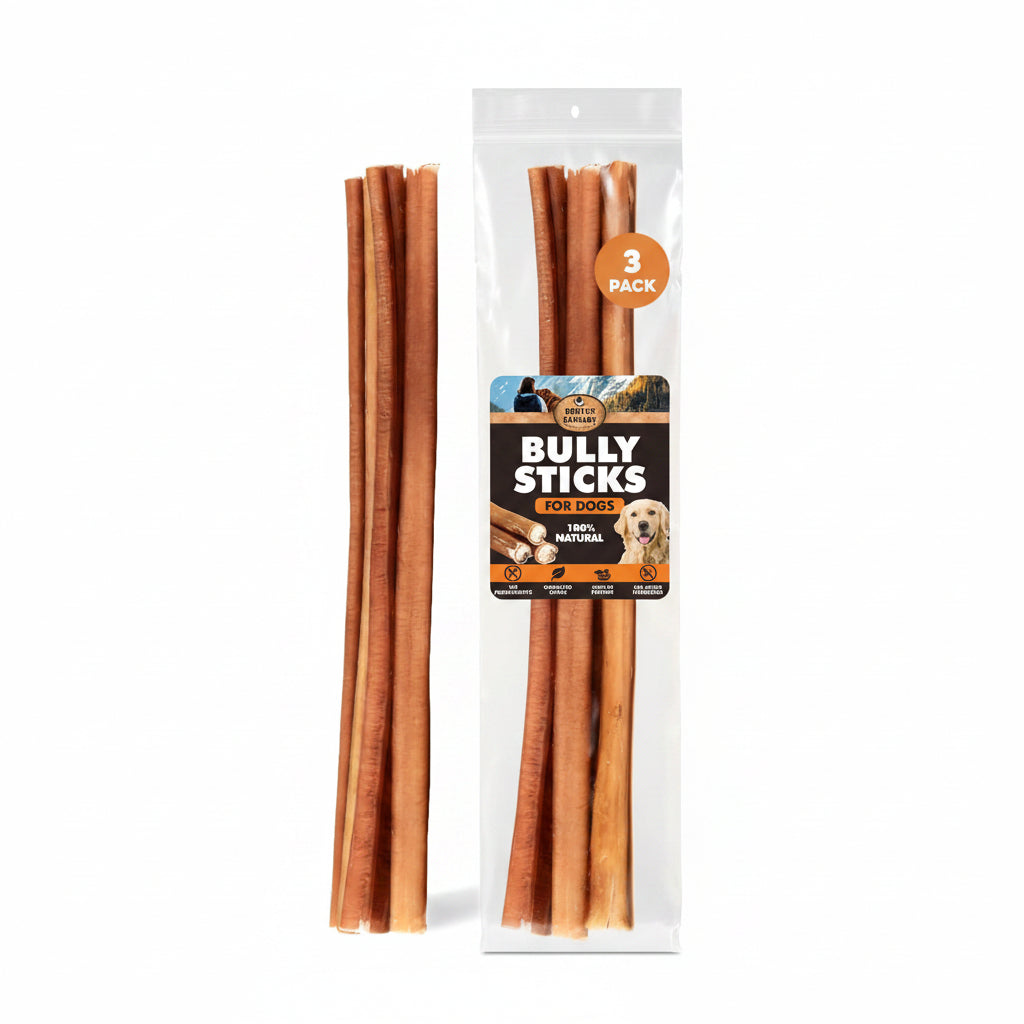
12-Inch Bully Sticks
A longer, extra-thick bully stick designed for stronger chewers. It may fit some larger seniors with healthy, comfortable teeth, but it should not be treated as a softer senior-dog chew.
- 12-inch extra-thick format
- 100% premium grass-fed beef
- Rawhide-free
- Best reserved for dogs whose teeth and chewing style suit a substantial chew
How to Give a Senior Dog a Bully Stick: 6 Steps
Check dental and health history first
Think about known dental disease, previous extractions, fractured teeth, recent dental work, swallowing problems, digestive disease, food restrictions, and any recent changes in chewing. Ask your veterinarian when anything is uncertain.
Choose a chew that cannot be swallowed whole
The starting piece should be substantially larger than something your dog could simply gulp. Consider both length and thickness, and remember that the safe margin changes as the stick gets shorter.
Start with a brief, closely watched session
Even if your dog used bully sticks when younger, treat the current chew as a fresh assessment. Watch how much force they use, whether they settle comfortably, and how quickly they soften or shorten the stick.
Stay close enough to see the chewing pattern
Active supervision means noticing large pieces breaking free, repeated crushing bites, coughing, gagging, frantic swallowing, bleeding, or signs that chewing has become uncomfortable.
Remove the chew before the final end becomes swallow-sized
Do not wait for the dog to finish every last piece. Use a familiar trade if necessary rather than grabbing directly from the mouth. If your dog guards chews, manage that separately with qualified reward-based behavior guidance.
Reassess after the session
Look for mouth discomfort, broken pieces, unusual drooling, vomiting, diarrhea, appetite changes, or changes in stool. A chew that repeatedly causes problems is not a good fit simply because your dog enjoys it.
Do This
- Match size and firmness to the individual senior dog
- Supervise the entire chewing session
- Watch how the chew changes as it softens and shortens
- Remove the end before it can be swallowed whole
- Provide access to fresh water
- Count edible chews as part of overall treat intake
Avoid This
- Giving a dense chew to a dog with obvious dental pain
- Leaving a senior dog unattended with an edible chew
- Assuming a longer or thicker stick is automatically safer
- Allowing the dog to swallow large softened pieces
- Forcing a dog to continue chewing when they seem uncomfortable
- Treating bully sticks as a replacement for veterinary dental care
How Often Can a Senior Dog Have a Bully Stick?
There is no universal bully-stick schedule for senior dogs. Frequency depends on the dog's body condition, normal diet, calorie needs, how much of each chew is actually consumed, digestive tolerance, activity level, and medical history.
Older dogs may also have conditions that make treat choices more individualized. A dog managing weight, gastrointestinal disease, pancreatitis risk, a prescription diet, food sensitivity, or another chronic condition may need a very different treat allowance from a healthy senior of the same size.
When Should a Senior Dog Avoid Bully Sticks?
A different treat or enrichment activity is the better choice when the potential dental, swallowing, or medical risk outweighs the benefit of chewing.
- Your dog has known painful periodontal disease, loose teeth, fractured teeth, or severe dental wear
- Your dog recently had a tooth extraction or other oral procedure and has not been cleared for firm chewing
- Your dog suddenly avoids hard food or chews, drops food, favors one side of the mouth, or appears painful when chewing
- Your dog repeatedly bites off and swallows large pieces or tries to gulp the final end
- Your dog has a history of gastrointestinal obstruction, pica, or swallowing difficulty
- Your dog does not tolerate beef or has a veterinary-directed restricted diet
- Your veterinarian has recommended avoiding dense chews because of a medical or dental condition
- You cannot actively supervise the chewing session
What If a Senior Dog Swallows a Large Piece of Bully Stick?
Do not assume that because a bully stick is edible, every swallowed piece will pass safely. Large pieces can create choking or gastrointestinal concerns. The ASPCA advises contacting a veterinarian when a dog consumes a substantial chunk of chew material.
Do Bully Sticks Clean a Senior Dog's Teeth?
Chewing can create mechanical contact with the surface of the teeth, but a bully stick should not be treated as dental treatment. It cannot diagnose or correct periodontal disease, repair a fractured tooth, or replace veterinary dental care.
If dental health is the goal, discuss an appropriate home-care routine with your veterinarian. Tooth brushing and professionally recommended dental products are more controlled approaches than expecting a recreational edible chew to manage existing dental disease.
Related Brutus & Barnaby Guides
Senior Teeth and Chew-Safety Resources
These veterinary and animal-welfare resources provide additional guidance on dental comfort, hard chewing, tooth fractures, appropriate chew sizing, active supervision, and swallowed pieces.
Senior Dogs and Bully Sticks FAQ
Can old dogs eat bully sticks?
Some can. A senior dog's current teeth, gums, chewing style, swallowing behavior, digestion, and medical needs matter more than age alone. Dogs with dental pain, loose or fractured teeth, or other health concerns should be assessed before receiving a dense chew.
Are bully sticks too hard for senior dogs?
They can be too firm for some older dogs, especially when the stick is thick or dry or the dog has dental disease, worn teeth, or previous fractures. Never encourage a dog to keep chewing an item that appears uncomfortable to bite.
What is the best bully stick size for a senior dog?
The best size is one the individual dog can comfortably hold and chew but cannot swallow whole. Mouth size, length, thickness, chewing speed, and gulping behavior all matter, so there is no universal senior-dog size based only on weight.
Are skinny bully sticks better for senior dogs?
A thinner bully stick may be easier for some lighter chewers to handle, and Brutus & Barnaby's Skinny Bully Sticks are a 6-inch format currently recommended for seniors and sensitive jaws. However, a thinner chew is not automatically appropriate for a dog with loose, fractured, painful, or diseased teeth.
Can a senior dog with missing teeth have a bully stick?
It depends on which teeth are missing, the health of the remaining teeth and gums, and how the dog chews. A dog with significant tooth loss may need a softer treat format. Ask your veterinarian or veterinary dental professional what chewing pressure is appropriate for your dog's mouth.
Can dogs with periodontal disease have bully sticks?
Do not use a bully stick to manage existing periodontal disease. Diseased gums and teeth can be painful or unstable, and treatment needs vary. Have your veterinarian assess the mouth and tell you what type of chewing, if any, is appropriate.
What should I do if my senior dog swallows the end of a bully stick?
Contact your veterinarian promptly for individualized guidance, especially if the swallowed piece was large. Seek emergency care for breathing difficulty, collapse, blue or pale gums, repeated gagging, or severe distress, and watch for vomiting, pain, appetite loss, lethargy, or difficulty passing stool.
Can bully sticks replace dental cleaning for senior dogs?
No. Chewing may create some mechanical contact with the tooth surface, but a bully stick cannot treat periodontal disease or replace tooth brushing, veterinary dental examinations, or necessary professional dental treatment.
Senior Status Doesn't Ban Bully Sticks—Dental Comfort and Chewing Behavior Decide
Some older dogs can continue enjoying bully sticks, while others are better served by a thinner chew, a softer treat, or a different enrichment activity entirely. Reassess the dog you have today rather than automatically continuing the chew routine they had years ago.
A Bully Stick May Still Fit
Choose an appropriate size, begin conservatively, supervise every session, and remove the final swallow-sized end.
Reassess the Chew
If chewing has become hesitant or dental comfort is uncertain, stop dense chews and get the mouth checked before continuing.
Choose Another Option
A dog that swallows large pieces or has significant dental, swallowing, digestive, or dietary concerns may need a different form of enrichment.
Choose a Bully Stick Format That Fits the Dog You Have Today
Compare Brutus & Barnaby bully stick formats and choose according to your senior dog's current mouth size, chewing style, and dental comfort—not age alone.
Shop Bully Sticks