


Does your Lab finish a chew before you've put the bag away? Compare bully sticks, beef cheek rolls, and cow ears, and learn how to match an edible chew to your Labrador's habits.
The best chews for Labradors are large enough to handle safely, appropriate for their teeth, and matched to their chewing habits. A 12-inch bully stick suits many steady adult chewers; a beef cheek roll offers a broader shape; and a cow ear may fit a shorter session. None should be given without supervision. Compare options in our bully sticks for dogs collection if your Lab prefers a longer chew.
Why Labradors Need a Chew That Matches Their Habits
Labradors often enjoy carrying things in their mouths. But one Lab may patiently gnaw a chew between its paws while another bites off sections and tries to swallow them. Their size alone does not tell you which chew is appropriate.
Watch what your dog actually does. A Lab that works steadily through one end of a chew needs a different approach from a Lab that crushes or gulps it. For the latter, a sturdy food-stuffable toy may be more suitable than an edible chew.
Quick answer: Choose for chewing style first, then for size and texture. The hardest chew is not automatically the safest choice for a powerful Labrador.
Best Chews for Labradors Compared
These rawhide-free options differ in shape and how a Labrador can grip them. Actual chew time varies with the dog; no chew is guaranteed to last a set number of minutes.
Portion note: An edible chew is part of your Lab's treat intake, even when it lasts through several sessions. Account for other treats and regular meals rather than offering chews as an unlimited extra.
Three Brutus & Barnaby Chews Worth Comparing
Start with a chew your adult Lab can hold comfortably and cannot swallow whole. Each of these options is rawhide-free, but each requires active supervision.
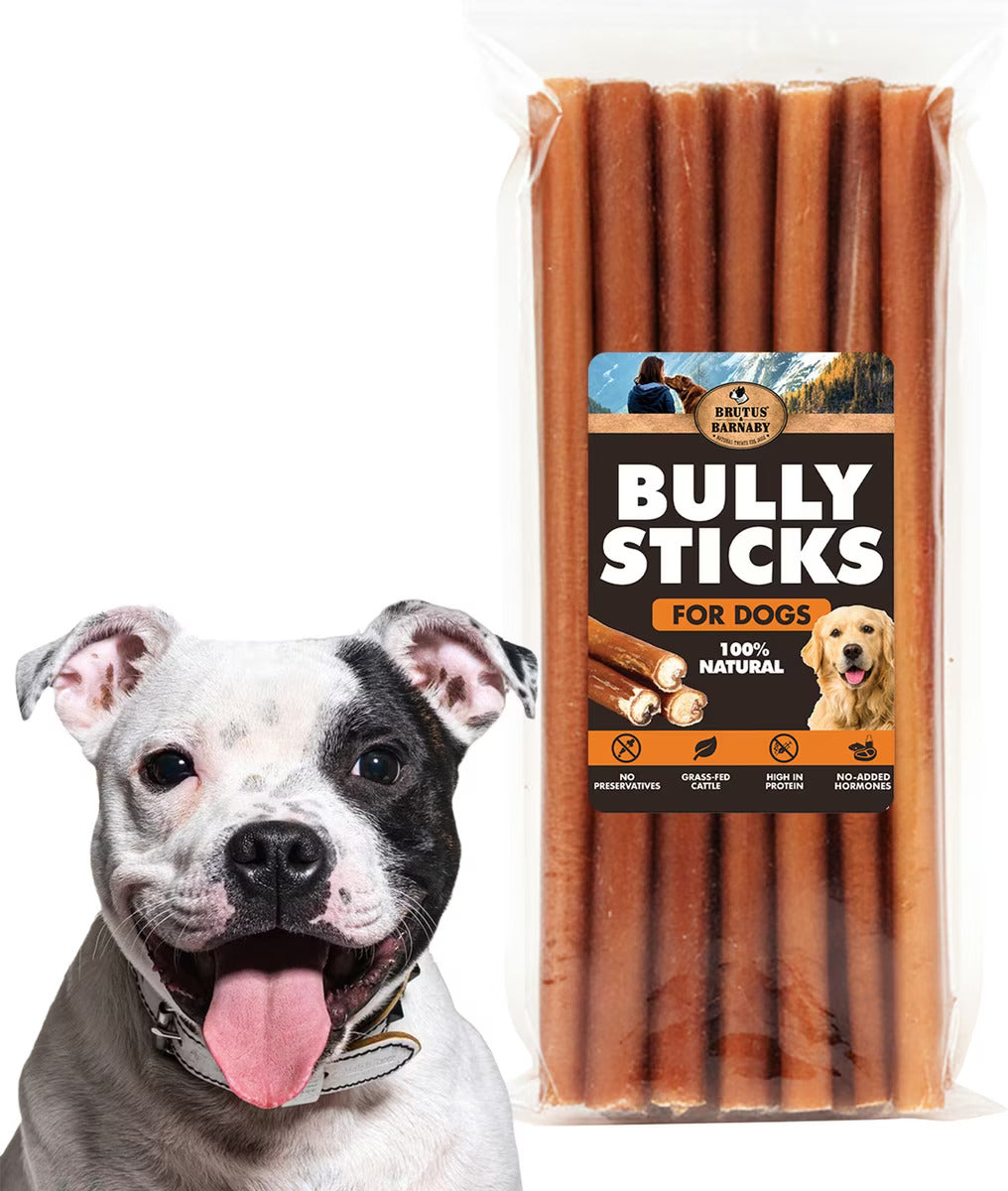
12-Inch Bully Sticks
A longer, extra-thick beef chew for Labradors that settle down and gnaw gradually. The shape provides room to grip, but the end must be removed before it becomes swallowable.
- Single-ingredient beef, rawhide-free
- Longer shape for supervised gnawing
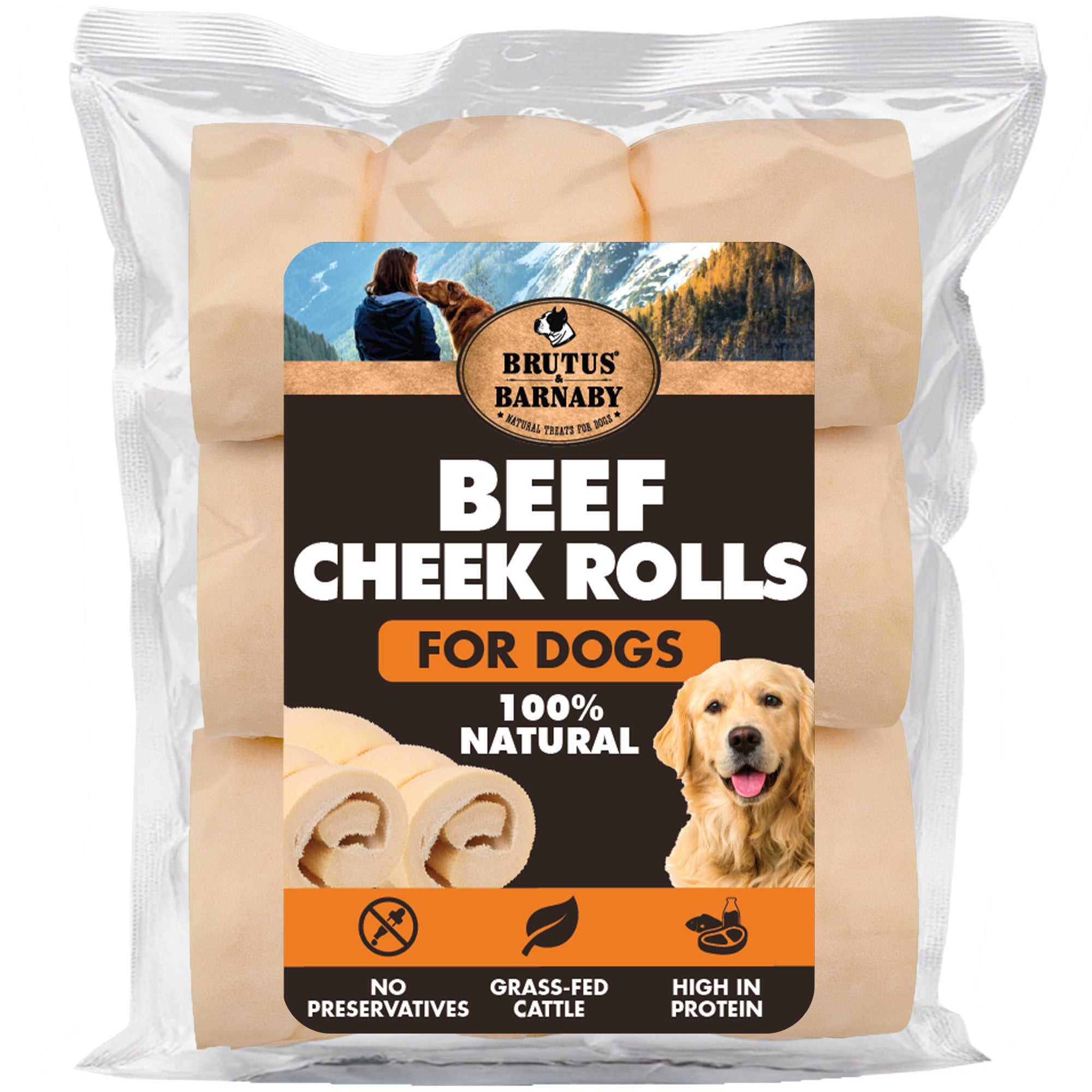
Original Beef Cheek Rolls, 10–12 Inch
A substantial rolled beef cheek chew for adult Labs that like holding a larger shape between their paws. Take it away if your dog loosens and gulps sections.
- Single-ingredient beef cheek, rawhide-free
- Wide rolled format for careful gnawers

Natural Cow Ears
A thinner, flexible option for Labs that prefer this texture over a thick roll. Not a good fit for a dog that tears off and swallows large pieces.
- Single-ingredient, rawhide-free chew
- Different texture from thick beef chews
What Can Labrador Puppies Chew On?
A Lab puppy chewing chair legs is not asking for an adult power-chewer treat. Puppies explore with their mouths, and teething changes what feels comfortable. A chew designed for an adult Labrador may be too firm or too large for a young puppy.
Start with flexible puppy-sized rubber toys, puppy teething toys used according to their instructions, or food-stuffable toys containing a little of the puppy's regular meal. Inspect everything for damage and replace toys as the puppy grows.
For Lab puppies: Ask your veterinarian which edible chew textures and sizes are appropriate for your puppy's age, teeth, and digestion. Do not assume an adult chew is safe just because your puppy wants it.
When Is an Edible Chew the Wrong Choice for a Lab?
Some Labs are enthusiastic chewers but poor candidates for edible chews. The warning sign is not how fast they chew by itself; it is how they handle the pieces they create.
Stop the Chew If...
- Your Lab gulps large pieces
- The remaining piece could be swallowed whole
- The chew develops sharp or loose sections
- Your dog coughs, gags, or seems distressed
Choose Another Activity If...
- Your Lab repeatedly tries to swallow chews
- Your dog has dental discomfort
- Chews trigger stomach upset
- Your dog guards food or chews
A durable, appropriately sized rubber enrichment toy may be a better fit for a gulper. If your Lab shows tooth pain, has a digestive condition, or guards chews, check with a veterinarian; guarding concerns may also benefit from qualified reward-based training support.
If a large section is swallowed, contact your veterinarian promptly. Trouble breathing, collapse, or severe distress calls for emergency veterinary care.
A Chew Routine for a Food-Motivated Labrador
For many Labs, the moment a treat appears is exciting. A calm routine helps you see whether a particular chew is working instead of letting chew time turn into a race.
- Pick a quiet spot. Avoid competition with other dogs and distractions that encourage frantic chewing.
- Inspect the chew first. Check its shape, condition, and whether your dog could fit it entirely in its mouth.
- Stay within watching distance. Notice whether your Lab gnaws gradually or bites off chunks.
- Practice a calm trade. Teach exchanging ordinary toys for a reward before trying it with a valuable chew; never force a guarded chew away.
- Remove risky remainders. End the session before a piece becomes small or slippery enough to gulp.
- Count what was eaten. Consider that portion alongside the rest of your Lab's meals and treats.
A Labrador that finishes a chew quickly has not necessarily had a better session. The useful result is a controlled, enjoyable activity that stays appropriate from the first bite to the last safe piece.
FAQ
For an adult Labrador that gnaws patiently, a well-matched chew can become part of a supervised routine. Start with your dog's behavior and choose a format you can manage safely from beginning to end.
Compare rawhide-free chewing options by size, texture, and your Labrador's habits. Stay nearby during every session and remove pieces before they become a swallowing risk.
Browse Natural Dog Treats