



Why Is My Dog Always Hungry? 7 Reasons Dogs Beg for More Food
Some dogs act like they have never eaten a meal in their life. But constant begging can come from habit, boredom, routine, diet, or sometimes a health concern. Here is how to tell the difference.
A hungry-looking dog is not always truly hungry. Sometimes dogs beg because food is rewarding, because they are bored, because the routine taught them to expect snacks, or because treats are more exciting than regular meals.
Quick answer: dogs may act hungry because of habit, boredom, low stimulation, fast eating, poor routine, extra treat expectations, or diet changes. Sudden extreme hunger, weight loss, vomiting, diarrhea, or behavior changes should be checked by your veterinarian.
Is My Dog Really Hungry or Just Begging?
Dogs are excellent at learning what works. If staring, pawing, whining, following you to the kitchen, or sitting near the table gets them a treat, they may repeat that behavior even when they are not physically hungry.
Real hunger usually connects to meal timing, calorie needs, growth, activity level, or a diet that does not satisfy the dog. Begging often connects to routine, attention, boredom, and the reward history your dog has learned.
The goal is not to stop treats completely. The goal is to use treats with purpose so your dog gets rewards without learning that begging works all day!
7 Reasons Your Dog May Act Hungry All the Time
Before adding more food or more treats, look at the reason behind the behavior.
Begging Has Been Rewarded
If your dog gets food after begging, even once in a while, the behavior can become stronger. Random rewards can make begging even more persistent.
Boredom Looks Like Hunger
A bored dog may ask for food because eating is fun. Sometimes they need enrichment, chewing, sniffing, or training more than another snack.
Fast Eating
Dogs who eat quickly may finish meals before they feel satisfied, then immediately search for more food or treats.
Treats Are Too Random
If treats happen all day for no clear reason, your dog may keep asking because they do not know when the next reward is coming.
Higher Activity Level
Dogs who walk more, play more, train more, or spend more time active may need different feeding guidance from their veterinarian.
Diet or Schedule Changes
A new food, smaller meal size, skipped snack routine, or feeding schedule change can make dogs act more food-focused.
Possible Health Concern
Sudden extreme hunger, weight loss, vomiting, diarrhea, increased thirst, or major behavior changes should be discussed with your veterinarian.
What Your Dog’s “Hungry” Behavior May Mean
Use this quick guide to understand whether your dog may need food, structure, enrichment, or a vet visit.
| Behavior | Possible Meaning | Better Response | Treat Idea |
|---|---|---|---|
| Begging at the table | Learned habit | Reward calm behavior away from the table | Small training treats |
| Asking for snacks when bored | Needs enrichment | Use sniffing, training, or supervised chew time | Bully stick or cow ear |
| Always wanting more after treats | Treats may be too random | Set treat times and use smaller pieces | Sweet potato fries or training treats |
| Sudden extreme hunger | Possible health change | Call your veterinarian | Do not solve with extra treats |
Important: if your dog is suddenly much hungrier than usual, losing weight, drinking more, urinating more, vomiting, having diarrhea, or acting different, contact your veterinarian instead of simply adding more food.
How to Help a Dog That Begs for Food
The best plan is not to argue with your dog at the table. It is to build a routine that teaches them what works.
1. Stop Rewarding Begging
Do not feed from the table or reward whining, pawing, jumping, or staring. Reward calm behavior instead.
2. Use a Treat Schedule
Planned treat times reduce random begging because your dog learns rewards happen during routines, not constant asking.
3. Add Enrichment
Walks, sniffing, short training sessions, puzzle feeding, and supervised chews can reduce boredom-based begging.
4. Use Smaller Treat Pieces
Dogs usually value the reward moment more than the size. Smaller pieces help you reward without overfeeding.
Pro tip: teach your dog a “place” or mat behavior during meals. Reward them away from the table instead of giving food from your plate.
Best Brutus & Barnaby Treats for Hungry-Looking Dogs
These treats help you create a smarter reward routine: small training rewards, lighter snack options, high-value bites, and supervised chews for enrichment.

Training Treats
Use small training treats to reward calm behavior, mat time, recall, and better choices around food.
- Easy to portion
- Useful for repeated rewards
- Great for teaching “place” or “leave it”
- Better than feeding from the table

Sweet Potato Fries for Dogs
A dog-friendly fry-style treat for snack moments when you want to avoid sharing salty human food.
- Easy to portion
- Useful as a snack or topper
- Great alternative to human fries
- Good for lighter treat days
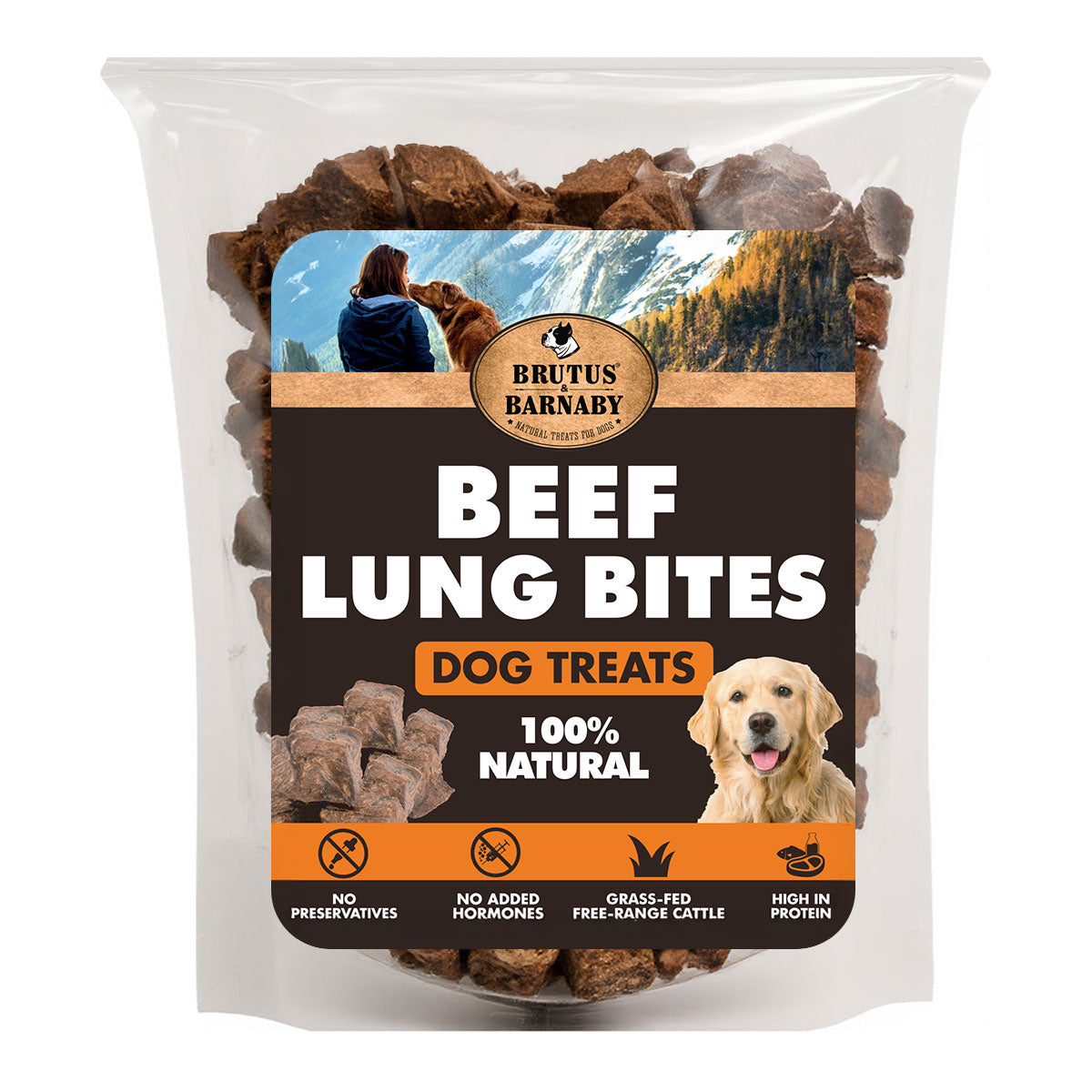
Beef Lung Bites
A simple high-value bite for moments when you need extra motivation without using large treat pieces.
- Single-ingredient beef lung
- High-value reward option
- Great for recall and focus
- Easy to break smaller if needed

Bully Sticks
A natural rawhide-free beef chew for supervised downtime when your dog needs enrichment, not another random snack.
- Great for supervised chew time
- Rawhide-free chew option
- Useful for dogs who love to gnaw
- Count edible chews as treats
A Simple Daily Routine for a Food-Focused Dog
Food-focused dogs often do better when treats are predictable, purposeful, and connected to behavior.
Morning
Feed breakfast, then use a few small training treats for calm practice, recall, or leash manners.
Midday
Offer enrichment such as sniffing, training, or a supervised chew instead of giving snacks every time your dog asks.
Dinner Time
Keep your dog away from the table and reward calm mat behavior with tiny treat pieces after they settle.
Evening
Use a planned chew or light snack if it fits your dog’s daily treat amount. Avoid random extra bites from your plate.
Simple rule: treats should reward behavior, support enrichment, or help training — not answer every begging request.
Keep Learning Before You Add More Treats
Pair this guide with related Brutus & Barnaby blog guides and trusted veterinary resources. Internal guide links help you build a better routine, while external sources give extra context on treats, calories, and food-related behavior.
Related Brutus & Barnaby Guides
Trusted Veterinary & Behavior Resources
Frequently Asked Questions
Build a Smarter Treat Routine
Brutus & Barnaby treats and chews help you reward the right moments — from training and calm behavior to supervised chewing and lighter snack time.
Shop Natural Dog TreatsEducational disclaimer: This article is for general education only and is not veterinary advice. Every dog has different calorie needs, medical history, activity level, appetite, behavior, and dietary restrictions. Ask your veterinarian if your dog has sudden extreme hunger, weight loss, vomiting, diarrhea, increased thirst, increased urination, weakness, behavior changes, obesity, diabetes, pancreatitis, kidney disease, digestive issues, allergies, or a restricted diet. Treats and edible chews should be portioned appropriately and supervised.