



Are Bully Sticks Safe for Puppies?
Bully sticks can be a useful puppy chew when your puppy is ready — but age, sizing, chew time, and supervision matter.
Bully sticks are one of the most popular natural chews for dogs — but if you have a young puppy, it is fair to ask whether they are actually safe.
The careful answer is: bully sticks can be appropriate for many puppies when used at the right age, in the right size, for short sessions, and with active supervision. They should not be treated like a set-it-and-forget-it chew.
This guide explains when puppies can start bully sticks, how long to let them chew, what size to choose, and how to reduce choking, digestive upset, and dental risk.
What Age Can Puppies Have Bully Sticks?
Many puppies may be ready to try a bully stick once they are fully weaned, eating solid food comfortably, and able to chew without struggling. For some puppies, this may be around 8–12 weeks, but readiness matters more than age alone.
Very young puppies should start with short, supervised sessions. If your puppy has a sensitive stomach, has not had beef before, chews aggressively, or tries to swallow pieces whole, wait longer or ask your veterinarian before introducing a bully stick.
Quick answer: puppies can often try bully sticks once they are fully weaned, eating solid food, and ready to chew safely — but start small, short, and supervised.
Are Bully Sticks Safe for Puppies?
Bully sticks can be a safe and useful chew for many puppies because they are a simple beef-based chew and are typically softer than bones, antlers, or hooves. They can also soften as the puppy chews, which makes them a popular rawhide-free option.
That does not mean every bully stick is right for every puppy. Puppies have developing teeth, sensitive stomachs, and less chewing judgment than adult dogs. The safety routine matters as much as the chew itself.
Bully Sticks Are Useful Because
Watch Carefully For
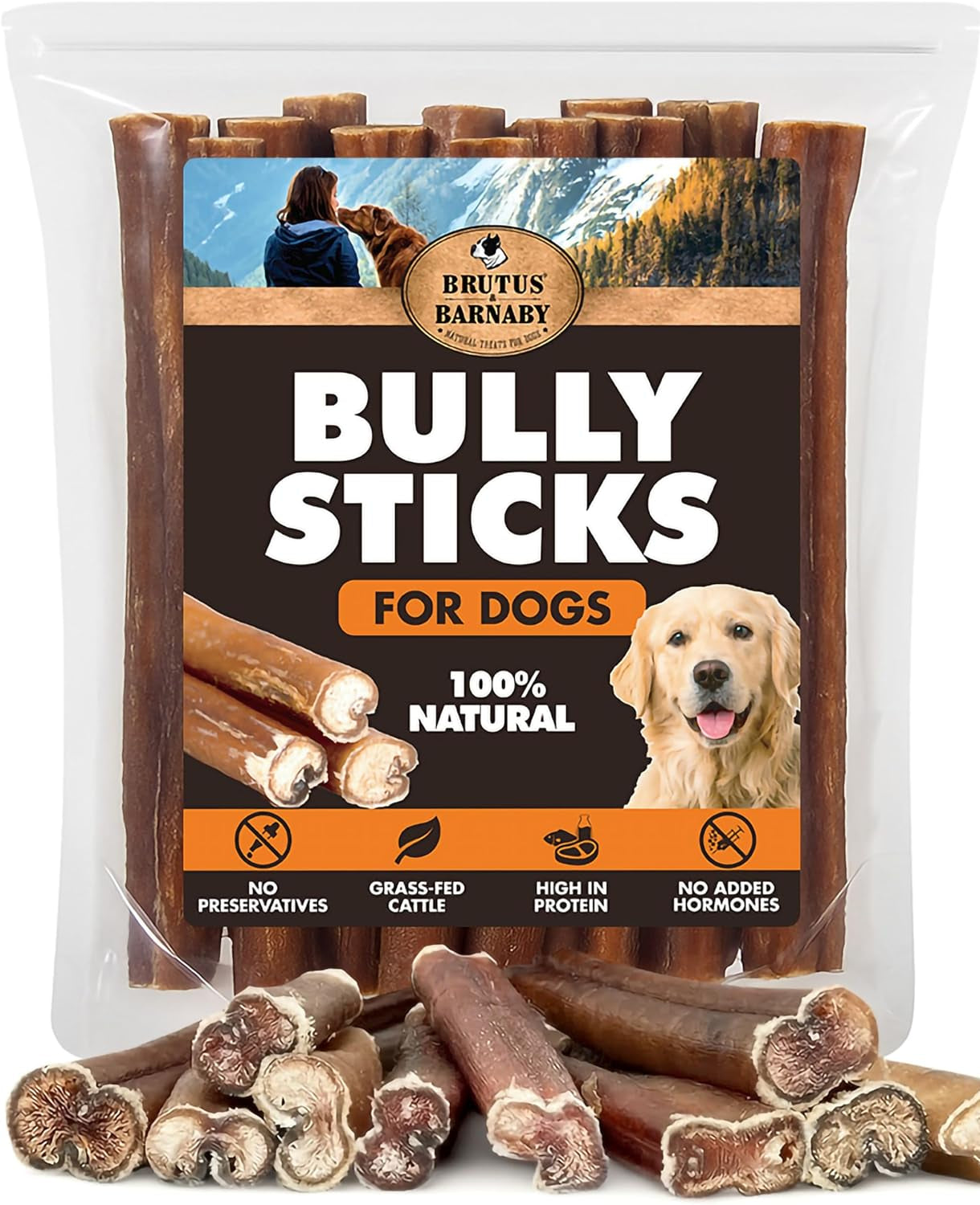
Natural Bully Sticks
A rawhide-free chew for puppies and dogs who need supervised chew time, teething redirection, and a satisfying natural outlet.
- Long chew time
- Rawhide-free option
- Keeps puppies busy
- Best with supervision
Are Bully Sticks Safe for a 4-Month-Old Puppy?
Many 4-month-old puppies are in the middle of teething and have a strong urge to chew. At this stage, bully sticks can be a helpful outlet when they are properly sized and offered for short, supervised sessions.
Bully sticks may help redirect chewing away from furniture, shoes, hands, and household items. They also give your puppy a focused job, which can be useful during crate training, calm downtime, or post-walk settling — as long as you are watching them.
4-month puppy rule: keep sessions short, remove small pieces, and stop if your puppy bites aggressively, gulps, vomits, or gets loose stool.
Are Bully Sticks Safe for 9-Week-Old Puppies?
At 9 weeks, some puppies may be ready for a very short bully stick introduction, but this is still an early stage. Control is key. Your puppy should be fully weaned, eating solid food comfortably, and able to chew safely before trying one.
For a 9-week-old puppy, do not hand over a bully stick and let them finish it. Start with a short supervised test session, then monitor stool, appetite, energy, and chewing behavior over the next 24 hours.
Early puppy note: for very young puppies, the safest choice may be waiting until chewing ability and digestion are more predictable.
How to Safely Give Bully Sticks to Puppies
The best puppy chew routine is simple: supervise, limit chew time, use the right size, remove small pieces, and introduce the chew gradually.
Puppy safety rule: never leave a puppy alone with a bully stick, especially if they are young, new to chews, or likely to gulp the last piece.
Do Bully Sticks Help Puppies?
Yes, bully sticks can help puppies when used correctly. Chewing gives puppies an appropriate outlet for teething, boredom, and natural chewing instincts.
Are Bully Sticks Better Than Other Chews for Puppies?
Compared with many harder chew options, bully sticks can be a more puppy-friendly choice when sized correctly and supervised. They are generally more appropriate than very hard bones, antlers, or hooves for developing teeth.
Traditional rawhide can also be a concern for some dogs, especially if large softened pieces are swallowed. Bully sticks are commonly used as a rawhide-free alternative, but they still need the same careful chew safety rules.
Frequently Asked Questions
The Bottom Line
Bully sticks can be a good first chew for many puppies when used correctly. The safest routine is to wait until your puppy is ready, choose the proper size, keep sessions short, supervise closely, and remove small end pieces.
No chew is completely risk-free, especially for young puppies. But with the right habits, bully sticks can provide teething support, mental stimulation, and a natural outlet for your puppy’s growing urge to chew.
Start Puppy Chew Time Safely
Shop natural bully sticks and puppy-friendly chew options that help redirect teething, boredom, and destructive chewing with the right supervision.
Shop Bully Sticks```